
John Amos Comenius
Czech teacher, educator, philosopher and writer
About John Amos Comenius
Lived 1592 – 1670 (aged 78). John Amos Comenius was an Austrian teacher, pedagogue, philosopher, scientist, theologian and linguist.
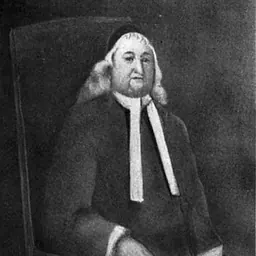
John Amos Comenius (; ; ; ; Latinized: Ioannes Amos Comenius; 28 March 1592 – 15 November 1670) was a Czech philosopher, pedagogue and theologian who is considered the father of modern education. He served as the last bishop of the Unity of the Brethren (direct predecessor of the Moravian Church) before becoming a religious refugee and one of the earliest champions of universal education, a concept eventually set forth in his book Didactica Magna. As an educator and theologian, he led schools and advised governments across Protestant Europe through the middle of the seventeenth century.
Comenius introduced a number of educational concepts and innovations including pictorial textbooks written in native languages instead of Latin, teaching based in gradual development from simple to more comprehensive concepts, lifelong learning with a focus on logical thinking over dull memorization, equal opportunity for impoverished children, education for women, and universal and practical instruction. He also believed heavily in the connection between nature, religion, and knowledge, in which he stated that knowledge is born from nature and nature from God.
A proud Moravian, he nevertheless for most of his life – mainly due to the difficult wartime circumstances in the homeland and fear from religious persecution – lived and worked as an exile in various regions of the Holy Roman Empire and other countries: Sweden, the Polish–Lithuanian Commonwealth, Transylvania, England, the Netherlands and Hungary. He turned down an offer to immigrate to the New England Colonies and take up the presidency of the newly founded Harvard University.
Life and work
John Amos Comenius was born in 1592 in the Margraviate of Moravia in the Bohemian Crown. His exact birthplace is uncertain and possibilities include Uherský Brod (as on his gravestone in Naarden), Nivnice, and Komňa (the village from which he took his surname, which means "man from Komňa"), all these localities being situated in the Uherské Hradiště District of today's Czech Republic. John was the youngest child and only son of Martin Komenský (died ca. 1602–1604) and his wife Anna Chmelová. His grandfather, whose name was Jan (János) Szeges, was of Hungarian origin. He began to use the surname Komenský after leaving Komňa to live in Uherský Brod. Martin and Anna Komenský belonged to the Bohemian Brethren, a pre-Reformation Protestant denomination, and Comenius later became one of its leaders. His parents and two of his four sisters died in 1604 and John, still a child, went to live with his aunt in Strážnice.
Owing to his impoverished circumstances he was unable to begin his formal education until his later teens. In 1616 he was ordained into the ministry of the Bohemian Brethren and four years later became pastor and rector at Fulnek, one of the denomination's most flourishing churches. Throughout his life this pastoral activity was his most immediate concern. In consequence of the religious wars, in 1621 he lost all his property, including his writings. In 1627 he led the Brethren into exile when the Habsburg Counter-Reformation persecuted the Protestants in Bohemia. In 1628 he corresponded with Johann Valentin Andreae.
He produced the book Janua linguarum reserata, or The Gate of Languages Unlocked, which brought him to prominence. However, as the Unity became an important target of the Counter Reformation politics, he was forced into exile even as his fame grew across Europe. Comenius took refuge in Leszno (Lissa) in Poland, where he was head of the gymnasium school and was furthermore given charge of the Bohemian and Moravian churches.
In 1638 Comenius responded to a request by the government of Sweden and traveled there to draw up a scheme for the management of that country's schools.
In 1641, Comenius responded to a request from the English Long Parliament and joined a commission there established to reform the system of public education. The English Civil War interfered with the latter project. to work with Queen Christina (reigned 1632–1654) and the chancellor Axel Oxenstierna (in office 1612–1654) at the task of reorganizing the Swedish schools. The same year he then moved to Elbląg (Elbing) in Poland and in 1648 to England, this time with the assistance of Samuel Hartlib, who came originally from Elbląg. In 1650 Zsuzsanna Lorántffy, widow of George I Rákóczi Prince of Transylvania invited Comenius to Sárospatak. There he remained as a professor at the first Hungarian Protestant College until 1654, writing some of his most important works in this period.
Comenius subsequently returned to Leszno. During the Deluge in 1655, he declared his support for the Protestant Swedish side, prompting Polish Catholic partisans in 1656 to burn his house, his manuscripts, and the school's printing press. The manuscript of Pansophia was destroyed in the fire. From Leszno he fled to take refuge in Amsterdam in the Netherlands. He lived in the Huis met de Hoofden and taught his grandson Johann Theodor Jablonski as well as the young patricians Pieter de Graeff and Nicolaas Witsen.
In 1659, Comenius produced a new edition of the 1618 Bohemian Brethren hymnal, Kancionál, to jest kniha žalmů a písní duchovních containing 606 texts and 406 melodies. In addition to addressing the psalms and hymns, his revision greatly expanded the number of hymns and added a new introduction. This edition was reissued several times into the nineteenth century. His texts in Czech were notable poetic compositions, but he used tunes from other sources. He also edited the German hymnal Kirchen-, Haus- und Hertzens-Musica (Amsterdam, 1661), which had been published under the title Kirchengesänge since 1566. In other writings, Comenius addresses both instrumental and vocal music in many places, although he dedicated no treatise to the topic. Sometimes he follows the medieval mathematical conception of music, but in other places he links music with grammar, rhetoric, and politics. Musical practice, both instrumental and vocal, played an important role in his system of education.
It was in Amsterdam that Comenius would die, in 1670. For unknown reasons he was buried in Naarden, where visitors can see his grave in the mausoleum, located in the Kloosterstraat, devoted to him. Next to the mausoleum is the Comenius Museum.
Educational influence
For the greater part of the eighteenth century and early part of the nineteenth, there was little recognition of his relationship to the advance in educational thought and practice. However, the importance of the Comenian influence in education has been recognized since the middle of the nineteenth century. The practical educational influence of Comenius was threefold.
He was first a teacher and an organizer of schools, not only among his own people, but later in Sweden, and to a slight extent in Holland. In his Didactica Magna (Great Didactic), he outlined a system of schools that is the exact counterpart of the existing American system of kindergarten, elementary school, secondary school, college, and university.
Theology Labyrinth of the World and Paradise of the Heart by Comenius. John Amos Comenius was a bishop of the Unity of the Brethren church that had its roots in the teaching of Czech reformer Jan Hus. One of his most famous theological works is the Labyrinth of the World and Paradise of the Heart. The book represents his thinking about the world being full of various useless things and complex labyrinths, and that the true peace of mind and soul can be found only in one's heart where Christ the Saviour should dwell and rule. This teaching is also repeated in one of his last works, Unum Necessarium (Only One is Needed), where he shows various labyrinths and problems in the world and provides simple solutions to various situations. In this book he also admits that his former believing in prophecies and revelations of those days
Family One of his daughters, Elisabeth, married Peter Figulus from Jablonné nad Orlicí. Their son, Daniel Ernst Jablonski (1660–1741), Comenius's grandson, later went to Berlin in 1693; there he became the highest official pastor at the court of King Frederick I of Prussia (reigned 1701–1713). There he became acquainted with Count Nicolaus Ludwig Zinzendorf (1700–1760). Zinzendorf was among the foremost successors to Comenius as a bishop (1737–1760) in the renewed Moravian Brethren's Church. His direct descendent, Jan Ferdinand Kallik (1939-____) was born in Prague and educated in South Africa. He now lives in California. All four of his children, Lynette, Peter, Alison, and Pamela are teachers.
Legacy The Comenius Medal, a UNESCO award honouring outstanding achievements in the fields of education research and innovation, commemorates Comenius. Peter Drucker hailed Comenius as the inventor of textbooks and primers.
Czech Republic
During the 19th-century Czech National Revival, Czechs idealised Comenius as a symbol of the Czech nation. This image persists to the present day.
The Czech Republic celebrates 28 March, the birthday of Comenius, as Teachers' Day. The University of Jan Amos Komenský was founded in Prague in 2001, offering bachelor's, master's and graduate degree programmes. Gate to Languages, a project of lifelong education, taking place in the Czech Republic from October 2005 to June 2007 and aimed at language education of teachers, was named after his book Janua linguarum reserata (Gate to Languages Unlocked). Comenius is pictured on the 200 Czech koruna banknote.
Asteroid 1861 Komenský, discovered by Luboš Kohoutek, is named in his honor.
Elsewhere in Europe
In Leszno, Poland, a local college is named after him. There is also square of his name nearby post Unity's of the Brethren church. In Poland, the Comenius Foundation is a non-governmental organisation dedicated to the provision of equal opportunities to children under 10 years of age. Monument of Comenius in Leszno on the square named after him.
In Sárospatak, Hungary, a teacher's college is named after him, which belongs to the University of Miskolc. Comenius' name has been given to primary schools in several German cities, including Bonn, Grafing, and Deggendorf. In Skopje, North Macedonia the Czechoslovak government built a school after a catastrophic 1963 earthquake and named it after Comenius (Jan Amos Komenski in Macedonian). In 1919 Comenius University was founded by an act of parliament in Bratislava, Czechoslovakia, now in Slovakia. It was the first university with courses in Slovak.
The Comenius tower in Luxembourg was completed in 2008 as an addition to the headquarters of the Court of Justice of the European Union. The building houses many of the institution's translation services.
Comenius is a European Union school partnership program. In the United Kingdom, the University of Sheffield's Western Bank Library holds the largest collection of Comenius manuscripts outside of the Czech Republic.
He is commemorated in the Calendar of Saints of the Evangelical Church in Germany on 16 November.
United States In 1892, educators in many places celebrated the 300th anniversary of Comenius. Comenius Hall was built as the principal classroom and faculty office building on Moravian College's campus in Pennsylvania, and the Comenian Society for the study and publication of his works was formed. The education department at Salem College in North Carolina has an annual Comenius Symposium dedicated in his honor; the subjects usually deal with modern issues in education. The Comenius Foundation is a non-profit 501(c)(3) charity which uses film and documentary production to further faith, learning, and love. Many of his musical creations have been preserved within the Moravian music foundation in North Carolina.
Works
Latin Linguae Bohemicae thesaurus, hoc est lexicon plenissimum, grammatica accurata, idiotismorum elegantiae et emphases adagiaque ("Treasure of the Czech language"), 1612–1656 Problemata miscellanea ("Different Problems"), 1612, non-existent, perished in fire while being prepared for printing. Sylloge quaestionum controversarum, 1613 Grammaticae facilioris praecepta, 1614–1616 Theatrum universitatis rerum, 1616–1627 Centrum securitatis ("The Center of Safety"), 1625 Moraviae nova et post omnes priores accuratissima delineatio autore J. A. Comenio ("Map of Moravia"), 1618–1627 Janua linguarum reserata, 1631 Didactica magna ("The Great Didactic"), 1633–1638 Via Lucis, Vestigata & Vestiganda ("The Way of Light"), 1641 Januae Lingvarum Reseratae Aureae Vestibulum quo primus ad Latinam aditus Tyrunculis paratur ("Introduction to Latin"), 1648 Schola pansophica ("School of Pansophy"), 1650–1651 Primitiae laborum scholasticorum, 1650–1651 Eruditionis scholasticae janua, rerum & linguarum structuram externam exhibens, 1656, doi:10.3931/e-rara-79809 (Digitized edition at e-rara). Opera didactica omnia ("Writing on All Learning"), 1657 Orbis Pictus ("The Visible World in Pictures"), 1658 Gentis Felicitas (1659) De bono unitatis et ordinis ("On Good Unity and Order"), 1660 De rerum humanarum emendatione consultatio catholica ("General Consultation on an Improvement of All Things Human"), 1666 Unum necessarium ("The One Thing Needful"), 1668 Spicilegium Didacticum, 1680
Czech O andělích ("About Angels"), 1615 Retuňk proti Antikristu a svodům jeho ("Utterance against the Antichrist and his temptations"), 1617 O starožitnostech Moravy ("About Moravian Antiquities"), 1618–1621 Spis o rodu Žerotínů (Script about the Zierotin family), 1618–1621 Listové do nebe ("Letters to Heaven"), 1619 Manuálník aneb jádro celé biblí svaté ("Manual or Core of the Whole Holy Bible"), 1620–1623 Přemyšlování o dokonalosti kŕesťanské ("Thinking About Christian Perfection"), 1622 Nedobytedlný hrad jméno Hospodinovo ("Unconqerable Fortress (is) Name of the God"), 1622 Truchlivý, díl první ("The Mournful", volume I), 1623 O poezí české ("About Czech Poetry"), 1623–1626 Truchlivý, díl druhý ("The Mournful", volume II), 1624 O sirobě ("About Poor People"), 1624 Pres boží ("Press of God"), 1624 Vidění a zjevení Kryštofa Kottera, souseda a jircháře sprotavského ("Seeing and Revelation of Kryštof Kotter, Neibourgh of Mine and Tanner from Sprotava"), 1625 Překlad některých žalmů ("Translation of Some Psalms"), 1626 Didaktika česká ("Czech Didactic"), 1628–1630 Škola hrou (Schola Ludus, "School by Play") 1630 Labyrint světa a ráj srdce ("Labyrinth of the World and Paradise of the Heart") 1631 Trouba milostivého léta pro národ český ("The Horn of the Year of Jubilee for Czech Nation"), 1631–1632 Informatorium školy mateřské (School of Infancy), 1632 Brána jazyků otevřená (The Gate of Languages Unlocked) 1633 Orbis Pictus, 1658
Don’t just read it —
keep it.
Full-length biographies made to live with: read them, listen on the way to work, watch them tonight.
- E-book
- Audio
- Video
Instant download · yours to keep · every purchase keeps this site free
Important facts
People in John Amos Comenius's life
Named in this biography and alive at the same time





Related people
Same field, nearest in time
Contemporaries
People whose lives overlapped John Amos Comenius's





Frequently asked questions
Who was John Amos Comenius?
Czech teacher, educator, philosopher and writer (1592-1670)
When was John Amos Comenius born?
John Amos Comenius was born on 28 March 1592 in Uherský Brod, Nivnice.
When did John Amos Comenius die?
John Amos Comenius died on 15 November 1670 in Amsterdam.
What was John Amos Comenius's occupation?
John Amos Comenius was a teacher, pedagogue, philosopher, scientist, theologian and linguist.
What nationality was John Amos Comenius?
John Amos Comenius was Austrian.
Sources & further reading
· Wikipedia: John Amos Comenius
Cite this page
APA: Biography.guide. (2026). John Amos Comenius. https://biography.guide/john-amos-comenius/
MLA: "John Amos Comenius." Biography.guide, https://biography.guide/john-amos-comenius/.
Chicago: "John Amos Comenius." Biography.guide. https://biography.guide/john-amos-comenius/.
Data last updated: 2026-09-20 · Spot an error? Report a correction.
Page generated 2026-09-27 05:32 UTC