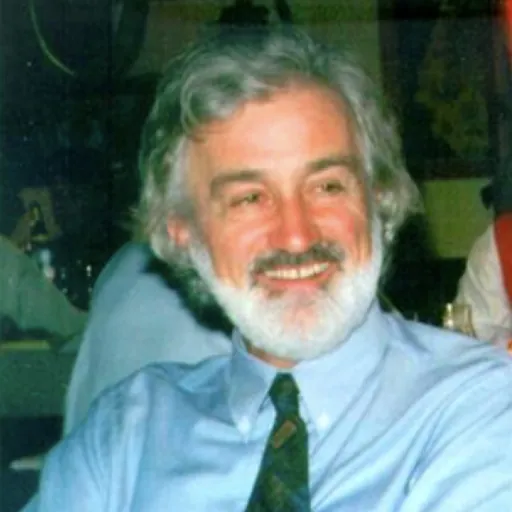
About John A. Osborn
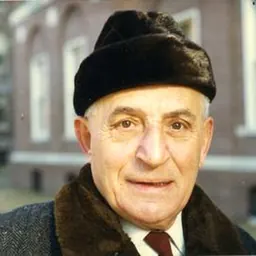
Lived 1939 – 2000 (aged 60). John A. Osborn was a British chemist.
John A. Osborn (1939–2000) was an inorganic chemist who made contributions to organometallic chemistry. During that degree Osborn contributed to the development of Wilkinson's catalyst.
Education He studied at Cambridge University, receiving a bachelor's degree with honors. In 1962, he obtained a PhD from Imperial College London under the supervision of Sir Geoffrey Wilkinson (Nobel Prize in Chemistry, 1973). During this period, he contributed to the development of Wilkinson's catalyst RhCl(PPh3)3. His thesis studies ranged widely.
Career Osborn's first independent position was at Harvard. His first doctoral student was Richard R. Schrock (Nobel Prize in Chemistry 2005), followed by John R. Shapley and Jay A. Labinger. During this time, the chemistry of [M(diene)(PR3)2]+ was advanced (M = Rh, Ir), laying the foundation for many subsequent developments. With Schrock, he developed the Schrock-Osborn catalyst [(PR3)2RhS2]+ (S = solvent), which is a cationic species derived from the Wilkinson catalyst.
At Harvard, he taught organometallic chemistry and homogeneous catalysis with transition metals, inspiring many students to pursue careers in this field, including Ryōji Noyori (Nobel Prize in Chemistry 2001), who was a postdoctoral student at Harvard at the same time. He met Jean-Marie Lehn (Nobel Prize in Chemistry 1987), who was a visiting professor at Harvard in 1972 and then in 1974, and who invited him to join the Louis Pasteur University of Strasbourg in 1975.
In Strasbourg, he became a university professor and headed a CNRS-university research laboratory until his untimely death. During this period, he developed:
- tungsten(VI)-based olefin metathesis catalysts, known to be extremely active;
- catalytic systems for carbonylation reactions (palladium-based) and hydrosilylation reactions (platinum-based);
- the asymmetric synthesis of amines by hydrogenation.
- the catalytic properties of oxo (M=O) and imido (M=NR) complexes leading to new rhenium(VII) molecular catalysts for the rearrangement of allylic alcohols.
Don’t just read it —
keep it.
Full-length biographies made to live with: read them, listen on the way to work, watch them tonight.
- E-book
- Audio
- Video
Instant download · yours to keep · every purchase keeps this site free
Important facts
People in John A. Osborn's life
Named in this biography and alive at the same time



Related people
Same field, nearest in time



Contemporaries
People whose lives overlapped John A. Osborn's




Frequently asked questions
Who was John A. Osborn?
British chemist
When was John A. Osborn born?
John A. Osborn was born on 28 July 1939 in Chislehurst, Kent.
When did John A. Osborn die?
John A. Osborn died on 23 April 2000 in Strasbourg.
What was John A. Osborn's occupation?
John A. Osborn was a chemist.
What nationality was John A. Osborn?
John A. Osborn was British.
Sources & further reading
Cite this page
APA: Biography.guide. (2026). John A. Osborn. https://biography.guide/john-a-osborn/
MLA: "John A. Osborn." Biography.guide, https://biography.guide/john-a-osborn/.
Chicago: "John A. Osborn." Biography.guide. https://biography.guide/john-a-osborn/.
Data last updated: 2026-09-20 · Spot an error? Report a correction.
Page generated 2026-09-27 05:10 UTC