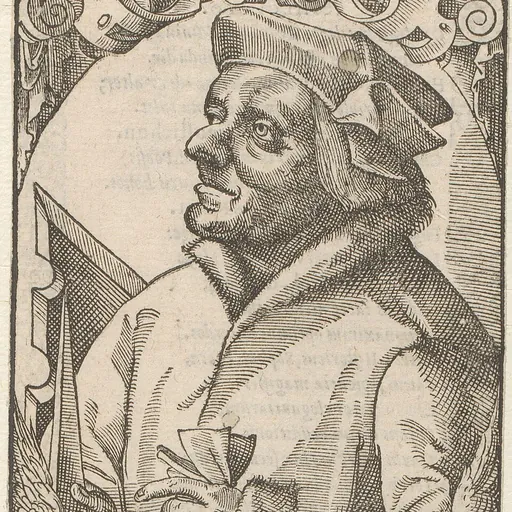
About Johannes Manardus
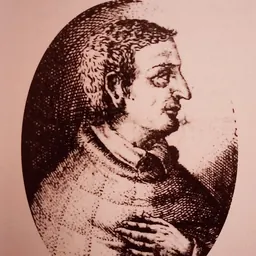
Lived 1462 – 1536 (aged 73). Johannes Manardus was a physician and botanist.
(also known as Manardi or Mainardi; Latin: Iohannes Manardus; 24 July 1462 – 8 March 1536 Having begun to teach in the University of Ferrara, he worked as the personal physician to Pico della Mirandola from 1493 to 1504. From 1513 to 1518, he was the court physician to the Jagiellonian kings of Hungary, Vladislaus II and his son, Louis II. He then returned to the Este household in Ferrara, to provide for the health of Alfonso d'Este. In 1533, he was with another student of Leoniceno, , one of the doctors who attempted to cure Ludovico Ariosto.
In 1494, on the death of Giovanni Pico della Mirandola, Manardo oversaw the publication of his Disputationes adversum Astrologiam divinatricem, in which the philosopher criticized astrological beliefs and practices, marking a clear distinction between astronomy (mathematical or speculative astrology), which studied the harmonic reality of the universe, and astrology (judicial or divining astrology), which supposedly revealed the future of men according to astral conjunctures. Manardo also participated in debates on syphilis, particularly in Ferrara and Leipzig, where he wrote a pamphlet entitled De erroribus Symonis Pistoris de Lypczk circa morbum gallicum, published in 1500 in Nuremberg.
While Manardo had already shown his ability to apply philological principles to medical science in his commentary on Galen's Ars Parva, his humanist erudition was evidenced especially in his Epistolae Medicinales which started to be released in bits and pieces starting in 1528, but which was not fully published until after his death in Basel in 1540, after which it went through numerous posthumous editions. The Epistolae combined the traditions of councils, forums and philological discussions about medicine and botany to the field of pharmacological terminology. The Epistolae, besides criticizing the botanical knowledge informed by Arabic medicine, described the anthers of flowers (belonging to the angiosperms) for the first time, and had a particular influence on François Rabelais who republished it in Lyon, because he saw in Manardo's work both a useful contribution to restoring medicine to the prestige it had once enjoyed in antiquity, as well as being an authoritative voice underlying the renewal of culture.
Publications
Don’t just read it —
keep it.
Full-length biographies made to live with: read them, listen on the way to work, watch them tonight.
- E-book
- Audio
- Video
Instant download · yours to keep · every purchase keeps this site free
Important facts
People in Johannes Manardus's life
Named in this biography and alive at the same time
Related people
Same field, nearest in time




Contemporaries
People whose lives overlapped Johannes Manardus's


Frequently asked questions
Who was Johannes Manardus?
Italian physician (1462-1536)
When was Johannes Manardus born?
Johannes Manardus was born on 24 July 1462 in Ferrara.
When did Johannes Manardus die?
Johannes Manardus died on 8 March 1536 in Ferrara.
What was Johannes Manardus's occupation?
Johannes Manardus was a physician and botanist.
What nationality was Johannes Manardus?
Johannes Manardus's recorded nationality: Duchy of Ferrara.
Sources & further reading
· Wikipedia: Johannes Manardus
Cite this page
APA: Biography.guide. (2026). Johannes Manardus. https://biography.guide/johannes-manardus/
MLA: "Johannes Manardus." Biography.guide, https://biography.guide/johannes-manardus/.
Chicago: "Johannes Manardus." Biography.guide. https://biography.guide/johannes-manardus/.
Data last updated: 2026-09-23 · Spot an error? Report a correction.
Portrait: Wikimedia Commons · author & licence
Page generated 2026-09-27 05:05 UTC