
About Johann Trollmann
Lived 1907 – 1944 (aged 36). Johann Trollmann was a German boxer.
Early life Trollmann was born in , a village part of Gifhorn, into a poor Protestant family. His father, Wilhelm "Schnipplo" Trollmann (1867–1933), was an ethnic German umbrella maker and part-time musician, while his mother, Friederike "Pessy" Weiss (1874–1946), was of Sinti origin. He had eight siblings: his three sisters Maria, Anna, and Wilhelmine, and five brothers Wilhelm, Ferdinand, Julius, Albert, and Heinrich. The family moved to Hanover, settling in the borough Ricklingen, in the early 1910s. Trollmann attended the local Volksschule until third grade.
Trollmann picked up boxing when he was a child and had his first amateur match at eight years old. He was called "Rukeli" by other Sinti, derived from the Romani word for tree , for his upright stance. Trollmann's youngest brothers, Albert ("Benny") and Heinrich ("Stabeli"), also boxed in their private time.
Although the family had kept close ties to the Roma community, the Trollmanns were regarded as assimilated. Trollmann's father had served in Braunschweig's water police during World War I while the family of his mother had long abandoned their itinerant lifestyle.
With the rising popularity of boxing, Trollmann entered officially held matches as a middleweight by 1924. His looks made him popular with the audience, earning him compliments by both women and men during matches and dedicated columns in newspapers in his hometown. He was well-received for his distinct boxing style, which was compared to dance for Trollmann's quick and agile moves. Trollmann's critics primarily focused on his Romani heritage and mocked his technique as "un-German", with some newspapers derisively nicknaming him "the Dancing Gypsy" ("der tanzende Zigeuner") or just "Gipsy/Gibsy" .
Trollmann sought to join the German national boxing team for the 1928 Summer Olympics, but was barred by officials, officially for "inedequate performance". For the middleweight class, the committee instead selected Walter Cunow, who had been previously defeated by Trollmann several times; Cunow himself would be replaced by Albert Leidmann. It has since been suspected that Trollmann's rejection was related to the Weimar government's unwillingness to be represented by a Sinto at the event. The defeat signalled his permanent expulsion from professional boxing, with his licence being revoked in the following autumn, but this did nothing to dismantle his popular image. To avoid further issues with Nazi officials, Trollmann briefly went into hiding in the region around Teutoburg Forest. Trollmann was labelled "feeble-minded since birth" and forcibly sterilised 23 December 1935, as part of Nazi eugenics efforts targeting ethnic minorities. In September 1938, Trollmann divorced from his wife in hopes of covering for his daughter who, under the Nuremberg Laws, would be judged a Mischling for being half-Sintiza.
By 1938, Trollmann had been transferred to Hannover-Ahlem subcamp, but was released the same year. In November 1939 he was drafted into the Wehrmacht as an infantryman. He was stationed in occupied France, Belgium, and Poland, where he was wounded in June 1941 during the early stages of Operation Barbarossa, being returned to Germany as a result; he was officially discharged in early 1942, when Sinti and Roma were banned from serving in the military.
The Gestapo arrested Trollmann in June 1942 while in Hanover. He was tortured during custody at the city's branch office of the and in October of the same year, he was interned at Neuengamme concentration camp in Hamburg. He tried to keep a low profile, but was recognized by Schutzhaftlagerführer , who had been a boxing official before the war.
On 9 June 2010, the anniversary of his championship fight, the German artist collective Bewegung Nurr erected a temporary memorial "9841" in the Berlin Victoria Park to honour Trollmann. The memorial was also displayed the following year in Hannover and in Dresden in 2012 for six weeks. The title refers to Trollmann's prison number.
In 2015, the Italian alternative rock band C.F.F. e il Nomade Venerabile released the song Come fiori dedicated to Trollmann. This song was the inspiration for the theathral show My Inv(f)erno... gypsy life which opened the X edition of the International TeatroLab Festival at the Tagliavini theatre in Novellara in March 2019.
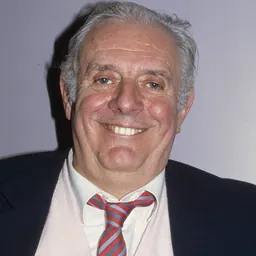
In 2016, Dario Fo, recipient of the 1997 Nobel Prize in Literature, published the book Razza di zingaro based on Trollmann's life.
In 2022, the German television series Babylon Berlin season four, a fictional version of Trollmann is portrayed by Hannes Wegener and is revealed to be the half-brother of one of the series' leads, Lotte Ritter. A fight takes place between Trollman and Willy Bolze, who in real life was Trollman's first professional boxing opponent. The dates are different in the show with their fight taking place in 1931 instead of 1929.
Professional boxing record
Don’t just read it —
keep it.
Full-length biographies made to live with: read them, listen on the way to work, watch them tonight.
- E-book
- Audio
- Video
Instant download · yours to keep · every purchase keeps this site free
Important facts
People in Johann Trollmann's life
Named in this biography and alive at the same time

Related people
Same field, nearest in time



Contemporaries
People whose lives overlapped Johann Trollmann's


Frequently asked questions
Who was Johann Trollmann?
German boxer (1907-1943)
When was Johann Trollmann born?
Johann Trollmann was born on 27 December 1907 in Gifhorn.
When did Johann Trollmann die?
Johann Trollmann died on 9 April 1944 in Wittenberge, Wittenberge concentration camp.
What was Johann Trollmann's occupation?
Johann Trollmann was a boxer.
What nationality was Johann Trollmann?
Johann Trollmann was German.
Sources & further reading
Cite this page
APA: Biography.guide. (2026). Johann Trollmann. https://biography.guide/johann-trollmann/
MLA: "Johann Trollmann." Biography.guide, https://biography.guide/johann-trollmann/.
Chicago: "Johann Trollmann." Biography.guide. https://biography.guide/johann-trollmann/.
Data last updated: 2026-09-26 · Spot an error? Report a correction.
Page generated 2026-09-27 05:15 UTC