
About Johann Strauss II
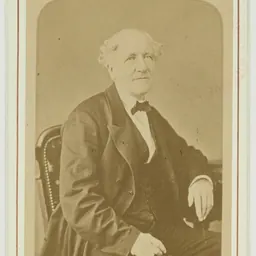
Lived 1825 – 1899 (aged 73). Johann Strauss II was an Austrian conductor and composer.
Johann Baptist Strauss II (; ; 25 October 1825 – 3 June 1899), also known as Johann Strauss Jr., the Younger, the Son , or simply just Johann Strauss, was an Austrian composer of light music, particularly dance music and operettas, as well as a violinist. He composed over 500 waltzes, polkas, quadrilles, marches and other types of dance music, as well as several operettas and a ballet.
In his lifetime, he was known as "The Waltz King", as he played a major role in popularizing the waltz in the 19th century. Some of Johann Strauss's most famous works include "The Blue Danube", "Kaiser-Walzer" (Emperor Waltz), "Tales from the Vienna Woods", "Frühlingsstimmen" (Voices of Spring), and the "Tritsch-Tratsch-Polka". Among his operettas, Die Fledermaus and Der Zigeunerbaron are the best known.
Strauss was the son of Johann Strauss I and his first wife Maria Anna Streim. The two younger brothers, Josef and Eduard Strauss, also became composers of light music, although they were never as well known as their brother.
Early life
Strauss was born into a Catholic family in St Ulrich near Vienna (now a part of Neubau), Austria, on 25 October 1825, to the composer Johann Strauss I and his first wife, Maria Anna Streim. His paternal great-grandfather was a Hungarian Jew – a fact which the Nazis, who lionised Strauss's music as "so German", later tried to conceal. His father did not want him to become a musician but rather a banker. It was only when the father abandoned his family for a mistress, , that the son was able to concentrate fully on a career as a composer with the support of his mother.
Strauss studied counterpoint and harmony with theorist Professor Joachim Hoffmann, He initially formed his small orchestra where he recruited his members at the Zur Stadt Belgrad tavern, where musicians seeking work could be hired easily.
Debut as a composer
Johann Strauss I's influence over the local entertainment establishments meant that many of them were wary of offering the younger Strauss a contract for fear of angering the father. which had been the site of many of his earlier triumphs.
Strauss made his debut at Dommayer's in October 1844, where he performed some of his first works, such as the waltzes "Sinngedichte", Op. 1 and "Gunstwerber", Op. 4 and the polka "Herzenslust", Op. 3.
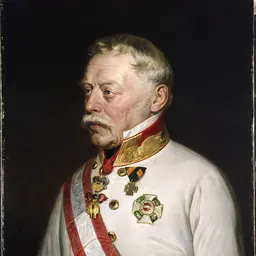
Vienna was wracked by the revolutions of 1848 in the Austrian Empire, and the intense rivalry between father and son became much more apparent. The son decided to side with the revolutionaries. It was a decision that was professionally disadvantageous, as the Austrian royalty twice denied him the much coveted position of KK Hofballmusikdirektor, which was first designated especially for Johann I in recognition of his musical contributions. Further, the younger Strauss was also arrested by the Viennese authorities for publicly playing "La Marseillaise", but was later acquitted. The elder Strauss remained loyal to the monarchy and composed his "Radetzky March", Op. 228 (dedicated to the Habsburg field marshal Joseph Radetzky von Radetz), which would become one of his best-known compositions.
When the elder Strauss died from scarlet fever in Vienna in 1849, the younger Strauss merged both their orchestras and engaged in further tours. performing his "Blue Danube" waltz. He also conducted other pieces of his at the Festival with a smaller orchestra to great acclaim.
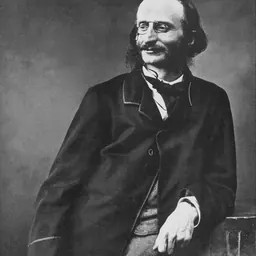
Marriages Strauss married the singer Henrietta Treffz in 1862, and they remained together until her death in 1878. Six weeks after her death, Strauss married the actress Angelika Dittrich. Dittrich was not a fervent supporter of his music, and their differences in status and opinion, and especially her indiscretion, led him to seek a divorce. Also, Philipp Fahrbach denied the younger Strauss the commanding position of the KK Hofballmusikdirektor when the latter first applied for the post. The German operetta composer Jacques Offenbach, who made his name in Paris, also posed a challenge to Strauss in the operetta field.
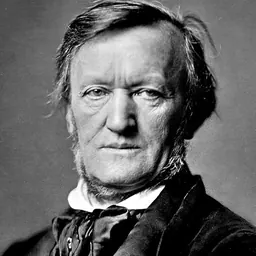
Strauss was admired by other prominent composers: Richard Wagner once admitted that he liked the waltz "Wein, Weib und Gesang" (Wine, Women and Song) Op. 333. Richard Strauss (unrelated), when writing his Rosenkavalier waltzes, said in reference to Johann Strauss, "How could I forget the laughing genius of Vienna?"
Johannes Brahms was a personal friend of Strauss; the latter dedicated his waltz "Seid umschlungen, Millionen!" ("Be Embraced, You Millions!"), Op. 443, to him. A story is told in biographies of both men that Strauss's wife Adele approached Brahms with a customary request that he autograph her fan. It was usual for the composer to inscribe a few measures of his best-known music, and then sign his name. Brahms, however, inscribed a few measures from the "Blue Danube", and then wrote beneath it: "Unfortunately, NOT by Johannes Brahms."
Stage works
The most famous of Strauss's operettas are Die Fledermaus, Eine Nacht in Venedig, and Der Zigeunerbaron. There are many dance pieces drawn from themes of his operettas, such as "Cagliostro-Walzer" Op. 370 (from Cagliostro in Wien), "O Schöner Mai" Walzer Op. 375 (from Prinz Methusalem), "Rosen aus dem Süden" Walzer Op. 388 (from Das Spitzentuch der Königin), and "Kuss-Walzer" op. 400 (from Der lustige Krieg), that have survived obscurity and become well-known. Strauss also wrote an opera, Ritter Pázmán, and was in the middle of composing a ballet, Aschenbrödel, when he died in 1899.
Death and legacy
Strauss often suffered from a variety of lifelong health problems, including hypochondria, several phobias, and bronchial catarrh. In late May 1899, he developed a respiratory illness which developed into pleuropneumonia, and on 3 June 1899 he died in Vienna, at the age of 73. He was buried in the Zentralfriedhof. At the time of his death, he was still composing his ballet Aschenbrödel.
As a result of the efforts by Clemens Krauss, who performed a special all-Strauss programme in 1929 with the Vienna Philharmonic, Strauss's music is now regularly performed at the annual Vienna New Year's Concert. Distinguished Strauss interpreters include Willi Boskovsky, who carried on the tradition of conducting with violin in hand, as was the Strauss family custom, as well as Herbert von Karajan, Carlos Kleiber, Lorin Maazel, Zubin Mehta and Riccardo Muti. In addition, the Wiener Johann Strauss Orchester, which was formed in 1966, pays tribute to the touring orchestras which once made the Strauss family so famous. In 1987 Dutch violinist and conductor André Rieu also created a Johann Strauss Orchestra.
Eduard Strauss surprisingly wound up the Strauss Orchestra on 13 February 1901 after concerts in 840 cities around the globe, and pawned the instruments. The orchestra's last violins were destroyed in the firestorm of the Second World War.
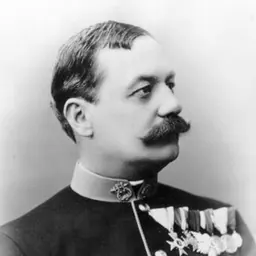
Most of the Strauss works that are performed today may once have existed in a slightly different form, as Eduard Strauss destroyed much of the original Strauss orchestral archives in a furnace factory in Vienna's Mariahilf district in 1907. Eduard, then the only surviving brother of the three, took this drastic precaution after agreeing to a pact between himself and brother Josef that whoever outlived the other was to destroy their works. The measure was intended to prevent the Strauss family's works from being claimed by another composer. This may also have been fueled by Strauss's rivalry with another of Vienna's popular waltz and march composers, Carl Michael Ziehrer.
Two museums in Vienna are dedicated to Johann Strauss II. His residence in the Praterstrasse, where he lived in the 1860s, is now part of the Vienna Museum. The Strauss Museum is about the whole family, with a focus on Johann Strauss II.
Portrayals in the media
The lives of the Strauss dynasty members are the subject of several film and television features, such as The Great Waltz (1938), remade in 1972; The Strauss Family (1972); The Strauss Dynasty (1991) and Strauss, the King of 3/4 Time (1995). Many other films used his works and melodies. Alfred Hitchcock made a biographical film of Strauss in 1934 called Waltzes from Vienna.
After a trip to Vienna, Walt Disney was inspired to create four feature films. One of those was The Waltz King, a loosely adapted biopic of Strauss, which aired as part of The Wonderful World of Disney in the U.S. in 1963. Works
Don’t just read it —
keep it.
Full-length biographies made to live with: read them, listen on the way to work, watch them tonight.
- E-book
- Audio
- Video
Instant download · yours to keep · every purchase keeps this site free
Important facts
more
Johann Baptist Strauss II, Johann Strauss Jr, Jr., Junior, Johann Strauß, the Younger, Walzerkönig, Johann Baptist Strauß, Johann Strauss Jr.Family & relationships
People in Johann Strauss II's life
Named in this biography and alive at the same time




Related people
Same field, nearest in time



Contemporaries
People whose lives overlapped Johann Strauss II's



Frequently asked questions
Who was Johann Strauss II?
Austrian composer (1825-1899)
When was Johann Strauss II born?
Johann Strauss II was born on 25 October 1825 in Neubau, Vienna.
When did Johann Strauss II die?
Johann Strauss II died on 3 June 1899 in Vienna.
What was Johann Strauss II's occupation?
Johann Strauss II was a conductor and composer.
What nationality was Johann Strauss II?
Johann Strauss II was Austrian.
Sources & further reading
· Wikipedia: Johann Strauss II
Cite this page
APA: Biography.guide. (2026). Johann Strauss II. https://biography.guide/johann-strauss-ii/
MLA: "Johann Strauss II." Biography.guide, https://biography.guide/johann-strauss-ii/.
Chicago: "Johann Strauss II." Biography.guide. https://biography.guide/johann-strauss-ii/.
Data last updated: 2026-09-22 · Spot an error? Report a correction.
Page generated 2026-09-27 05:27 UTC