
About Johann Peter Kellner
Lived 1705 – 1772 (aged 66). Johann Peter Kellner was a German composer, organist and cantor.
Johann Peter Kellner (variants: Keller, Kelner; 28 September 1705 – 19 April 1772) was a German organist and composer. He was the father of Johann Christoph Kellner.
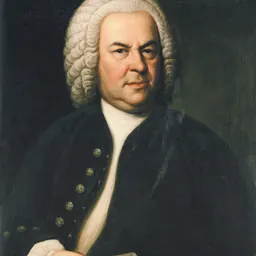
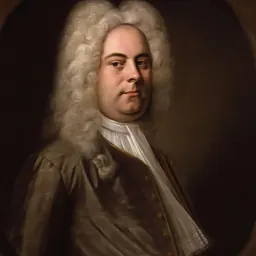
Biography He was born in Gräfenroda, Thuringia, and was intended by his parents to follow his father into a career as a lamp-black merchant. He was devoted to music from childhood, and first learnt singing from the cantor Johann Peter Nagel and keyboard from his son Johann Heinrich Nagel. He studied for a year from 1720 with the organist Johann Schmidt in Zella, followed by a year with the organist Hieronymus Florentinus Quehl (or Kehl) in Suhl, during which time he also studied composition. He knew Johann Sebastian Bach well, although it is not known whether he was taught by him. He was also acquainted with George Frideric Handel. In 1722, he returned to work as a tutor at Gräfenroda for three years. He was appointed cantor of Frankenhain in October 1725, returning to Gräfenroda in December 1727 as assistant cantor. He became cantor after Nagel's death in 1732, and remained in the post for the rest of his life; his pupils included Johann Philipp Kirnberger, Johannes Ringk, and J.E. Rembt. Kellner was admired as an organist, and performed for the Dukes of Coburg and Weimar and the Prince of Sondershausen.
He played an important role in the dissemination of music by Johann Sebastian Bach, through the many manuscript copies made by him and his circle, particularly of keyboard and organ works, and very importantly the six cello suites. These are the earliest or only source of many works, and provide information on their chronology, compositional history, and authenticity. Russell Stinson has determined that the three movement trio sonata for organ BWV 1039a/BWV 1027a was not made by Bach, but almost certainly a transcription made by Kellner of the first two movements of Bach's Sonata in G major for two flutes and continuo, BWV 1039, and the fourth movement of Bach's Sonata in G major for viola da gamba and harpsichord, BWV 1027.
Compositions His keyboard music is in typical galant style, though also shows influences of Bach's Well-Tempered Clavier.
Published in Arnstadt.
Organ Fugue in D minor, BWV Anh. 180 Prelude and Fugue in D minor 2 trios, D major, G major, in Die Orgel II/7 (Lippstadt, 1958) Prelude in C major, in Orgelmusik um Johann Sebastian Bach (Wiesbaden, 1985) 2 fugues in C minor and D major 3 preludes in C major, C major, and G minor 2 preludes and fugues in G major It has been suggested that Kellner composed the Toccata and Fugue in D minor, formerly attributed to J.S. Bach
Chorale settings Herzlich tut mich verlangen, BWV Anh. 47 (Leipzig, 1907) on Herzlich tut mich verlangen Was Gott tut, das ist wohlgetan (Leipzig, 1907) on "Was Gott tut, das ist wohlgetan" Wer nur den lieben Gott lässt walten (Wiesbaden, 1985) on "Wer nur den lieben Gott lässt walten" Lobt Gott, ihr Christen, allzugleich Nun danket alle Gott, on "Nun danket alle Gott" Allein Gott in der Höh sei Ehr on "Allein Gott in der Höh sei Ehr"
Keyboard Certamen musicum, bestehend aus Präludien, Fugen, Allemanden, Couranten, Sarabanden, Giguen, wie *auch Menuetten, 6 suites (1739–1749) 3 Sonates (1752) Manipulus musices, oder Eine Hand voll kurzweiliger Zeitvertreib, 4 suites (1752–1756) Concerto in F major (Leipzig, 1956) 2 fugues in A minor and C major Menuet in A minor 3 preludes and fugues in A minor, C major, and G major 2 sonatas 12 Variationes
Vocal 36 church cantatas, in Stadt- und Universitätsbibliothek, Frankfurt Annual cycle of church cantatas with organ, 1753 (lost)
Recordings Only a few works by Kellner have been recorded so far and often they appear in collections of organ music devoted to a school of composers. The following is a list of websites with information about recordings of music by Johann Peter Kellner:
http://www.allmusic.com/performance/trio-for-organ-in-g-major-arrangement-possibly-by-kellner-bwv-1027a-mq0000942751 http://www.johann-peter-kellner.de/index.php?sub=musikliteratur&page=tontraeger
Don’t just read it —
keep it.
Full-length biographies made to live with: read them, listen on the way to work, watch them tonight.
- E-book
- Audio
- Video
Instant download · yours to keep · every purchase keeps this site free
Important facts
People in Johann Peter Kellner's life
Named in this biography and alive at the same time


Related people
Same field, nearest in time

Contemporaries
People whose lives overlapped Johann Peter Kellner's




Frequently asked questions
Who was Johann Peter Kellner?
German composer and organist (1705–1772)
When was Johann Peter Kellner born?
Johann Peter Kellner was born on 28 September 1705 in Gräfenroda.
When did Johann Peter Kellner die?
Johann Peter Kellner died on 19 April 1772 in Gräfenroda.
What was Johann Peter Kellner's occupation?
Johann Peter Kellner was a composer, organist and cantor.
What nationality was Johann Peter Kellner?
Johann Peter Kellner was German.
Sources & further reading
· Wikipedia: Johann Peter Kellner
· DBpedia: Johann Peter Kellner
Cite this page
APA: Biography.guide. (2026). Johann Peter Kellner. https://biography.guide/johann-peter-kellner/
MLA: "Johann Peter Kellner." Biography.guide, https://biography.guide/johann-peter-kellner/.
Chicago: "Johann Peter Kellner." Biography.guide. https://biography.guide/johann-peter-kellner/.
Data last updated: 2026-09-20 · Spot an error? Report a correction.
Page generated 2026-09-27 05:02 UTC