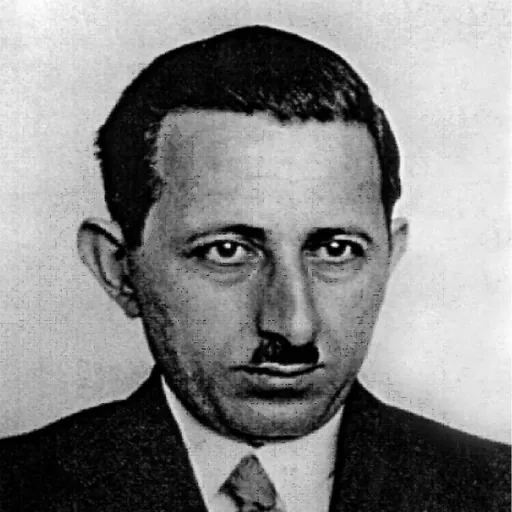
About Johann Nikuradse
Lived 1894 – 1979 (aged 84). Johann Nikuradse was a Russian and German physicist, engineer, university teacher and chemist.
Johann Nikuradse (, Ivane Nikuradze) (November 20, 1894 – July 18, 1979) was a Georgia-born German engineer and physicist. His brother, Alexander Nikuradse, was also a Germany-based physicist and geopolitician known for his ties with Alfred Rosenberg and for his role in saving many Georgians during World War II.
He was born in Samtredia, Georgia (then part of the Kutais Governorate, Imperial Russia) and studied at Kutaisi. In 1919, through the recommendations of the conspicuous Georgian scholar Petre Melikishvili, he went abroad for further studies. The 1921 Sovietization of Georgia precluded his return to homeland and Nikuradse naturalized as a German citizen.
As PhD student of Ludwig Prandtl in 1920, he later worked as a researcher at the Kaiser Wilhelm Institute for Flow Research (now the Max Planck Institute for Dynamics and Self-Organization). He succeeded in putting himself in Prandtl's favour and thus advanced to the position of department head. In spite of his close ties with the Nazi Party, Nikuradse came, in the early 1930s, under fire of the institute's National Socialist Factory Cell Organization whose members accused him of spying for the Soviet Union and of stealing books from the institute. Prandtl initially defended Nikuradse, but was eventually forced to dismiss him in 1934. He then served as a professor at the University of Breslau (1934–1945), and an honorary professor at the Aachen Technical University since 1945.
Nikuradse lived mostly in Göttingen and engaged in hydrodynamics. His best known experiment was published in Germany in 1933. Nikuradse carefully measured the friction that a fluid experiences in turbulent flow through a rough pipe. He cemented grains of sand to the inner wall of a pipe and discovered that, the rougher the surface the greater the friction, and hence a greater pressure loss.
He discovered that:
Don’t just read it —
keep it.
Full-length biographies made to live with: read them, listen on the way to work, watch them tonight.
- E-book
- Audio
- Video
Instant download · yours to keep · every purchase keeps this site free
Important facts
People in Johann Nikuradse's life
Named in this biography and alive at the same time


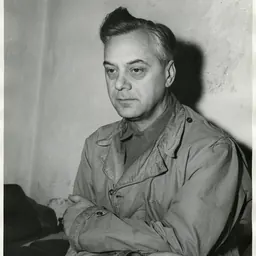



Related people
Same field, nearest in time
Contemporaries
People whose lives overlapped Johann Nikuradse's


Frequently asked questions
Who was Johann Nikuradse?
German physicist (1894–1979)
When was Johann Nikuradse born?
Johann Nikuradse was born on 20 November 1894 in Samtredia.
When did Johann Nikuradse die?
Johann Nikuradse died on 18 July 1979 in Göttingen.
What was Johann Nikuradse's occupation?
Johann Nikuradse was a physicist, engineer, university teacher and chemist.
What nationality was Johann Nikuradse?
Johann Nikuradse was Russian and German.
Sources & further reading
Cite this page
APA: Biography.guide. (2026). Johann Nikuradse. https://biography.guide/johann-nikuradse/
MLA: "Johann Nikuradse." Biography.guide, https://biography.guide/johann-nikuradse/.
Chicago: "Johann Nikuradse." Biography.guide. https://biography.guide/johann-nikuradse/.
Data last updated: 2026-09-23 · Spot an error? Report a correction.
Portrait: Wikimedia Commons · author & licence
Page generated 2026-09-27 05:08 UTC