
Johann Nepomuk Berger
Austrian member of Down Austrian regional parliament, member of Austrian empire council, local politician and lawyer
About Johann Nepomuk Berger
Lived 1816 – 1870 (aged 54). Johann Nepomuk Berger was an Austrian teacher, writer, politician, jurist, statesperson and non-fiction writer.
Johann Nepomuk Berger (pseudonym Sternau; 16 September 1816 – 9 December 1870) was an Austrian lawyer, politician and writer.
Life and early career Berger was born on 16 September 1816 in Prostějov, Moravia, Austria Hungary. He studied law, mathematics and philosophy at the University of Vienna and received his doctorate (jur. dr.) in 1841. In 1844 he began teaching criminal law and natural law at the Theresianum in Vienna. The following year he began a successful law practice in the same city.
Political career On 24 May 1848 Berger was elected as a deputy to the Frankfurt National Assembly (Frankfurter Nationalversammlung) till 23 April 1849, as a member of the Donnersberg (radical left), representing Mähren-Olmütz in Moravia and opposed the proposal to offer the title of Emperor to the King of Prussia. He was considered one of the sharpest and wittiest speakers of the extreme left.
For a while he served at the Imperial Court in Vienna as a court lawyer. In March 1861 he entered the Lower Austrian Diet who in turn elected him in 1863 to the lower house (Chamber of Deputies, Abgeordnetenhaus) of the Imperial Council (Reichsrat) as a leading member of the Liberals and was active as a committee member and speaker. Since 1861 he had been a proponent of Dual Monarchy, writing in "Zur lösung der österreichische verfassungsfrage". Under that arrangement in 1867 he was appointed by the Chairman of the Ministers' Conference Minister-President Beust (1867–1867) to cabinet on 30 December as Minister without Portfolio in what was known as the "Citizen's Ministry" (Bürgerministerium) (1867–1870), because the majority were commoners.
Berger was considered to belong to a minority in the ministry, who desired reconciliation with the Slavic nationalities on the basis of direct elections instead of parliamentary delegations. In this minority were Taaffe, Potocki, Berger and Beust (Hayes 1994, 191–226), lined up against Carl Giskra, Eduard Herbst, Leopold Hasner von Artha, Rudolf Brestel and Baron Ignaz von Plener. He resigned on 15 January 1870 from Taaffe's first cabinet (1868–1870) along with Taaffe and Potocki, when their "Minority Memorandum" which Berger had written was rejected by the Emperor. This favoured making concessions to the federalists, but the Emperor favoured the Liberal majority position. He then left politics.
Legacy In 1894 the 16th district of Vienna (Ottakring) named the Johann-Nepomuk-Berger-Platz in his honour.
Publications Die Preßfreiheit und das Preßgesetz (Wien 1848) (Freedom of the press and press law) Die österreichische Wechselordnung vom 25. Jan. 1850 (1850) (The Austrian Exchange Regulation of 25 Jan. 1850) Kritische Beiträge zur Theorie des österreichischen allgemeinen Privatrechts (Wien 1856) (Critical contributions to the theory of Austrian general private law) Über die Todesstrafen (1864) (Concerning the Death Penalty) Zur Lösung der österreichischen Verfassungsfrage (1861) (For the solution of the Austrian constitutional issue)
Don’t just read it —
keep it.
Full-length biographies made to live with: read them, listen on the way to work, watch them tonight.
- E-book
- Audio
- Video
Instant download · yours to keep · every purchase keeps this site free
Important facts
People in Johann Nepomuk Berger's life
Named in this biography and alive at the same time
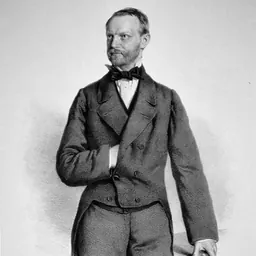

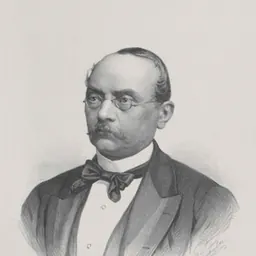
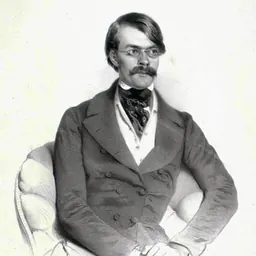

Related people
Same field, nearest in time
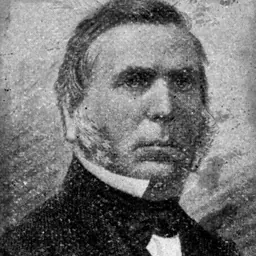
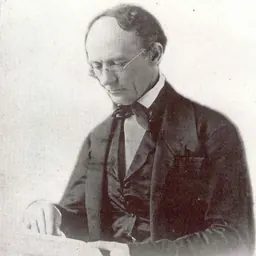



Contemporaries
People whose lives overlapped Johann Nepomuk Berger's




Frequently asked questions
Who was Johann Nepomuk Berger?
Austrian member of Down Austrian regional parliament, member of Austrian empire council, local politician and lawyer (1816-1870)
When was Johann Nepomuk Berger born?
Johann Nepomuk Berger was born on 16 September 1816 in Prostějov.
When did Johann Nepomuk Berger die?
Johann Nepomuk Berger died on 9 December 1870 in Vienna.
What was Johann Nepomuk Berger's occupation?
Johann Nepomuk Berger was a teacher, writer, politician, jurist, statesperson and non-fiction writer.
What nationality was Johann Nepomuk Berger?
Johann Nepomuk Berger was Austrian.
Sources & further reading
· Wikipedia: Johann Nepomuk Berger
· DBpedia: Johann Nepomuk Berger (politician)
Cite this page
APA: Biography.guide. (2026). Johann Nepomuk Berger. https://biography.guide/johann-nepomuk-berger/
MLA: "Johann Nepomuk Berger." Biography.guide, https://biography.guide/johann-nepomuk-berger/.
Chicago: "Johann Nepomuk Berger." Biography.guide. https://biography.guide/johann-nepomuk-berger/.
Data last updated: 2026-09-20 · Spot an error? Report a correction.
Page generated 2026-09-27 05:31 UTC