
About Johann Menge
Lived 1788 – 1852 (aged 63–64). Johann Menge was an explorer, geologist, mineralogist, merchant, language teacher and translator.
Johannes Menge (4 January 1788 – 1852), is regarded as South Australia's first geologist, though he had no formal qualifications. An early explorer of the new colony, he was influential in the settlement of the Barossa Valley.
He has been called the "father of South Australian mineralogy". On the passenger list of the ship that brought him out he was called "Johannes Joseph Menge", but in his letters to newspapers he variously called himself "John" and "Joseph". To fellow-colonists he was "Professor Menge".
History Born in the town of Steinau, Holy Roman Empire, Germany, Menge had little formal education, but was a keen learner and quickly gained a broad knowledge of languages, philosophy, medicine, religion, and geology. His particular interest in geology developed after his early employment by Privy Councillor Karl Cäsar von Leonhard, who collected and sold mineral specimens.
Menge was particularly fond of the Barossa Valley (which he called "New Silesia"), and he lived there for some time in a cave on the banks of Jacob's Creek at its junction with the North Para River. He diverted the flow of Jacob's Creek and created "Menges' Island" where he grew vegetables. He was particularly struck with the possibilities for viticulture. Menge wrote to Angas detailing the Barossa as "the cream, the whole cream and nothing but the cream". When the first German Lutheran immigrants arrived in the state, Menge assisted in their resettlement from their initial residence in the Adelaide Hills to the Barossa Valley. It is claimed that in 1849 Menge made the first discovery of opal in Australia.
Despite Menge being attributed with many early geological discoveries in South Australia, it was Thomas Burr who most keenly and scientifically observed the colony's geology, his Remarks on the Geology and Mineralogy of South Australia being published at Adelaide in 1846, this being the colony's first official government geological report and the first geological book to be published in Australia.
Death In 1852 Menge walked overland to the Victorian gold diggings, where in the winter of that year he died (though news did not reach the newspapers until October) and was buried at Forest Creek (now Chewton, part of Castlemaine) near Bendigo.
Biography A biography of Menge was written by W. A. Cawthorne (1825–1897), an early Adelaide schoolmaster.
Named by Menge Hereinien Range, (between Stockwell and Truro) and its highest peak, Broken, for a fancied resemblance to similarly named German features (possibly Brocken). Belvidere Range Kaiserstuhl
Don’t just read it —
keep it.
Full-length biographies made to live with: read them, listen on the way to work, watch them tonight.
- E-book
- Audio
- Video
Instant download · yours to keep · every purchase keeps this site free
Important facts
People in Johann Menge's life
Named in this biography and alive at the same time
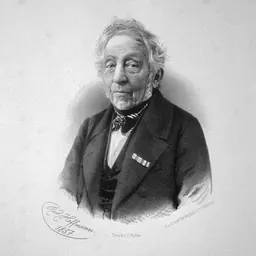

Related people
Same field, nearest in time
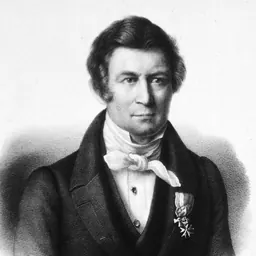
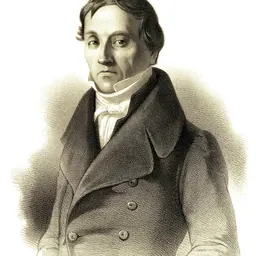



Contemporaries
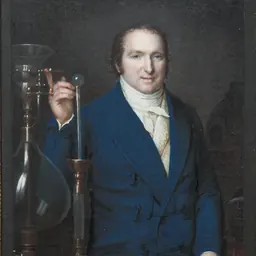
People whose lives overlapped Johann Menge's


Frequently asked questions
Who was Johann Menge?
Australian geologist
When was Johann Menge born?
Johann Menge was born on 24 January 1788 in Steinau an der Straße.
When did Johann Menge die?
Johann Menge died in 1852 in Melbourne.
What was Johann Menge's occupation?
Johann Menge was an explorer, geologist, mineralogist, merchant, language teacher and translator.
What nationality was Johann Menge?
Johann Menge's recorded nationality: Electorate of Hesse.
Sources & further reading
Cite this page
APA: Biography.guide. (2026). Johann Menge. https://biography.guide/johann-menge/
MLA: "Johann Menge." Biography.guide, https://biography.guide/johann-menge/.
Chicago: "Johann Menge." Biography.guide. https://biography.guide/johann-menge/.
Data last updated: 2026-09-20 · Spot an error? Report a correction.
Page generated 2026-09-27 05:14 UTC