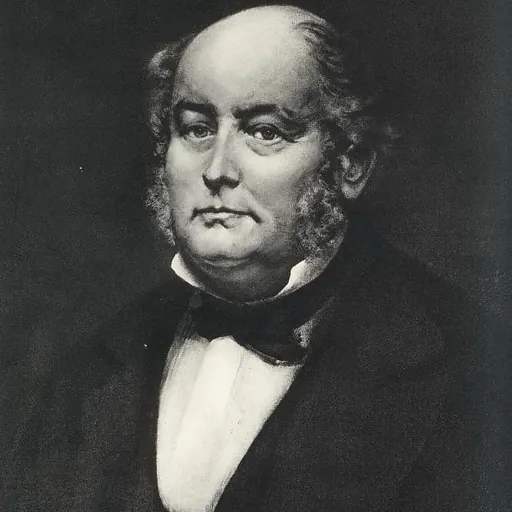
Johann Jakob Bachofen
Swiss jurist and philologist
About Johann Jakob Bachofen
Lived 1815 – 1887 (aged 71). Johann Jakob Bachofen was a Swiss gender studies scholar, judge, philosopher, sociologist, university teacher and legal scholar.
Johann Jakob Bachofen (22 December 1815 – 25 November 1887) was a Swiss antiquarian, jurist, philologist, anthropologist, and professor of Roman law at the University of Basel from 1841 to 1844.
Bachofen is most often connected with his theories surrounding prehistoric matriarchy, or Das Mutterrecht, the title of his seminal 1861 book Mother Right: an investigation of the religious and juridical character of matriarchy in the Ancient World. Bachofen assembled documentation demonstrating that motherhood is the source of human society, religion, morality, and decorum. He postulated an archaic "mother-right" within the context of a primeval Matriarchal religion or Urreligion.
Bachofen became an important precursor of 20th-century theories of matriarchy, such as the Old European culture postulated by Marija Gimbutas from the 1950s, and the field of feminist theology and "matriarchal studies" in 1970s feminism.
Biography Born into a wealthy Basel family active in the silk industry, After attending the Gymnasium, under August Boeckh, Karl Ferdinand Ranke, and Friedrich Carl von Savigny, as well as in Göttingen. After completing his doctorate in Basel, he studied for another two years in Paris, London, and Cambridge.
He was appointed to the Basel chair of Roman law in 1841. In 1842, he travelled to Rome with his father to, as he described it, see his spiritual homeland with his own eyes. In 1845, he also resigned from the Grand Council. Between 1851 and 1852, he travelled to Greece, Magna Graecia, and Etruria. It was the same house which would become the seat of the Civil Register of Basel between 1962 and 1983 and part of the Antikenmuseum Basel und Sammlung Ludwig in the 1980s. In 1865, he married the at the time twenty five-years old Louise Bachofen-Burckhardt from a noble family of Basel. Johann Jakob Bachofen is buried at the Wolfgottesacker cemetery in Basel. The tomb was sculptured by Richard Kissling.
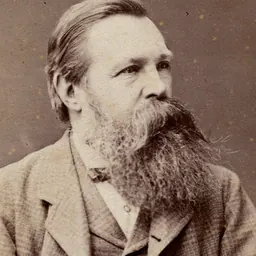
Because of his theoretical commitment to Marxist historiography, Friedrich Engels faulted Bachofen for regarding "religion as the main lever of the world's history" and therefore considered it a "troublesome and not always profitable task to work your way through [his] big volume [i.e. Das Mutterrecht]". Nevertheless, he credited Bachofen with inaugurating research into the history of the family. He summarized Bachofen's views as follows: "(1) That originally man lived in a state of sexual promiscuity, to describe which Bachofen uses the mistaken term "hetaerism"; (2) that such promiscuity excludes any certainty of paternity, and that descent could therefore be reckoned only in the female line, according to mother-right, and that this was originally the case amongst all the peoples of antiquity; (3) that since women, as mothers, were the only parents of the younger generation that were known with certainty, they held a position of such high respect and honor that it became the foundation, in Bachofen's conception, of a regular rule of women (gynaecocracy); (4) that the transition to monogamy, where the woman belonged to one man exclusively, involved a violation of a primitive religious law (that is, actually a violation of the traditional right of the other men to this woman), and that in order to expiate this violation or to purchase indulgence for it the woman had to surrender herself for a limited period." (Friedrich Engels, 1891: see link below)
Emile Durkheim credited Bachofen with upsetting the "old conception" that the father must be "the essential element of the family". Before Bachofen, Durkheim claims that "no one had dreamed that there could be a family organization of which the paternal authority was not the keystone".
In contrast to Engels and Durkheim, the American sociologist Carle Zimmerman criticized Bachofen's work for initiating a research paradigm in sociology that "completely divorced" the study of the family from history, replacing the "constant struggle between familism and individualism" with "imagination". He characterized Bachofen and the other members of this research paradigm, such as J.F. McLennan, L.H. Morgan, E.A. Westermark, and others, as "evolutionary cultists" and considered them to have "destroyed history as a fundamental study in social science" during the late nineteenth and early twentieth centuries.
As has been noted by Joseph Campbell in Occidental Mythology and others, Bachofen's theories stand in radical opposition to the Aryan origin theories of religion, culture and society, and both Campbell and writers such as Evola have suggested that Bachofen's theories only adequately explain the development of religion among the pre-Aryan cultures of the Mediterranean and the Levant, and possibly Southern Asia, but that a separate, patriarchal development existed among the Aryan tribes which conquered Europe and parts of Asia.
Works De legis actionibus de formulis et de condictione. Dissertation Basel. Dieterich, Göttingen 1840. Das Naturrecht und das geschichtliche Recht in ihren Gegensätzen. Basel 1841. reprint: Off. Librorum, Lauterbach 1995, Römisches Pfandrecht. Schweighauser, Basel 1847. reprint: Keip, Goldbach 1997, Ausgewählte Lehren des römischen Civilrechts. Leipzig 1848. reprint: Keip, Goldbach 1997, Versuch über die Gräbersymbolik der Alten. Basel 1859 Oknos der Seilflechter : ein Grabbild : Erlösungsgedanken antiker Gräbersymbolik. Basel 1859. reprint: Beck, München 1923 Das Mutterrecht: eine Untersuchung über die Gynaikokratie der alten Welt nach ihrer religiösen und rechtlichen Natur. Stuttgart: Verlag von Krais und Hoffmann, 1861 ( Internet Archive link) abbreviated edition, ed. Hans-Jürgen Heinrichs. (Suhrkamp Taschenbücher Wissenschaft; Nr.135.) Frankfurt am Main: Suhrkamp, 1975 excerpts edited as Mutterrecht und Urreligion: eine Auswahl, ed. Rudolf Marx. (Kröners Taschenausgabe; Band 52) Leipzig: A. Kröner, 1927; Stuttgart, 1954; 6th ed. 1984 . Antiquarische Briefe vornemlich zur Kenntniss der ältesten Verwandtschaftsbegriffe. 2 vols. Trübner, Strassburg 1880 & 1886. Römische Grablampen nebst einigen andern Grabdenkmälern vorzugsweise eigener Sammlung. Basel 1890 Gesammelte Werke (collected works) ed. Karl Meuli. Basel: B. Schwabe, 1943–1967, in 8 volumes (I-IV, VI-VIII and X) I. Antrittsrede; politische Betrachtungen II. Das Mutterecht, erste Hälfte III. Das Mutterecht, zweite Hälfte IV. Die Sage von Tanaquil VII. Die Unsterblichkeitslehre der orphanischen Theologie: Römische Grablampen VIII. Antiquarische Briefe X. Briefe Myth, Religion and Mother Right Princeton University Press, translated by Ralph Manheim, 1967 An English Translation of Bachofen's Mutterrecht (Mother Right) (1861): A Study of the Religious and Juridical Aspects of Gynecocracy in the Ancient World Volumes 1-5: Vol 1. "Lycia," "Crete," and "Athens" Lewiston, NY: Edwin Mellen, translated by David Partenheimer, 30 January 2008 Vol 2. "Lemnos" and "Egypt" Lewiston, NY: Edwin Mellen, translated by David Partenheimer, 1 April 2007 Vol 3. Orchomenus And the Minyan's And India And Central Asia Lewiston, NY: Edwin Mellen, translated by David Partenheimer, 30 June 2006 Vol 4. "Elis", "The Epizephyrian Locrians", and "Lesbos" Lewiston, NY: Edwin Mellen, translated by David Partenheimer, 1 June 2005, Vol 5. Mantinea; Pythagoreanism and Subsequent Doctrines; The Cantabri; Lewiston, NY: Edwin Mellen, translated by David Partenheimer, 1 January 2003
Don’t just read it —
keep it.
Full-length biographies made to live with: read them, listen on the way to work, watch them tonight.
- E-book
- Audio
- Video
Instant download · yours to keep · every purchase keeps this site free
Important facts
Family & relationships
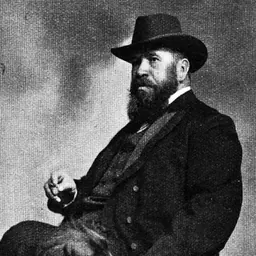
People in Johann Jakob Bachofen's life
Named in this biography and alive at the same time

Related people
Same field, nearest in time

Contemporaries
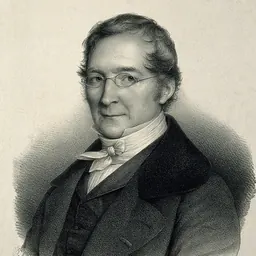
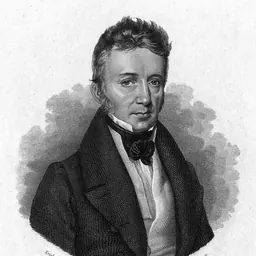
People whose lives overlapped Johann Jakob Bachofen's




Frequently asked questions
Who was Johann Jakob Bachofen?
Swiss jurist and philologist (1815–1887)
When was Johann Jakob Bachofen born?
Johann Jakob Bachofen was born on 22 December 1815 in Basel.
When did Johann Jakob Bachofen die?
Johann Jakob Bachofen died on 25 November 1887 in Basel.
What was Johann Jakob Bachofen's occupation?
Johann Jakob Bachofen was a gender studies scholar, judge, philosopher, sociologist, university teacher and legal scholar.
What nationality was Johann Jakob Bachofen?
Johann Jakob Bachofen was Swiss.
Sources & further reading
· Wikipedia: Johann Jakob Bachofen
· DBpedia: Johann Jakob Bachofen
Cite this page
APA: Biography.guide. (2026). Johann Jakob Bachofen. https://biography.guide/johann-jakob-bachofen/
MLA: "Johann Jakob Bachofen." Biography.guide, https://biography.guide/johann-jakob-bachofen/.
Chicago: "Johann Jakob Bachofen." Biography.guide. https://biography.guide/johann-jakob-bachofen/.
Data last updated: 2026-09-23 · Spot an error? Report a correction.
Portrait: Wikimedia Commons · author & licence
Page generated 2026-09-27 05:06 UTC