
About Johann Georg Graevius
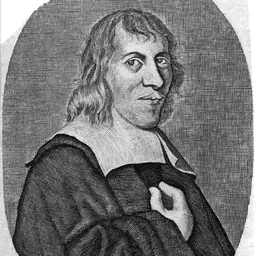
Lived 1632 – 1703 (aged 70). Johann Georg Graevius was a Dutch and German classical philologist, university teacher, historian and polymath.
Johann Georg Graevius (originally Grava or Greffe; Latin: Joannes/Johannes Georgius Graevius; 29 January 1632 – 11 January 1703) was a German classical scholar and critic. He was born in Naumburg, in the Electorate of Saxony.
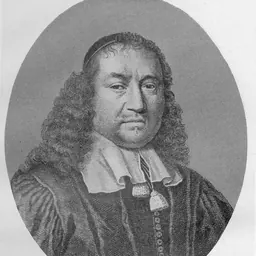
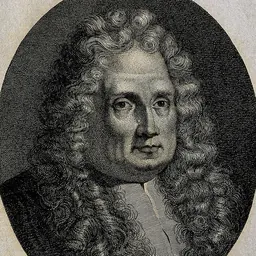
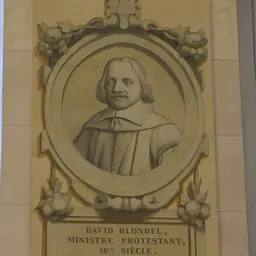
Life Graevius was originally intended for the law, but made the acquaintance of Johann Friedrich Gronovius during a casual visit to Deventer, under whose influence he abandoned jurisprudence for philology. He completed his studies under Daniel Heinsius at Leiden, and among others under the Protestant theologian David Blondel at Amsterdam.
During his residence in Amsterdam, under Blondel's influence he abandoned Lutheranism and joined the Reformed Church; and in 1656 he was called by the Elector of Brandenburg to the chair of rhetoric in the University of Duisburg. Two years afterwards, on the recommendation of Gronovius, he was chosen to succeed that scholar at Deventer; in 1662 he moved to the University of Utrecht, where he occupied first the chair of rhetoric, and in addition, from 1667 until his death, that of history and politics.
Graevius enjoyed a very high reputation as a teacher, and his lecture-room was crowded by pupils, many of them of distinguished rank, from all parts of the world. He was visited by Lorenzo Magalotti and honoured with special recognition by Louis XIV, and was a particular favourite of William III of England, who made him historiographer royal.
His library, rich in antiquarian classical books, was bought after his death by Johann Wilhelm, Elector Palatine (reigned 1690–1716); part of it was later transferred to Heidelberg University Library
Graevius died in Utrecht in 1703.
Work His two most important works are the Thesaurus antiquitatum Romanarum (1694–1699, in 12 volumes), and the Thesaurus antiquitatum et historiarum Italiae published after his death, and continued by the elder Pieter Burmann (1704–1725), although these have not always been looked upon favourably. His editions of the classics, although they marked a distinct advance in scholarship, are now for the most part superseded. They include Hesiod (1667), Lucian, Pseudosophista (1668), Justin, Historiae Philippicae (1669), Suetonius (1672), Catullus, Tibullus et Propertius (1680), and several of the works of Cicero.
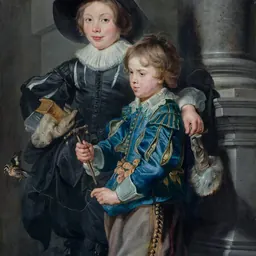
He also edited many of the writings of contemporary scholars. He corresponded with scholars throughout Europe including with Albert Rubens, the son of Peter Paul Rubens who was a prominent classical scholar and numismatist. He posthumously edited a collection of Albert Rubens's essays on ancient clothing, coins and gems, which was published in 1665 by Balthasar Moretus in Antwerp under the title De re vestiaria veterum, [...], et alia eiusdem opuscula posthuma.
Don’t just read it —
keep it.
Full-length biographies made to live with: read them, listen on the way to work, watch them tonight.
- E-book
- Audio
- Video
Instant download · yours to keep · every purchase keeps this site free
Important facts
People in Johann Georg Graevius's life
Named in this biography and alive at the same time


Related people
Same field, nearest in time




Contemporaries
People whose lives overlapped Johann Georg Graevius's





Frequently asked questions
Who was Johann Georg Graevius?
German academic (1632–1703)
When was Johann Georg Graevius born?
Johann Georg Graevius was born on 29 January 1632 in Naumburg.
When did Johann Georg Graevius die?
Johann Georg Graevius died on 11 January 1703 in Utrecht.
What was Johann Georg Graevius's occupation?
Johann Georg Graevius was a classical philologist, university teacher, historian and polymath.
What nationality was Johann Georg Graevius?
Johann Georg Graevius was Dutch and German.
Sources & further reading
· Wikipedia: Johann Georg Graevius
· DBpedia: Johann Georg Graevius
Cite this page
APA: Biography.guide. (2026). Johann Georg Graevius. https://biography.guide/johann-georg-graevius/
MLA: "Johann Georg Graevius." Biography.guide, https://biography.guide/johann-georg-graevius/.
Chicago: "Johann Georg Graevius." Biography.guide. https://biography.guide/johann-georg-graevius/.
Data last updated: 2026-09-20 · Spot an error? Report a correction.
Page generated 2026-09-27 05:28 UTC