
Johann Georg August Wirth
German journalist and author
About Johann Georg August Wirth
Lived 1798 – 1848 (aged 49). Johann Georg August Wirth was a German opinion journalist, writer, politician and jurist.
Johann Georg August Wirth (20 November 1798 – 26 July 1848 ) was a German lawyer, writer and politician during the Vormärz period that preceded the German revolutions of 1848–1849.
Life Born in Hof, Bavaria, Wirth was married to . The marriage gave birth to the journalist Max Wirth and the co-founder of the Frankfurter Friedensverein . The writer Rudolf Lavant was a great-nephew of Wirth.
Wirth first attended his hometown's grammar school as a classmate of Karl Ludwig Sand and in 1811 moved to the in Bayreuth. After graduating from high school, he studied law at the Friedrich-Alexander-Universität. In December 1817 Wirth was, together with other Corps-Renoncen, co-founder and committee member of the Erlanger Burschenschaft (Arminia). Wirth left the fraternity at the beginning of January 1818, became senior of the Corps Franconia and remained a student of the Corps throughout his life. Then he practiced in Schwarzenbach an der Saale and from 1823 in the Bayreuth chancellery of Gottlieb Keim.
At the end of May 1832 Wirth organized the Hambacher Fest together with his comrade-in-arms . After a speech before many thousands of people, in which he called for the formation of a "Union of the Patriots" and beyond "the united Free States of Germany" had already let "the confederate republican Europe" live high, Wirth was remanded in custody and taken to Zweibrücken.
In prison he wrote a pamphlet with his political ideas entitled: Die politische Reform Deutschlands.. In June 1833 he was tried by a jury in the spectacular trial in Landau and was acquitted - Wirth had defended himself in an eight-hour speech and declared the princes high traitors. But in November 1833, the Zuchtpolizeigericht Zweibrücken sentenced him to the maximum sentence of two years in prison for insulting domestic and foreign authorities. He was imprisoned in Kaiserslautern. In the prison there he wrote the Fragmente zur Kulturgeschichte der Menschheit. After his release in December 1835 he was taken to Passau to serve a sentence there. However, he managed to escape. At the end of December 1836 he came to France and in 1839 to Kreuzlingen in Thurgau (Switzerland). There he edited the articles published by the Konstanz publisher Ignaz Vanotti (1798-1870) and the Geschichte der Deutschen. In 1847 he moved to Karlsruhe. In the Prussian principalities he was elected to the Frankfurt Parliament, but died shortly thereafter in Frankfurt on 26 July 1848 Robert Blum gave the eulogy.
Memorial Sculpture Tribune II by the sculptor Andreas Theurer in honour of Wirth with a stylized side of the German Tribune in front of the Freiheitshalle in Hof.
The city of Hof erected a monument to the 150th anniversary of Wirth's death in 1998, which honours the person of Wirth by making his work as a fighter for freedom of the press its content. It was created by the sculptor Andreas Theurer and has the shape of a wave-shaped newspaper page lying on the ground. The surface consists of black and white cobblestones whose structure is reminiscent of a typeface. The pixel writing establishes a reference to the present and shows the title "Deutsche Tribüne" as a detail. The "D" of "Deutsch" is missing so that Wirth's struggle for German unity is not associated with dull nationalism. Before the inauguration, the then Federal President Roman Herzog remarked: "This will double the number of republican monuments in Germany".
In 2012, the monument was removed from its original location in the city centre and a second, smaller version was erected near the Freiheitshalle.
Honours
The in Kulmbach, an institution for journalist training, has been awarding the Johann Georg August Wirth Prize since 2009. A Johann-Georg-August-Wirth-Realschule exists in Hof.
In 1998, the volume Die Rechte des deutschen Volkes. Eine Verteidigungsrede vor den assise zu Landau (1833) by Wirth was published in the series Bibliothek Europäischer Freiheitsbewegungen in the German Federal Archives.
Work Entwurf eines Strafgesetzbuches. Ein Beytrag zur Erörterung der Frage: "ob der Entwurf des Strafgesetzbuches für Baiern vom J. 1822 dem zur Zeit möglichen Grade von Vollständigkeit u. Gerechtigkeit entspreche?“. Bayreuth 1825 Numerised Censurfreye Brochüren als Entschädigung für die Abonnenten des Inlandes. Erste Lieferung. München 1831 Numerised Johann Georg August Wirth (edit.): , 1831–1832. Reprint K. G. Saur, Munich 2007 Review: perlentaucher.de, in Perlentaucher, with redirection to Die Zeit Die politische Reform Deutschlands. Noch ein dringendes Wort an die deutschen Volksfreunde. Strasburg 1832 Digitalisat Das Nationalfest der Deutschen zu Hambach. 2 volumes. Christmann, Neustadt 1832. Das Nationalfest der Deutschen zu Hambach. Issue 1, issue 2) Das Recht des deutschen Volkes und die Beschlüsse des Frankfurter Bundestages vom 28. Juni 1832. o. O. and o. J. Numerised Fragmente zur Culturgeschichte. Erster Theil. J. J. Tascher, Kaiserslautern 1835 Numerised Fragmente zur Culturgeschichte. Zweiter Theil. J. J. Tascher, Kaiserslautern 1836 Numerised Die politisch-reformatorische Richtung der Deutschen im XVI. und XIX. Jahrhundert. Ein Beitrag zur Zeitgeschichte. Verlag der Deutschen Volkshalle, Belle-Vue 1841 Numerised Denkwürdigkeiten aus meinem Leben. Erstes Bändchen. Literarisches Institut, Emmishofen bei Konstanz 1844 Numerised Die Geschichte der deutschen Staaten. Von der Auflösung des Reiches bis auf unsere Tage. Vol. 1. Kunstverlag, Karlsruhe 1847 Numerised Die Geschichte der deutschen Staaten. 2 vol. 2. durchausverbesserte aufl. Hoffmannsche Verlags-Buchhandlung, Karlsruhe 1846 Numerised Die Geschichte der deutschen Staaten. 3 vol. 2. durchausverbesserte aufl. Hoffmannsche Verlags-Buchhandlung, Karlsruhe 1846 Numerised Die Geschichte der deutschen Staaten. 4 vol. 2. durchausverbesserte aufl. Hoffmannsche Verlags-Buchhandlung, Karlsruhe 1846 Numerised Ein Wort an die deutsche Nation. Kunstverlag, Karlsruhe 1848 Numerised J. G. A. Wirth’s Letztes Wort an die deutsche Nation. Mit Randglossen von M. Wirth. Sauerländer, Frankfurt am Main 1849 Numerised
Don’t just read it —
keep it.
Full-length biographies made to live with: read them, listen on the way to work, watch them tonight.
- E-book
- Audio
- Video
Instant download · yours to keep · every purchase keeps this site free
Important facts
Family & relationships
People in Johann Georg August Wirth's life
Named in this biography and alive at the same time


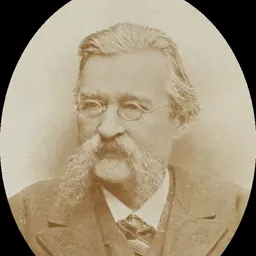
Related people
Same field, nearest in time


Contemporaries
People whose lives overlapped Johann Georg August Wirth's






Frequently asked questions
Who was Johann Georg August Wirth?
German journalist and author (1798-1848)
When was Johann Georg August Wirth born?
Johann Georg August Wirth was born on 20 November 1798 in Hof.
When did Johann Georg August Wirth die?
Johann Georg August Wirth died on 26 July 1848 in Frankfurt.
What was Johann Georg August Wirth's occupation?
Johann Georg August Wirth was an opinion journalist, writer, politician and jurist.
What nationality was Johann Georg August Wirth?
Johann Georg August Wirth was German.
Sources & further reading
· Wikipedia: Johann Georg August Wirth
· DBpedia: Johann Georg August Wirth
Cite this page
APA: Biography.guide. (2026). Johann Georg August Wirth. https://biography.guide/johann-georg-august-wirth/
MLA: "Johann Georg August Wirth." Biography.guide, https://biography.guide/johann-georg-august-wirth/.
Chicago: "Johann Georg August Wirth." Biography.guide. https://biography.guide/johann-georg-august-wirth/.
Data last updated: 2026-09-22 · Spot an error? Report a correction.
Page generated 2026-09-27 05:23 UTC