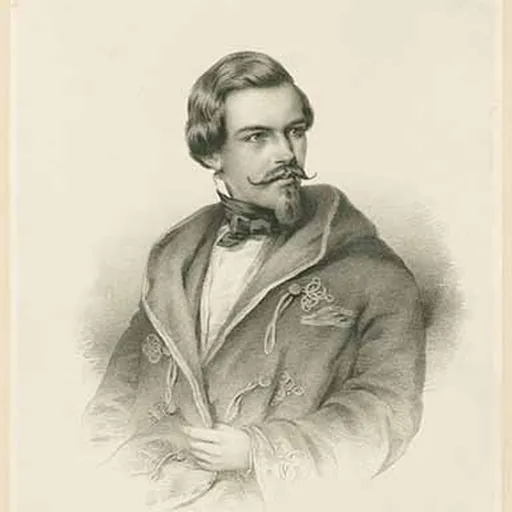
About Johann August von Eisenhart
Lived 1826 – 1905 (aged 79). Johann August von Eisenhart was a German politician, beamter, jurist and ludwig II of Bavaria.
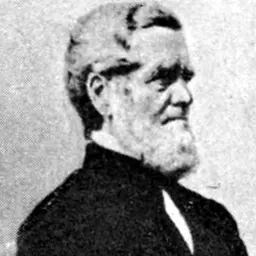
August von Eisenhart (3 November 1826 – 21 December 1905) was a Bavarian lawyer who became a politician. Between 1870 and 1876 he served as the king's cabinet secretary. The appointment was almost certainly made at the instigation of the powerful Interior Minister Johann von Lutz. The king himself became (at best) increasingly reclusive during the 1870s: commentators indicate that von Eisenhart became, in effect, the sole intermediary between King Ludwig II and the outside world - which included the other members of the Bavarian government.
Early life and education Johann August Eisenhart was born in Munich, where Ignaz Eisenhart (1790–1864), his father, worked as a senior appeal court judge. Both his parents had come originally from Württemberg. His studies completed, he joined the Bavarian Justice Service. By this time Eisenhart was well established in his career. Promotion followed the marriage when, at the end of 1857, he was appointed to a junior judicial role as an "assessor" at the Munich district court. Further promotion followed in 1859 when he was appointed to the same position at the Upper Appeal Court in Freising. When the Upper Appeal Court was transferred to Munich in 1862, Eisenhart moved back with it, by now a judge of the appeal court. For the rest of the 1860s his career continued to progress along its upward trajectory. The appointment was almost certainly made at the instigation of Johann von Lutz, head of the Bavarian government. The king was becoming ever more reluctant to see people, and often stayed away from the capital for months on end, preferring the seclusion afforded by his growing collection of opulent remotely located "modern castles". That left the running of Bavaria in the hands of the government. Von Eisenhart became the only link between the king and the government. It was potentially a highly influential position, especially since the dutiful sober minded official had little natural sympathy with the king's fantastical visions and opinions. Von Eisenhart's own politics seem to have combined powerful monarchist instincts with a lawyerly respect for the institutions of state and an enthusiasm the enlightenment thinking which had become mainstream among intellectuals across Western Europe in the aftermath of the French Revolution. But sources insist that von Eisenhart's natural timidity and strong sense of duty meant that he never exploited his position for personal gain, nor indeed to promote any political vision of his own. His principal challenges seem to have been those involved in "managing the king" who could be powerfully resistant to following the advice coming from his ministers in Munich. Through the critical unification process of 1870, choreographed from Berlin by Chancellor Bismarck, the Bavarian king needed particularly careful handling. In the end the treaty of 23 November 1870 whereby the Kingdom of Bavaria entered into an "eternal union" with the North German Confederation was ratified by the king, according to one source, only "through the energetic advice" ("...das energische Zuraten...") of Cabinet Secretary von Eisenhart. Other sources insist that, following the shock of defeat in 1866, Ludwig's consent was based on having reached for himself the pragmatic conclusion that Bavaria had no choice but to support the union of a "small German" state - excluding Austria and / or that large and at this stage secret cash payment arranged by Bismarck played their part. In 1886, which was the year of his sixtieth birthday, he received a further honour, created a "Commander of the Order of the Bavarian Crown"
Don’t just read it —
keep it.
Full-length biographies made to live with: read them, listen on the way to work, watch them tonight.
- E-book
- Audio
- Video
Instant download · yours to keep · every purchase keeps this site free
Important facts
People in Johann August von Eisenhart's life
Named in this biography and alive at the same time
Related people
Same field, nearest in time



Contemporaries
People whose lives overlapped Johann August von Eisenhart's






Frequently asked questions
Who was Johann August von Eisenhart?
German politician (1826-1905)
When was Johann August von Eisenhart born?
Johann August von Eisenhart was born on 3 November 1826 in Munich.
When did Johann August von Eisenhart die?
Johann August von Eisenhart died on 21 December 1905 in Munich.
What was Johann August von Eisenhart's occupation?
Johann August von Eisenhart was a politician, beamter, jurist and ludwig II of Bavaria.
What nationality was Johann August von Eisenhart?
Johann August von Eisenhart was German.
Sources & further reading
· Wikipedia: Johann August von Eisenhart
· DBpedia: August von Eisenhart
Cite this page
APA: Biography.guide. (2026). Johann August von Eisenhart. https://biography.guide/johann-august-von-eisenhart/
MLA: "Johann August von Eisenhart." Biography.guide, https://biography.guide/johann-august-von-eisenhart/.
Chicago: "Johann August von Eisenhart." Biography.guide. https://biography.guide/johann-august-von-eisenhart/.
Data last updated: 2026-09-23 · Spot an error? Report a correction.
Portrait: Wikimedia Commons · author & licence
Page generated 2026-09-27 05:08 UTC