
About Johan Rudolph Thorbecke
Lived 1798 – 1872 (aged 74). Johan Rudolph Thorbecke was a Dutch jurist, politician, historian, university teacher, political scientist and author.
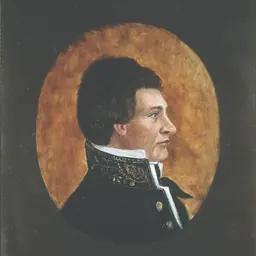
Johan Rudolph Thorbecke (14 January 1798 – 4 June 1872) was a Dutch liberal statesman. As the leading figure in the Constitutional Reform of 1848, he is considered the founder of parliamentary democracy in the Netherlands, and the most important Dutch statesman of the 19th century.
Born in Zwolle in 1798 to a financially struggling Lutheran merchant family of German origin, Thorbecke attended a Latin school and studied law and humanities in Amsterdam and Leiden. After receiving his doctorate in 1820, he spent four years in Germany, where met contemporary philosophers and was introduced to the ideas of Romanticism and historism. After his return to the Netherlands, he became a professor, first at Ghent University and, after the Belgian Revolution, at Leiden University. In Leiden, Thorbecke's writings became increasingly political in nature, and he soon became a leading figure in the charge for constitutional reform. He was elected to the House of Representatives in 1844, and made an unsuccessful attempt at constitutional reform as part of a group called the Negenmannen.
Amid the Revolutions of 1848, King William II appointed a constitutional reform commission headed by Thorbecke. In this capacity, he virtually single-handedly wrote a new Constitution of the Netherlands, which was adopted on 3 November of that year in slightly amended form. Among the changes introduced by the new Constitution were ministerial responsibility and direct elections to the House of Representatives, thus turning the Netherlands into a constitutional monarchy with a parliamentary system. During his first ministry (1849–1853), Thorbecke built upon the Constitution with several organic laws, including the Municipalities Act, which introduced local self-government. During his second ministry (1862–1866), he introduced the Hogere Burgerschool, which expanded secondary education to the middle class.
Thorbecke died in 1872, a year into his third ministry. His 1848 Constitution and his subsequent reforms had a lasting impact on Dutch politics and society. He has been commemorated with three statues, in Amsterdam, Zwolle and The Hague.
Early life and education
Johan Rudolph Thorbecke was born in Zwolle on 14 January 1798. He was descended from a Lutheran family originally from Osnabrück, of which one member had settled in Zwolle in the mid-17th century, where he worked as a postmaster and freight forwarder. His descendants continued to engage in trade and were members of the upper middle class. Thorbecke's father Frederik Willem was a tobacco manufacturer, while his mother Christine Regina was his father's cousin, born in Osnabrück. Frederik Willem's business suffered badly from the anti-British policies of the French occupiers, and his tobacco factory went bankrupt in 1803, after which he was unable to find another source of employment and would spend most of his time on the education of Johan Rudolph and his younger brother.
Johan Rudolph proved to be diligent and exemplary at a young age, showing intelligence and curiosity. Because of the sacrifices of his parents, who continued to struggle with financial problems, he was able to enjoy a decent education. He enjoyed primary education in his birthplace and in Amsterdam, where he lived until 1806, and attended a Latin school back in Zwolle, where he received a thorough education in Greek and Latin languages and antiquity and mathematics. Most of all he felt drawn to history, particularly to the works of Arnold Hermann Ludwig Heeren, professor of philosophy and history at the University of Göttingen. Thorbecke was named primus of his class and, in accordance with custom at the time, delivered a public Latin oration on Christiaan Gottlieb Heyne, the then-recently deceased professor of classical philology in Göttingen.
After graduating from the Latin school in the summer of 1814, Thorbecke continued his studies at the Athenaeum Illustre of Amsterdam, moving in with the Lutheran minister G.F. Sartorius, a friend of his father's. He attended lectures of Jean Henri van Swinden, and David Jacob van Lennep became his foremost mentor. When the philological faculty of Leiden University organised a competition on Cicero's De Oratore in 1817, Thorbecke submitted an entry entitled De principio philosophiae moralis secundum Cicernonem, and was awarded a gold medal on 8 February 1818. That same year, he enrolled at Leiden University, where he continued his studies and was awarded two more gold medals for treatises in academic competitions, one on Cicero's philosophy in 1818, and on the systems of the Greek philosophers in 1820. He received his doctorate on 19 June 1820 summis honoribus after defending his thesis entitled Disputatio historico-critica inauguralis de C. Asinio Pollione
Academic career In Germany (1820–1824)
Shortly after receiving his doctorate, Thorbecke was granted a state scholarship of 1,200 guilders for a journey to the foremost universities and libraries in Germany. The scholarship had been made possible by the efforts of Leiden professor Joan Melchior Kemper, who was a friend of education minister Anton Reinhard Falck, and was renewed the following year. Thorbecke started his journey in the fall of 1820, at the age of 22, and travelled through Germany for two years, visiting Göttingen, Marburg, Giessen, Heidelberg, Stuttgart, München, Erlangen, Jena, Dresden and Berlin. In Giessen, he was offered but declined a professorship, and met the philosopher Friedrich Wilhelm Joseph Schelling. In Erlangen, where he stayed in mid-1821, he befriended August von Platen-Hallermünde. In Berlin, he stayed with Henriette Solger, widow of the philosopher Karl Wilhelm Ferdinand Solger, who had died in 1819.
Thorbecke returned to the Netherlands in 1822, hoping to succeed Van de Wijnperse as professor of philosophy in Leiden, but J. Nieuwenhuis, professor in Deventer, was chosen instead, as Thorbecke was deemed too young. A discouraged and somewhat embittered Thorbecke returned to Germany, where he lectured as an extraordinary professor at Giessen and subsequently Göttingen, where he gave open lectures on the philosophy of history. He met and befriended the poet and philologist Ludwig Tieck in Dresden in 1821, and in 1824 he published his treatise Über das Wesen und den organischen Charakter der Geschichte ("On the Nature and the Organic Character of History") at Göttingen, his first academic paper since obtaining his doctorate.
In the four years he spent in Germany, Thorbecke was introduced to historism and Romanticism, and developed emotionally and spiritually. He was introduced to Friedrich Schelling's speculative natural philosophy and Georg Wilhelm Friedrich Hegel's history of the world-soul, but quickly distanced himself from such methodic-philosophical approaches to history. Instead, he became an adherent of the German historical school. In his writings, he articulated a kind of idealistic empiricism aimed at explaining organic growth in history. Each era had its own significance as a historical space of individuality and meaning-making, while at once being part of an ever-evolving whole, and serving a purpose in that process. As an expression of this duality of diachronicity and synchronicity, one must identify the era's unique principles of structure, and the organic renewal necessary to meet its needs. Thorbecke would maintain the philosophical principles he found during his time in Germany for the rest of his, and sought to apply these principles in his later political career.
In Ghent and Leiden (1824–1844) Upon his return to the Netherlands in the fall of 1824, Thorbecke settled in Amsterdam, where he wrote his first political work of significance, Bedenkingen aangaande het Regt en Den Staat ("Concerns about the Law and the State"). The work, which was published anonymously in 1825, was a reflection on the Brieven over het natuurregt ("Letters on Natural Law"), published in 1823 by professor of Dutch language and philology Johannes Kinker, which were in turn directed against Willem Bilderdijk's legal theory. It managed to gain some attention, and Anton Reinhard Falck, who had previously provided Thorbecke with his state scholarship, now secured him a professorship of political history at Ghent University, which had been established in 1817 by King William I. He arrived in Ghent in July 1825, and delivered his inaugural address, entitled De disciplinarum historicopoliticarum argumento, on 4 October of the same year.
Thorbecke enjoyed his time in Ghent. In his first year, he taught history of European politics, but later expanded to statistics and public economy. Among his students were Jules Van Praet and Theodorus Marinus Roest van Limburg. George Bergmann, another one of his students, would describe Thorbecke as "a thin, stiff, neatly dressed gentleman from Holland, who lived a very frugal life and spent most of his days in his study", and his lectures as "thoroughly learned, well-studied and correctly recited, but appreciated to their true worth by only a few students". During this time, he published a number of works on the subject of education. In these works, written in a time of Roman Catholic opposition to the state's monopoly on education, Thorbecke argued for freedom of education. His time in Ghent came to an abrupt end in 1830, when the outbreak of the Belgian Revolution prompted him to return to the north. The following year, Thorbecke became professor of Diplomacy and Modern History at the Leiden University,
Four years later, with much of Europe convulsed by the Revolutions of 1848, William II agreed to the formation of a commission tasked with drafting a constitutional revision and forming a new government. On 17 March 1848, he appointed the commission, which included Thorbecke, De Kempenaer, Storm, Dirk Donker Curtius and Lodewijk Caspar Luzac. The commission first met two days later, on a Sunday morning, and unanimously elected Thorbecke as its chair. The commission's task to form a new government was thwarted by London envoy Gerrit Schimmelpenninck, who offered his services to the King as formateur. When the commission had almost finished assembling a new government, in which Thorbecke would have become interior minister, the King relieved the commission of this task, having appointed Schimmelpenninck instead. His government took office on 25 March, and included some members of the commission, though not Thorbecke, who had little confidence in Schimmelpenninck and had opposed his appointment.
The commission finalised its proposals on 9 April, and presented its report on 11 April. The proposals included the introduction of ministerial responsibility, the direct election of the House of Representatives and the Senate, as well as provincial and municipal councils, local self-government and freedom of church denominations and education. The changes were in large part created by Thorbecke and based on his earlier constitutional writings. The draft constitution was somewhat reluctantly approved by the States General in slightly amended form, and was proclaimed on 3 November 1848.
First ministry (1848–1853)
Liberals won a majority in the inaugural November 1848 general election, with Thorbecke elected in four districts and taking his seat for the district of Leiden. The incumbent ministry, led by Donker Curtius and De Kempenaer, attempted to enact organic laws relating to elections and municipalities, but faced a number of defeats and resignations, as well as fierce parliamentary opposition from Thorbecke. The ministry resigned in September 1849 after the House adopted a hostile response to the speech from the throne drafted by Thorbecke. Although Thorbecke was widely seen as the logical formateur of a new ministry, King William III, who had ascended the throne in March 1849, was opposed to him, regarding him as unmanageable and anti-monarchist. Despite this initial reluctance, William III conceded in October 1849 and appointed Thorbecke as formateur. Thorbecke's first ministry took office on 13 November, with Thorbecke himself serving as interior minister. He simultaneously resigned his seat in the House, regarding the two offices incompatible.
As interior minister, Thorbecke set about preparing several organic laws in early 1850. In early May of that year, he tabled bills for the Elections Act and the Provinces Act, which the De Kempenaer ministry had previously attempted in vain to enact. Despite parliamentary opposition from Guillaume Groen van Prinsterer, the two bills passed in 12 July 1850. These legislative successes were followed by the Nationality Act and the Parliamentary Inquiry Act in July 1850. Most important of the organic laws, however, was the Municipalities Act, which was tabled on 3 March 1851. The bill sought to put the municipal council at the head of the municipality and establish municipal self-government, and was adopted on 29 June 1851. With these organic laws, Thorbecke sought to put to practice and expand upon the Constitution 1848, and became the basis for democratic government in the Netherlands. He was installed as a member of the House of Representatives on 27 June 1853, Thorbecke died at his home in The Hague two days later, on 4 June 1872, at the age of 74.
Thorbecke wrote many articles on history and several newspaper articles (especially in the Journal de La Haye) on topics of the day. He published a study on the philosophy of history (in German). Thorbecke's parliamentary speeches have been published.
Don’t just read it —
keep it.
Full-length biographies made to live with: read them, listen on the way to work, watch them tonight.
- E-book
- Audio
- Video
Instant download · yours to keep · every purchase keeps this site free
Important facts
People in Johan Rudolph Thorbecke's life
Named in this biography and alive at the same time





Related people
Same field, nearest in time


Contemporaries
People whose lives overlapped Johan Rudolph Thorbecke's





Frequently asked questions
Who was Johan Rudolph Thorbecke?
Dutch statesman (1798-1872)
When was Johan Rudolph Thorbecke born?
Johan Rudolph Thorbecke was born on 14 January 1798 in Zwolle.
When did Johan Rudolph Thorbecke die?
Johan Rudolph Thorbecke died on 4 June 1872 in The Hague.
What was Johan Rudolph Thorbecke's occupation?
Johan Rudolph Thorbecke was a jurist, politician, historian, university teacher, political scientist and author.
What nationality was Johan Rudolph Thorbecke?
Johan Rudolph Thorbecke was Dutch.
Sources & further reading
· Wikipedia: Johan Rudolph Thorbecke
· DBpedia: Johan Rudolph Thorbecke
Cite this page
APA: Biography.guide. (2026). Johan Rudolph Thorbecke. https://biography.guide/johan-rudolph-thorbecke/
MLA: "Johan Rudolph Thorbecke." Biography.guide, https://biography.guide/johan-rudolph-thorbecke/.
Chicago: "Johan Rudolph Thorbecke." Biography.guide. https://biography.guide/johan-rudolph-thorbecke/.
Data last updated: 2026-09-20 · Spot an error? Report a correction.
Page generated 2026-09-27 05:22 UTC