
About Johan Huizinga
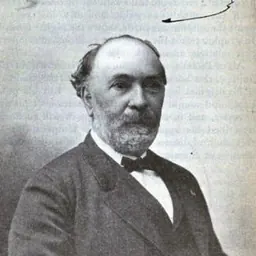
Lived 1872 – 1945 (aged 72). Johan Huizinga was a Dutch cultural historian, historian, university teacher, resistance fighter, linguist and philosopher.
Johan Huizinga (; 7 December 1872 – 1 February 1945) was a Dutch historian and one of the founders of modern cultural history.
Life Huizinga (right) with the ethnographer A.W. Nieuwenhuis, Leiden (1917)
Born in Groningen as the son of Dirk Huizinga, a professor of physiology, and Jacoba Tonkens, who died two years after his birth, he started out as a student of Indo-European languages, earning his degree in 1895. He then studied comparative linguistics, gaining a good command of Sanskrit. He wrote his doctoral thesis on the role of the jester in Indian drama in 1897.
In 1902 his interest turned towards medieval and Renaissance history. He continued teaching as an Orientalist until he became a Professor of General and Dutch History at Groningen University in 1905. In 1915, he was made Professor of General History at Leiden University, a post he held until 1942. In 1916 he became member of the Royal Netherlands Academy of Arts and Sciences.
In 1942, he spoke critically of his country's German occupiers, comments that were consistent with his writings about Fascism in the 1930s. He was held in detention by the Nazis between August and October 1942. Upon his release, he was banned from returning to Leiden. He subsequently lived at the house of his colleague Rudolph Cleveringa in De Steeg in Gelderland, near Arnhem, where he died just a few weeks before Nazi rule ended. He lies buried in the graveyard of the Reformed Church at 6 Haarlemmerstraatweg in Oegstgeest.
Works Huizinga had an aesthetic approach to history, where art and spectacle played an important part. His most famous work is The Autumn of the Middle Ages (also released as The Waning of the Middle Ages or Autumntide of the Middle Ages) (1919).
Other works include Erasmus (1924) and Homo Ludens (1938). In the latter book he discussed the possibility that play is the primary formative element in human culture. Huizinga also published books on American history and Dutch history in the 17th century.
Alarmed by the rise of National Socialism in Germany, Huizinga wrote several works of cultural criticism. Many similarities can be noted between his analysis and that of contemporary critics such as Ortega y Gasset and Oswald Spengler. Huizinga argued that the spirit of technical and mechanical organisation had replaced spontaneous and organic order in cultural as well as political life.
The Huizinga Lecture (Dutch: Huizingalezing) is a prestigious annual lecture in the Netherlands about a subject in the domains of cultural history or philosophy in honour of Johan Huizinga.
Johan Huizinga’s archive and papers are held by Leiden University Libraries’ Special Collections and also available in its Digital Collections. A complete inventory has been published.
Family Huizinga's son Leonhard Huizinga became a writer, including his series of tongue-in-cheek novels on the Dutch aristocratic twins ("Adriaan en Olivier").
Don’t just read it —
keep it.
Full-length biographies made to live with: read them, listen on the way to work, watch them tonight.
- E-book
- Audio
- Video
Instant download · yours to keep · every purchase keeps this site free
Important facts
People in Johan Huizinga's life
Named in this biography and alive at the same time

Related people
Same field, nearest in time




Contemporaries
People whose lives overlapped Johan Huizinga's



Frequently asked questions
Who was Johan Huizinga?
Dutch cultural historian (1872–1945)
When was Johan Huizinga born?
Johan Huizinga was born on 7 December 1872 in Groningen.
When did Johan Huizinga die?
Johan Huizinga died on 1 February 1945 in De Steeg.
What was Johan Huizinga's occupation?
Johan Huizinga was a cultural historian, historian, university teacher, resistance fighter, linguist and philosopher.
What nationality was Johan Huizinga?
Johan Huizinga was Dutch.
Sources & further reading
Cite this page
APA: Biography.guide. (2026). Johan Huizinga. https://biography.guide/johan-huizinga/
MLA: "Johan Huizinga." Biography.guide, https://biography.guide/johan-huizinga/.
Chicago: "Johan Huizinga." Biography.guide. https://biography.guide/johan-huizinga/.
Data last updated: 2026-09-26 · Spot an error? Report a correction.
Page generated 2026-09-27 05:13 UTC