
About Joe Lillard
Lived 1905 – 1978 (aged 73). Joe Lillard was an American baseball player and american football player.
Joseph Johnny Lillard Jr. (June 15, 1905 – September 18, 1978) was an American football, baseball, and basketball player. From 1932 to 1933, he was a running back for the National Football League's (NFL) Chicago Cardinals. Lillard was the last African-American, along with Ray Kemp, to play in the NFL until 1946, when Kenny Washington and Woody Strode joined the Los Angeles Rams. Lillard received the nickname "The Midnight Express" by the media. In 1933, he was responsible for almost half of the Cardinals' points.
An orphan from an early age, Lillard attended Mason City High School before moving to the University of Oregon. He played twice for the university's football team in 1931 before he was ruled ineligible by the Pacific Coast Conference (PCC) for playing semi-professional baseball. The following year, he signed with the Cardinals, but played less frequently toward the end of the season. Lillard was a leading contributor for the Cardinals in 1933, receiving praise from the Chicago Defender. His performances during the season included a game against the Chicago Bears that featured a punt return for a touchdown. However, he was ejected from two games that season for fighting, into which he was often baited by white opponents.
With the advent of an unofficial color line that excluded black players, Lillard did not play in the NFL after 1933. He remained active in football, playing for minor league and semi-professional teams, including the New York Brown Bombers, with whom he spent three seasons. Lillard was also a pitcher in Negro league baseball for five seasons from 1932 to 1944, and a guard in basketball for the future Harlem Globetrotters. After his athletic career, he became an appliance store employee and died in 1978.
Early life Born in Tulsa, Indian Territory (later Oklahoma) to Joe Lillard and Annie Johnson, Lillard was the first of the couple's two children; Johnson also had a son from a previous marriage. Lillard took up baseball at the age of six; his other childhood hobbies included singing and tap dancing. His mother died when Lillard was nine, and his father had left about six years before that time. Suspected of breaking college amateurism rules by playing semi-professional baseball for the Gilkerson Colored Giants, Lillard was briefly suspended by the PCC before Oregon's next game. The suspected violation placed Lillard's collegiate eligibility in question. While he did play in games, Lillard claimed that he received money not for playing, but for driving the team. The decision was overturned; according to PCC rules, no protest was possible during the week prior to a game between PCC teams.
Professional American football career After the end of his college career, Lillard participated in a professional all-star game on November 26, 1931; he helped his team to a win with a 55-yard touchdown run. In a second All-Star game, he recorded a 45-yard touchdown run for a Chicago-based team in a 20–6 win. These performances attracted the attention of NFL teams. For the 1932 NFL season, he joined the Chicago Cardinals. In his first NFL game, against the Portsmouth Spartans, Lillard converted an extra point attempt that helped secure a 7–7 tie. One week later, the Cardinals tied the eventual NFL champion Chicago Bears; Lillard's performance was praised in the Chicago Defender, which called him "the whole show". After wins against the Boston Braves and Providence Steamrollers (in a non-NFL contest), the number of plays in which Lillard was on the field for the Cardinals sharply declined. During the latter part of the 1932 season, "Lillard's teammates had stopped blocking for him", according to Coyle. Jack Chevigny, the Cardinals' coach, indicated that Lillard had occasionally failed to attend practice, and had arrived late at other times. The lack of playing time for Lillard was attributed to internal disputes caused by "lackluster effort and a prideful attitude"; the Chicago Defender offered a different explanation, accusing Chevigny of racism towards Lillard. He ended the season with 121 rushing yards in 52 attempts, and nine successful passes in 28 attempts.
Lillard was primarily a backup in 1933, although he was one of the Cardinals' leading players when he received playing time. One week later, he threw a touchdown pass in a 7–6 loss to the Spartans, though he received criticism from local newspapers for a missed extra point attempt and a short punt that led to a Portsmouth score. In the Cardinals' third game of the season, against the Cincinnati Reds, Lillard kicked a fourth-quarter field goal to secure Chicago's lone win of the 1933 season. After the kick, Lillard was punched by Cincinnati guard Les Caywood; he responded with a punch to Caywood's head, and was thrown out of the game along with Caywood. He played a key role in the Cardinals' October 15, 1933 game against the Bears. In addition to converting a field goal attempt, he had 110 yards in punt returns, including a return of more than 50 yards in which he outran Bears star Red Grange for a touchdown. However, the Cardinals lost by a score of 12–9. In 1933, the Cardinals posted 52 points in 11 games; Lillard scored 19 himself and had two touchdown passes. He had 373 rushing yards from 119 attempts.
During his time in the NFL, Lillard was regarded as a player with multiple talents, possessing the ability to complete passes and execute running and kicking plays. Author Charles Ross called him "a superior athlete" due to his skills in baseball and basketball, and added that in the NFL "arguably he was one of the best players in the league." He was frequently baited into fighting by opposing white players. His responses during these incidents went against cultural expectations for African-American athletes; Sports Illustrated'''s Daniel Coyle wrote that they "were regarded by all whites and many blacks as prideful foolishness, if not sheer lunacy." It is not known how other Cardinals players viewed Lillard. Cardinals coach Paul J. Schissler said that he was forced to remove Lillard from some games due to injuries suffered when teams "gave Joe the works". After the 1933 season, Lillard was not retained by the Cardinals, and he did not play again in the NFL. In 1935, he drew interest from coach Fritz Pollard, who was leading the New York Brown Bombers, a semi-professional team of African-American players. Based in Harlem, the team competed against minor league sides and clubs not affiliated with a league. and decided to join the Brown Bombers. In his first game with the team, on October 13, 1935, Lillard scored two touchdowns against the Cagle All-Stars in a 28–6 New York win. After three more victories, the Brown Bombers faced the Passaic Red Devils, a three-time champion of Eastern American football leagues. Despite suffering from an illness, Lillard converted a drop kick attempt and intercepted a pass, returning it 52 yards for a touchdown. He was responsible for all of the Brown Bombers' points in their 10–3 win over the Red Devils. Author Charles Ross wrote that "He possessed an exceptional fast ball, but erratic control."
In 1932, Lillard joined the Negro Southern League's Chicago American Giants and posted a 2–2 win–loss record. The Giants moved to the Negro National League before the start of the 1933 season, in which Lillard was the starting pitcher in five games and had a 4–0 record, along with a .387 batting average and two home runs as a hitter. He started twice in 1934, and did not record a decision on either occasion. Lillard did not play in any more recorded games until 1937, when he had an 0–1 record for the Giants, who by this time were playing in the Negro American League (NAL). His final Negro league season was 1944; Lillard played with the NAL's Cincinnati/Indianapolis Clowns, and the Birmingham Black Barons. In 1949 and 1950, Lillard played for El Águila de Veracruz of the Mexican League.
Professional basketball Lillard spent several years on the Savoy Big Five basketball team as a guard. He joined the Harlem Globetrotters in 1937.
Later life and legacy In the late 1930s, Lillard began writing a column on sports in the Independent News''. Later in his life, he moved to Astoria, Queens, After five African-Americans appeared in NFL games during the 1926 season, the number of black players in the league had declined to between one and two each season until Lillard entered the league. He was the lone African-American playing in the NFL in 1932 and one of two in 1933; the other was Ray Kemp, a tackle with the Pirates. Following the 1933 season, an unofficial gentlemen's agreement was reached between the NFL's owners not to employ African-American players. Incoming segregationist Boston Redskins owner George Preston Marshall was thought to have been behind the agreement. After the introduction of an unofficial color line, no African-American played in the NFL until 1946, when Kenny Washington and Woody Strode joined the Los Angeles Rams.
Don’t just read it —
keep it.
Full-length biographies made to live with: read them, listen on the way to work, watch them tonight.
- E-book
- Audio
- Video
Instant download · yours to keep · every purchase keeps this site free
Important facts
People in Joe Lillard's life
Named in this biography and alive at the same time
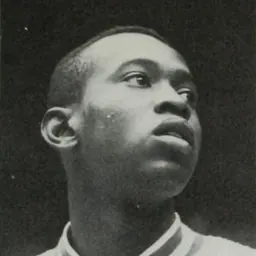
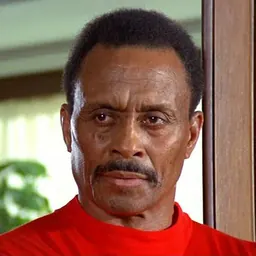





Related people
Same field, nearest in time
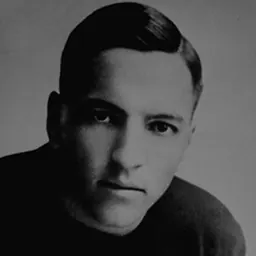
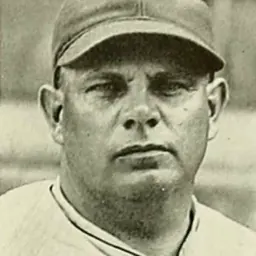
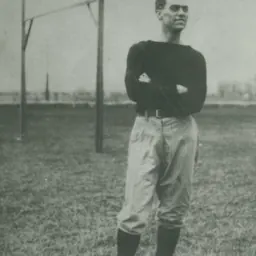
Contemporaries
People whose lives overlapped Joe Lillard's


Frequently asked questions
Who was Joe Lillard?
American football player (1905–1978)
When was Joe Lillard born?
Joe Lillard was born on 15 June 1905 in Mason City.
When did Joe Lillard die?
Joe Lillard died on 18 September 1978 in New York City.
What was Joe Lillard's occupation?
Joe Lillard was a baseball player and american football player.
What nationality was Joe Lillard?
Joe Lillard was American.
Sources & further reading
Cite this page
APA: Biography.guide. (2026). Joe Lillard. https://biography.guide/joe-lillard/
MLA: "Joe Lillard." Biography.guide, https://biography.guide/joe-lillard/.
Chicago: "Joe Lillard." Biography.guide. https://biography.guide/joe-lillard/.
Data last updated: 2026-09-20 · Spot an error? Report a correction.
Page generated 2026-09-27 05:11 UTC