
About Joe Corrie
Lived 1894 – 1968 (aged 73–74). Joe Corrie was a playwright and poet.
Joe Corrie (13 May 1894 – 13 November 1968) was a Scottish miner, poet, novelist and playwright best known for his radical, working class plays.
He was born in Slamannan, Stirlingshire in 1894. His family moved to Cardenden in the Fife coalfield when Corrie was still an infant and he started work at the pits in 1908. He died in Edinburgh in 1968.
Shortly after the First World War, Corrie started writing. His articles, sketches, short stories and poems were published in prominent socialist newspapers and journals, including Forward and The Miner.
Corrie's volumes of poetry include The Image o' God and Other Poems (1927), Rebel Poems (1932) and Scottish Pride and Other Poems (1955). T. S. Eliot wrote "Not since Burns has the voice of Scotland spoken with such authentic lyric note".
He turned to writing plays during the General Strike in 1926. His one-act plays and sketches were performed by the Bowhill Players, an amateur company of miners who performed to raise money for local soup kitchens. The company operated professionally as the Fife Miner Players in 1928-31 under the management of comedian and theatrical agent, Hugh Ogilvie. Corrie's first play, Hogmanay was published by the Fife Miners' Reform Union. His full-length play, In Time o' Strife, depicting the General Strike's effect on the Fife mining community, toured Fife mining villages and musical halls all over Scotland. Described by critic Alan Riach as showing exemplary 'defiance of the spirit'.
Corrie wrote a number of plays for groups who took part in the Scottish Community Drama Association's annual competitive festivals. Winning plays included Martha (1935), And So To War (1936) and Hewers of Coal (1937). A novel, Black Earth, was published in 1939.
Corrie's commitment to naturalism invited strong criticism from the Scottish theatrical establishment in his day and caused him to feel disconnected from other Scottish writers.
Corrie also wrote songs and many of his poems have been set to music. Maid of Kenmore was recorded by Robert Wilson. Calum Kennedy recorded Kirsteen. Battlefield Band recorded settings by Alan Reid of The Image o' God, Miners Wives and I Am the Common Man. In 2013, The Joe Corrie Project: Cage Load of Men, a collection of poems set to contemporary and traditional music, was released.
The 2012 feature film, The Happy Lands, was inspired by In Time o' Strife, being set in the same fictional village of Carhill.
In 2019, the University of St. Andrews released a biography of Corrie, as well as a guide to his archive and several academic essays in a new website marking the 50th anniversary of his death. This includes papers by Robert Crawford, Tom Hubbard, Willie Hershaw, Malcolm Petrie, Gavin Bowd, Sarah Leith, and Paul Malgrati.
Don’t just read it —
keep it.
Full-length biographies made to live with: read them, listen on the way to work, watch them tonight.
- E-book
- Audio
- Video
Instant download · yours to keep · every purchase keeps this site free
Important facts
People in Joe Corrie's life
Named in this biography and alive at the same time



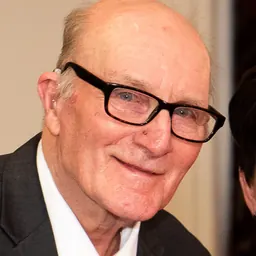


Related people
Same field, nearest in time


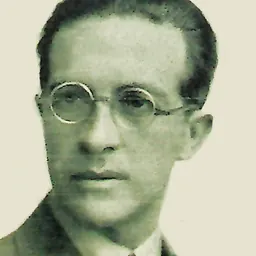
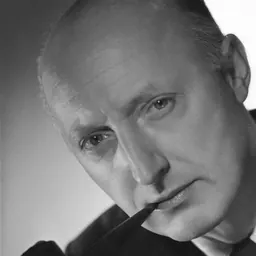

Contemporaries
People whose lives overlapped Joe Corrie's
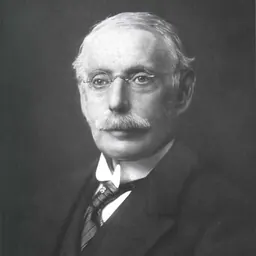

Frequently asked questions
Who was Joe Corrie?
Scottish miner, poet and playwright
When was Joe Corrie born?
Joe Corrie was born in 1894.
When did Joe Corrie die?
Joe Corrie died in 1968.
What was Joe Corrie's occupation?
Joe Corrie was a playwright and poet.
Sources & further reading
Cite this page
APA: Biography.guide. (2026). Joe Corrie. https://biography.guide/joe-corrie/
MLA: "Joe Corrie." Biography.guide, https://biography.guide/joe-corrie/.
Chicago: "Joe Corrie." Biography.guide. https://biography.guide/joe-corrie/.
Data last updated: 2026-09-20 · Spot an error? Report a correction.
Page generated 2026-09-27 05:30 UTC