
About Jocelyn Lee Hardy
Lived 1894 – 1958 (aged 63). Jocelyn Lee Hardy was an autobiographer.
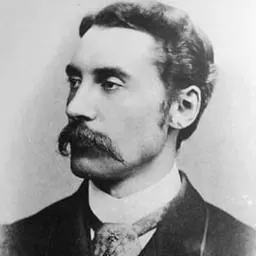
Major Jocelyn Lee "Hoppy" Hardy DSO, MC with Bar, (10 June 1894 – 30 May 1958) was a British Army officer famed in Britain for his courage on the battlefield and repeated escapes from German prisoner of war camps during the First World War. Between 1920 and 1922 he served in Dublin as part of the British counter-insurgency against republican forces during the Irish War of Independence and is considered one of the most ruthless and effective British intelligence officers combating the IRA who subsequently accused him of brutality. He retired from the army to become a successful writer. His nickname, "Hoppy", stemmed from the loss of a leg in combat during the final months of World War One. Fitted with a prosthesis, he trained himself to disguise the fact, by walking at a very quick pace, almost completely disguising that he had a wooden leg.
Early life Jocelyn Lee Hardy was born 10 June 1894 in Kensington, London to Howard and Katherine Hardy. His father was a wool merchant from County Down. Jocelyn Hardy later joined the Connaught Rangers, gaining his commission and joining the 2nd battalion at Aldershot in January 1914.
First World War Capture Hardy first saw action on 24 August 1914 when his unit served as a rearguard to cover the retirement of the 5th Infantry Brigade in action at Le Grand Fayt, France. By 26 August, Hardy and a group of 19 men led by a Captain Roche found themselves cut off and took shelter in a house being used as a makeshift hospital in the village of Maroilles. During the night, a large force of Germans entered the town, and the next day Hardy's group were discovered and taken prisoner, among 286 men listed as missing in the action.
Later war service In April 1918, Hardy transferred to the 2nd Battalion Inniskilling Fusiliers. On 1 August 1918, he was awarded the Military Cross on the Ypres front for leading a fighting patrol which engaged a group of enemy soldiers, killing one and causing the rest to flee. Hardy then used rapid fire to silence one of two German machine guns firing on the patrol before he was wounded by a grenade. Hardy ordered the rest of the patrol to retreat back to their lines whilst he remained to drag his badly wounded sergeant back to safety. The wording for his decoration declared, "Throughout the operation he set a splendid example to his men, and also obtained valuable information as to the enemy's dispositions".
On 2 October 1918, Hardy led a counter-attack near Dadizeele, during which he was shot in the stomach and received such severe wounds to his leg that it had to be amputated. He was evacuated back to England and was still in hospital when the war ended a short time later. He was fitted with an artificial limb and his resulting rapid manner of walking to disguise this earned him the nickname "Hoppy".
Marriage On 1 November 1919, Hardy married Kathleen Isabel Hutton-Potts in London. On 30 January 1920, Hardy was awarded a bar to his Military Cross, and the Distinguished Service Order "in recognition of gallant conduct and determination displayed in escaping or attempting to escape from captivity".
Hardy became a hated figure for the IRA, who accused him of brutality in interrogating prisoners, such as tricking suspects into providing information by using a revolver loaded with blanks to stage fake executions or threatening to burn them with a hot poker. The IRA dubbed the cells "The Knocking Shop".
In August 2014, TV personality Brendan O'Carroll featured on BBC TV's Who Do You Think You Are investigating the death of his grandfather, Peter O'Carroll, during the Irish War of Independence. On 16 October 1920, O'Carroll was shot dead at his home in Manor Street, Dublin. The programme uncovered a written testimonial by IRA mole David Neligan in the 1950s stating that IRA spymaster Michael Collins had suspected Hardy was responsible for an almost identical shooting of another Republican, Limerick County Councillor John Lynch in the Exchange Hotel, Dublin. However Neligan had informed Collins that Lynch had actually been killed by Captain G.T. Baggallay after Lynch drew a revolver on him during a raid. Baggallay, who like Hardy had lost a leg in combat, would later be killed on 'Bloody Sunday'. While the BBC programme claimed that Peter O'Carroll was not active in the rebellion, a statement made by Liam O'Carroll (one of Peter's sons and an uncle of Brendan O'Carroll) states that Peter O'Carroll was indeed a member of the Irish Republican Brotherhood and was involved in arming the rebels.
David Neligan's testimonial is dated 4 May 1950, 30 years after Peter O'Carroll's death. It states that his knowledge that Hardy figured in O'Carroll's murder was based on a description given to members of the Irish Volunteers by O'Carroll family members. However, a newspaper account in the Irish Independent dated 18 October 1920 reported that the deceased's daughter Martha said that her mother, on hearing knocking at the door, opened an upstairs window and saw the forms of two or three men at the door. Martha stated that the night was "densely" dark. It appears from this account that no one else claimed to have seen the murderers and it is unlikely that Mrs O'Carroll could have given a description of any of the men, given that it was very dark at the time and she would have had to have leant out the window to see those at the door. There is no indication that she saw any of the men moving such as would indicate that she might have noticed Hardy's gait. This newspaper account also states that the investigating police took possession of a piece of paper stating "A Traitor to Ireland: Shot by I.R.A." which had been pinned to the deceased's back. The only suggested similarity between this murder and Mr Lynch's death is that there was apparently little or no sound from the gun. There is therefore no conclusive evidence that Hardy was involved in the killing of Peter O'Carroll.
On one occasion, Hardy was shadowed on a visit to England, but evaded his would-be assassin at Euston station by quickly transferring from his train to a waiting taxi before he could be ambushed. On another occasion, a group of assassins was waiting for him on the dockside on his return to Ireland, but aborted their attempt when an armoured car arrived to pick him up. Hardy was on a list of intelligence agents to be assassinated in the morning hours of 21 November 1920. The IRA's attempt to destroy British intelligence in Ireland resulting in 13 deaths. This would come to be known as "Bloody Sunday". Hardy escaped death because he was not at his residence when the would-be assassins arrived. The previous evening, Hardy had taken part in a series of raids that led to the capture of prominent republicans Dick McKee and Peadar Clancy, who had done much of the planning around "Bloody Sunday". Hardy later prevented Clancy from escaping by slipping into a group of prisoners being transferred out of Dublin Castle In 1937 he embarked on a world trip on the liner SS Rawalpindi with his wife Kathleen Hardy, ostensibly as a holiday but including visits to the strategic Japanese ports of Kobe and Yokohama on the eve of the Second World War.
World War II During World War 2 Hardy joined the Home Guard and became involved in Auxiliary Units, stay behind groups which would wage guerrilla warfare against the Germans in the event of an invasion of Britain, acting as military liaison for the Narford Auxiliary Unit Patrol. As the threat of invasion faded Hardy took command of an anti-aircraft battery, one of 127,000 Home Guardsmen who would combat the Baby Blitz of 1943 and the V1 strikes which followed in the summer of 1944.
Later life In addition to his literary work, Hardy established a reputation as a polo player and a Rolls-Royce enthusiast. He frequently attended Connaught Ranger reunion dinners. He lived in Kensington, London in the 1950s.
Death Hardy died of natural causes on 30 May 1958 in Hammersmith, London. He was buried on 5 June at Wells Church, Norfolk leaving an estate of £57,000, on which £19,000 death duty taxes were paid. In his obituary Hardy is referred to as 'not only a gallant soldier: he was a rare bird, a writer of good and simple prose. A pity he did not write more. But, above all, Hardy was a man'. In the foreword for Hardy's autobiography I Escape!, Conan Doyle pays tribute to Hardy, stating that a "more gallant gentleman never lived."
Don’t just read it —
keep it.
Full-length biographies made to live with: read them, listen on the way to work, watch them tonight.
- E-book
- Audio
- Video
Instant download · yours to keep · every purchase keeps this site free
Important facts
People in Jocelyn Lee Hardy's life
Named in this biography and alive at the same time





Related people
Same field, nearest in time


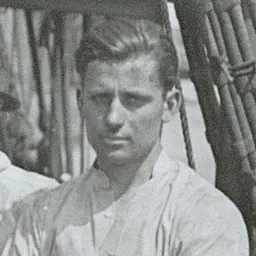
Contemporaries
People whose lives overlapped Jocelyn Lee Hardy's
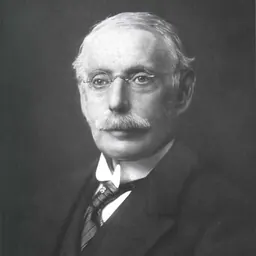

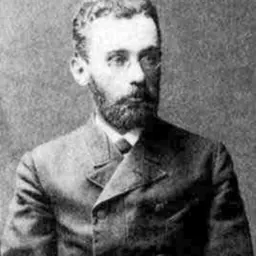
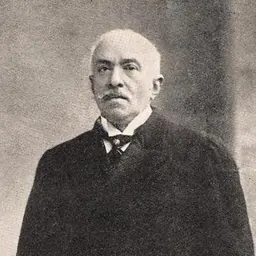

Frequently asked questions
Who was Jocelyn Lee Hardy?
British military officer and POW
When was Jocelyn Lee Hardy born?
Jocelyn Lee Hardy was born on 10 June 1894 in Kensington.
When did Jocelyn Lee Hardy die?
Jocelyn Lee Hardy died on 30 May 1958 in Hammersmith.
What was Jocelyn Lee Hardy's occupation?
Jocelyn Lee Hardy was an autobiographer.
Sources & further reading
· Wikipedia: Jocelyn Lee Hardy
Cite this page
APA: Biography.guide. (2026). Jocelyn Lee Hardy. https://biography.guide/jocelyn-lee-hardy/
MLA: "Jocelyn Lee Hardy." Biography.guide, https://biography.guide/jocelyn-lee-hardy/.
Chicago: "Jocelyn Lee Hardy." Biography.guide. https://biography.guide/jocelyn-lee-hardy/.
Data last updated: 2026-09-20 · Spot an error? Report a correction.
Page generated 2026-09-27 05:32 UTC