
Jocelin of Wells
Bishop of Bath; Bishop of Bath and Glastonbury
About Jocelin of Wells
Lived 1150 – 1242 (aged 91–92). Jocelin of Wells was a canon, catholic bishop and bishop.
Jocelin of Wells (died 19 November 1242) was a medieval Bishop of Bath (and Glastonbury). He was the brother of Hugh de Wells, who became Bishop of Lincoln. Jocelin became a canon of Wells Cathedral before 1200, and was elected bishop in 1206. During King John of England's dispute with Pope Innocent III, Jocelin at first remained with the king, but after the excommunication of John in late 1209, Jocelin went into exile. He returned to England in 1213 and was mentioned in Magna Carta in 1215.
Jocelin was one of the bishops who crowned John's son Henry III, and throughout the rest of Jocelin's life was involved in royal administration. He was also active in his diocese, ordering construction on the cathedral at Wells, and issuing rules for his diocesan clergy. During his time as bishop, he settled a dispute between his diocese and Glastonbury Abbey that had started during the bishopric of his predecessor. The memorial brass on his tomb in Wells Cathedral is probably one of the earliest in England.
Early life Jocelin born in Wells in Somerset, and was the son of Edward of Wells, His brother Hugh de Wells was archdeacon of Wells and Bishop of Lincoln. Some historians say that another relative, although the exact relationship is unknown, was Simon of Wells, who became Bishop of Chichester in 1207, but other historians dispute this. The name Jocelin Trotman or Thotman, by which he was occasionally known by some modern historians, only dates from the Margam Annals, and is not contemporary with his life.
Jocelin was a royal justiciar in 1203, at Reading by Bishop William of Sainte-Mère-Eglise of London. Jocelin did not immediately leave England after Pope Innocent III placed an interdict on England.
Jocelin and Hugh were in exile together in Bordeaux in 1212, but they both returned to England in May 1213, along with the other English bishops. In 1215, Jocelin sided with Stephen Langton and the barons, and Magna Charta lists Jocelin as one of the king's councillors.
Henry III's reign Jocelin and Peter des Roches, the Bishop of Winchester, anointed and crowned King Henry III, the young son of John, after John's death. Later, Jocelin was present at the battle with Eustace the Monk in 1217, which helped to secure Henry's rule. Jocelin supported Hubert de Burgh's work of ejecting French forces from England and regaining control of royal castles seized by Falkes de Breauté and other barons. In 1218, Jocelin was one of the itinerant justiciars for southwestern England.
In 1218 and 1219, Jocelin also ended the dispute between his diocese and Glastonbury Abbey. Jocelin gave up any claim to control of the abbey, and the abbey gave the bishopric a number of estates. Previously, the bishops, as part of their attempt to annexe Glastonbury to their bishopric, had been known as the Bishop of Bath and Glastonbury. They also had held the office of abbot. In 1218, as part of the settlement, a new abbot was elected at Glastonbury. The papacy had never acknowledged Jocelin's claiming of the title of abbot. The historian J. A. Robinson felt that as part of the settlement, Jocelin began to use the title Bishop of Bath and Wells, but another historian, David Knowles, disagreed.
After 1223, Jocelin was a baron of the exchequer. In 1225 he served the king as head of one of the receivers of the tax of a fifteenth. After the fall of Peter des Roches in April 1234, Jocelin was given control of the Wardrobe. After this, he appears less regularly in royal government, but he did witness the reconfirmation of Magna Carta in 1237. Jocelin promulgated a set of constitutions for the diocese, ordered that his diocesan clergy reside in their benefices, and gave land and income to the cathedral school. Jocelin was also involved in mediating between William de Blois, the Bishop of Worcester, and Tewkesbury Abbey over William's rights over the abbey. Jocelin finally settled the dispute in 1232.
Jocelin funded the building of Wells Cathedral,
Don’t just read it —
keep it.
Full-length biographies made to live with: read them, listen on the way to work, watch them tonight.
- E-book
- Audio
- Video
Instant download · yours to keep · every purchase keeps this site free
Important facts
People in Jocelin of Wells's life
Named in this biography and alive at the same time
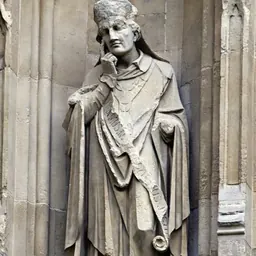


Related people
Same field, nearest in time

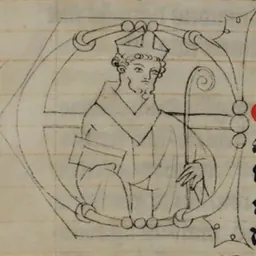
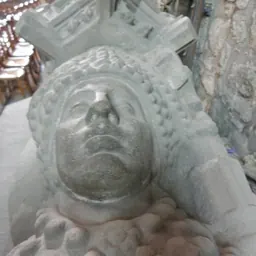

Contemporaries
People whose lives overlapped Jocelin of Wells's
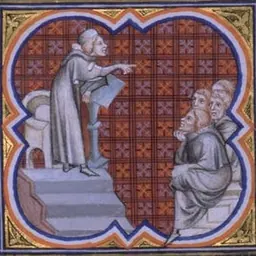




Frequently asked questions
Who was Jocelin of Wells?
Bishop of Bath; Bishop of Bath and Glastonbury
When was Jocelin of Wells born?
Jocelin of Wells was born in 1150 in Wells.
When did Jocelin of Wells die?
Jocelin of Wells died on 19 November 1242 in Wells.
What was Jocelin of Wells's occupation?
Jocelin of Wells was a canon, catholic bishop and bishop.
Sources & further reading
Cite this page
APA: Biography.guide. (2026). Jocelin of Wells. https://biography.guide/jocelin-of-wells/
MLA: "Jocelin of Wells." Biography.guide, https://biography.guide/jocelin-of-wells/.
Chicago: "Jocelin of Wells." Biography.guide. https://biography.guide/jocelin-of-wells/.
Data last updated: 2026-09-20 · Spot an error? Report a correction.
Page generated 2026-09-27 05:20 UTC