
About Joaquín de Iglesias Vidamartel
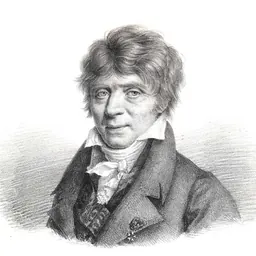
Lived 1794 – 1840 (aged 45). Joaquín de Iglesias Vidamartel was a Costa Rican politician.
José Joaquín Nicolás de Iglesias Vidamartel (7 November 1794 – 12 April 1840) was a Costa Rican politician and a founding father of Costa Rican independence.
Biography
Early years (1794–1821) José Joaquín Nicolás de Iglesias Vidamartel was born in the city of Cartago on 7 November 1794 and was baptized the following day in the local parish. He was the son of Juana María de Iglesias y Vidamartel, a woman belonging to the Cartago elite. Although he was listed in the parish registers as a natural son, family historical tradition documented that his biological father was the Italian-born physician Stefano Corti Rocca.
From a young age, he showed a notable inclination towards letters and studying, which allowed him to join the administrative work of the province early on. During the last years of the viceregal period, he served as an amanuensis to the governor of the Province of Costa Rica, Juan de Dios de Ayala. Later, in 1819, he assumed the position of primary school teacher in Cartago.
Independence process and public life (1821–1834) Upon receiving the news of the Independence of Central America in Cartago in October 1821, Iglesias actively joined the political organization process of the new State. He was appointed Secretary of the first Superior Governing Junta of Costa Rica. In the exercise of these duties, he was part of the special commission designated to draft the Interim Fundamental Social Pact or Pact of Concord (promulgated on 1 December 1821), a normative body considered the first Constitution of Costa Rica.
During the political crisis of 1823, derived from attempts to annex the territory to the First Mexican Empire, he adopted a firmly republican stance. He represented the town of Pacaca before the Junta of Legates of the Peoples, of which he also served as secretary. That same year he served as the second mayor of the city of Cartago and assumed the first mayoralty on an interim basis after the incumbent was dismissed on suspicion of disloyalty, managing to maintain local order during the events that triggered the Battle of Ochomogo.
His legislative career reached its peak in 1834, when he was elected deputy and, subsequently, appointed President of the State Assembly. At the same time, he became a candidate and received votes in the 1835 Head of State elections, in which his cousin Braulio Carrillo Colina was elected. He was also appointed on two different occasions as Magistrate of the Supreme Court of Justice of Costa Rica, honors that he decided to decline in order to continue dedicating himself to his private and agricultural activities.
The League War, exile in Nicaragua and mining activity In 1834, he was one of the main deputies who supported and voted for the creation of the Ambulance Law, which gave a rotating character to the capital; however, when the government of Braulio Carrillo Colina repealed this law, he was one of the main promoters of the city taking up arms in alliance with Alajuela and Heredia. Iglesias aligned himself with the discontented factions of his hometown, assuming a prominent role in the political direction of the revolutionary movement of the coalition of cities. He participated directly in the deliberations and armed actions of this civil conflict, historically known as the League War.
After the failure of the insurrectional movement and the definitive victory of Carrillo's government forces, a persecution was unleashed against the main ringleaders of the revolt. Iglesias suffered the confiscation of part of his properties and material goods as economic reprisal, and was forced to hurriedly go into exile in Nicaragua to avoid imprisonment.
Established in Nicaraguan territory, specifically in the mountainous and jungle region of Matagalpa, he redirected his efforts towards extractive and mining activities. During this period of exile, he discovered and exploited a gold and silver vein near the town of San Ramón, an economic enterprise that allowed him to stabilize his financial situation, recover part of his fortune, and remotely support his large family that remained in Costa Rica.
Return, Atlantic commission and death At the beginning of 1839, under a new political context following Carrillo's definitive return to power through a coup d'état, Iglesias obtained a pardon and official permission to return to Costa Rica. Carrillo appointed him Director of the opening works of the road to the Caribbean Sea, an ambitious state project that sought to provide the country with a direct commercial route to Europe without depending on the port of Puntarenas and the long transit through the Pacific Ocean.
In March 1840, Iglesias led an expedition to the Caribbean plains with the objective of inspecting the progress of the road works and coordinating the establishment of a new agricultural colony on the banks of the Pacuare River. During the course of this work in the tropical jungle, he contracted a "malignant fever". His health rapidly deteriorated due to the aggressiveness of the infection and the lack of medical resources in the area. He died on 12 April 1840 on the banks of the Pacuare River, at the age of 45.
Marriages and descendants Iglesias married twice. On 5 November 1818, he married his first wife Petronila Llorente y Lafuente, sister of the subsequent first bishop of Costa Rica, Anselmo Llorente y Lafuente. From this union his eldest children were born, among them the prominent politicians and intellectuals Francisco María Iglesias Llorente and Demetrio Iglesias Llorente. After becoming a widower, he entered a second marriage with Inés Ugalde y Alfaro, with whom he had his younger children. His grandson, Rafael Iglesias Castro (son of Demetrio), served as President of the Republic between 1894 and 1902.
Don’t just read it —
keep it.
Full-length biographies made to live with: read them, listen on the way to work, watch them tonight.
- E-book
- Audio
- Video
Instant download · yours to keep · every purchase keeps this site free
Important facts
People in Joaquín de Iglesias Vidamartel's life
Named in this biography and alive at the same time
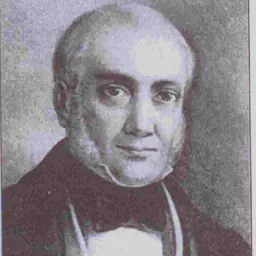

Related people
Same field, nearest in time

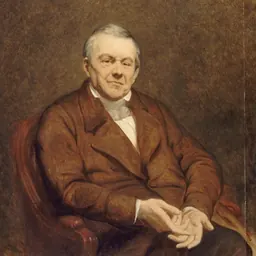
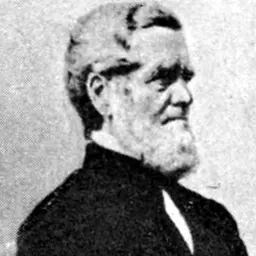


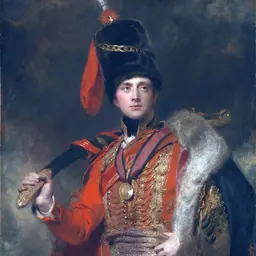
Contemporaries
People whose lives overlapped Joaquín de Iglesias Vidamartel's





Frequently asked questions
Who was Joaquín de Iglesias Vidamartel?
Costa Rican politician
When was Joaquín de Iglesias Vidamartel born?
Joaquín de Iglesias Vidamartel was born on 7 November 1794.
When did Joaquín de Iglesias Vidamartel die?
Joaquín de Iglesias Vidamartel died on 12 April 1840.
What was Joaquín de Iglesias Vidamartel's occupation?
Joaquín de Iglesias Vidamartel was a politician.
What nationality was Joaquín de Iglesias Vidamartel?
Joaquín de Iglesias Vidamartel was Costa Rican.
Sources & further reading
· Wikipedia: Joaquín de Iglesias Vidamartel
· DBpedia: Joaquín de Iglesias
Cite this page
APA: Biography.guide. (2026). Joaquín de Iglesias Vidamartel. https://biography.guide/joaquin-de-iglesias-vidamartel/
MLA: "Joaquín de Iglesias Vidamartel." Biography.guide, https://biography.guide/joaquin-de-iglesias-vidamartel/.
Chicago: "Joaquín de Iglesias Vidamartel." Biography.guide. https://biography.guide/joaquin-de-iglesias-vidamartel/.
Data last updated: 2026-09-20 · Spot an error? Report a correction.
Page generated 2026-09-27 05:21 UTC