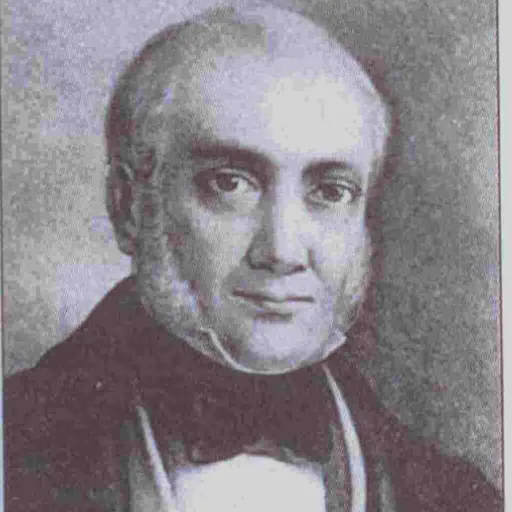
About Braulio Carrillo Colina
Lived 1800 – 1845 (aged 45). Braulio Carrillo Colina was a Costa Rican politician, judge, lawyer and jurist.
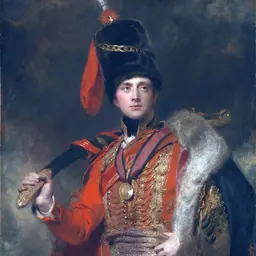
Braulio Evaristo Carrillo Colina (20 March 1800 – 15 May 1845) was a Costa Rican lawyer and statesman who served as the 3rd and 5th Head of State of Costa Rica from 1835 to 1837 and as a dictator from 1838 until 1842. His administrations implemented extensive legal, fiscal, administrative, and economic reforms that contributed to the consolidation of the Costa Rican state. Following its secession from the Federal Republic of Central America, Carrillo declared Costa Rica a sovereign and independent state on 14 November 1838.
Before becoming head of state, Carrillo served as a member of the Congress of Costa Rica, a deputy to the Congress of the Federal Republic of Central America, and as a judge and acting president of the Supreme Court of Costa Rica. During his second administration, he reorganized the country's public administration, promoted economic development, codified legislation, and strengthened the authority of the central government. His government also enacted measures against vagrancy and expanded the powers of the executive.
Carrillo has been widely regarded as one of the principal architects of the country's early state institutions and is commonly referred to as the "Architect of the Costa Rican State." The Braulio Carrillo National Park in north-central Costa Rica is named after him.
Biography Braulio Carrillo studied law at the National Autonomous University of Nicaragua in León, Nicaragua. At the early age of 28 years was elected to the legislature for a period of two years, and for a brief period held the position of president of the legislature. Carrillo held the presidency of the Supreme Court in an acting capacity from October 1833 to January 1834. Later that year, he was sent as a representative of Costa Rica to the Central American Congress, in El Salvador.
Upon the resignation of Costa Rica's head of state José Rafael Gallegos in 1835, Carrillo was indirectly elected to complete the term of Gallegos. Because of their strong character and that the assembly repealed in August of that year the Ambulance Act (the law that established the rotation of the country's capital among the four cities of San José, Alajuela, Heredia and Cartago), the cities of Cartago, Heredia and Alajuela took up arms against the government in mid-September, but were defeated after a civil war which lasted a fortnight.
Carrillo was a candidate for reelection in 1837, but was defeated by Manuel Aguilar, who was overthrown in 1838 by a cuartelazo. Carrillo again became the Head of State, with absolute powers. He convened a constituent assembly, which, in November, declared that the state was separated from the Federal Republic of Central America, and thus Costa Rica became a sovereign country. The constituent session was suspended in December 1838.
In 1841 Carrillo issued the Guarantee Law, which made him head of state for life. There were a number of changes in the social life of Costa Rica, and Carrillo became known as the "Architect of the Costa Rican National State". He worked to prohibit vagrancy, vice and crime. He greatly boost the development of Costa Rica and introduced order in the Civil Service. His efforts to open a path to communicate with the Central Valley Matina on the Caribbean coast, could not be satisfactorily completed, as the government of Francisco Morazán stopped work when they were well advanced. Due to this effort, the National Park located between the provinces of Limón and San José and a highway between San José and Guápiles carries his name today. Braulio Carrillo National Park is also named after him.
In 1842 Francisco Morazán, former Federal President Central America, invaded Costa Rica and seized power. Carrillo went into exile and settled in El Salvador, where he was killed in 1845.
Achievements of Carrillo's governments Abolished Ambulance Act and established the capital in San Juan del Murciélago, now Tibás. Reduced the number of public holidays in 1836. Enacted the in 1841. Developed a plan to boost agriculture. Costa Rica left the Central American Federation and assumed full sovereignty. He organized new Courts of Justice.
Don’t just read it —
keep it.
Full-length biographies made to live with: read them, listen on the way to work, watch them tonight.
- E-book
- Audio
- Video
Instant download · yours to keep · every purchase keeps this site free
Important facts
People in Braulio Carrillo Colina's life
Named in this biography and alive at the same time

Related people
Same field, nearest in time



Contemporaries
People whose lives overlapped Braulio Carrillo Colina's






Frequently asked questions
Who was Braulio Carrillo Colina?
Head of State of Costa Rica (1800-1845)
When was Braulio Carrillo Colina born?
Braulio Carrillo Colina was born on 20 March 1800 in Cartago.
When did Braulio Carrillo Colina die?
Braulio Carrillo Colina died on 15 May 1845 in Sociedad.
What was Braulio Carrillo Colina's occupation?
Braulio Carrillo Colina was a politician, judge, lawyer and jurist.
What nationality was Braulio Carrillo Colina?
Braulio Carrillo Colina was Costa Rican.
Sources & further reading
· Wikipedia: Braulio Carrillo Colina
· DBpedia: Braulio Carrillo Colina
Cite this page
APA: Biography.guide. (2026). Braulio Carrillo Colina. https://biography.guide/braulio-carrillo-colina/
MLA: "Braulio Carrillo Colina." Biography.guide, https://biography.guide/braulio-carrillo-colina/.
Chicago: "Braulio Carrillo Colina." Biography.guide. https://biography.guide/braulio-carrillo-colina/.
Data last updated: 2026-09-20 · Spot an error? Report a correction.
Portrait: Wikimedia Commons · author & licence
Page generated 2026-09-27 04:57 UTC