
About Joaquim Ibarz
Lived 1943 – 2011 (aged 67). Joaquim Ibarz was a Spanish journalist and writer, known for Latin America.
Joaquim Ibarz Melet (25 May 1943 – 12 March 2011) was a Spanish journalist who for 28 years was a Latin America correspondent for the Barcelona newspaper La Vanguardia. He was widely recognized by his journalistic colleagues and others as an expert on Latin American affairs and as an authoritative and witty commentator upon them. El País correspondent Juan Jesús Aznárez described Ibarz as "the journalist who knows the most about Latin America."
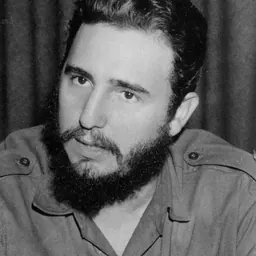
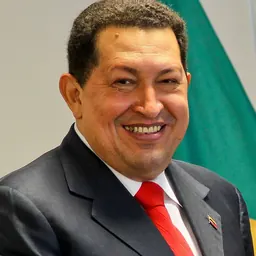
Also described as "a defender of democracy and a staunch critic of the populist and authoritarian regimes in Latin America," Ibarz was present at the 1992 Fujimori coup in Peru, the 1994 Zapatista uprising in Chiapas, and other major events in modern Latin American history. In 1991, owing to his coverage of the regime of Fidel Castro, he became the first Spaniard to be expelled from Cuba. He later recalled that after the fall of the Soviet Union, Cubans "were so desperate that they were eating the island's cats," and said that no story he had ever written had "raised such a ruckus" as the 1992 article in which he "confirmed the sad fate of Cuban cats" by asking 300 or so Cubans if they had eaten cat. "About a third said yes." In addition to being expelled from Cuba, he was accused by Hugo Chávez of being "responsible for the political agitations against the Bolivarian caudillo."
Early life and education Ibarz was born 25 May 1943 in Zaidín (Saidí), Huesca, Spain. He received a journalism degree from the University of Navarra.
Career Ibarz began his career with the daily El Noticiero. In 1970 he started working in Barcelona for the newspaper Tele Expres, for which he covered the conflict in the Sahara. He later worked as executive director of the magazine Ser Padres ("Being Parents") and as assistant director of the weekly Primera Plana ("Close-up"). He also worked for the sports publication Barca in 1971, for the Zaragoza weekly Andalán in 1977-78, and for the Valles Expres. He moved to Mexico City in 1982 to serve as La Vanguardia's correspondent there, a position he held until his death.
For all his prolificity, Ibarz never wrote a book. "Friends have told me for years that I should write a book about my experiences," he said near the end of his life. "But I was always so busy that I never did, although I had the title down: There's no fixing this." Still, he added that "Lula's successful government in Brazil, Chile's institutional strength, Santos' victory in Colombia, and Funes' prudence in El Salvador, augur better days for the region." A month before his death he was described by the historian Enrique Krauze as "the best witness of contemporary life in Mexico during the past three decades." On his death La Vanguardia published a set of brief tributes by "his enormous family of friends." Carmen de Carlos of ABC said "Quim was a book you could read to learn and know about Latin America." Javier Sandomingo, Spanish ambassador to Peru, said that "Joaquín...always gave me the benefit of his encyclopedic knowledge of the region" and praised his "commitment to the fight" against the abettors of tyranny in politics and the press. José de Córdoba of The Wall Street Journal said Ibarz was "a model" who "lived for journalism," was "without fear," and loved life. Manuel M. Cascante of ABC praised his collegial generosity and called him "the master." José Vales of El Universal called him "the best colleague of my long career and...a brother." Juan Restrepo, formerly of TVE, said he possessed "a professional dedication I have rarely encountered in this job." Pablo Biffi, an editor at the Buenos Aires newspaper Clarín, described Ibarz as "a 'journalistic animal,' with an admirable and unmatched capacity for work." Mexican diplomat David Nájera called him a "gentlemanly witness to history."
Journalist Roger Bartra, in a memoir of Ibarz, noted that "Joaquim began his work in Mexico" at a time when "a process of democratic transition" was underway in much of Latin America and that Ibarz "asked me insistently" why such a transition wasn't beginning in Mexico. "The answer could be found in his brilliant journalism." Journalist Fran Sevilla, in a posthumous tribute addressed to Ibarz, said: "From your beloved Mexico to your adored Lima, from Quito to Managua, from turbulent Caracas to violent Bogotá or San Salvador or Guatemala, from the arrested Asunción to the devastated Port au Prínce, in the rubble of the Hotel Villa Creole, you were always there, writing history, living it, narrating it in your indispensable chronicles in La Vanguardia." A Peruvian colleague wrote: "We Latin Americans have been greatly fortunate that Joaquín Ibarz Melet...arrived in Mexico one day in 1982 as the correspondent of La Vanguardia." A Columbia University student wrote after Ibarz's death that his "passion and love for the region (not to mention his sense of humor) was palpable" to the students who met him when he came to Columbia to receive his Cabot prize. And in 2010 he became the first European to receive the Maria Moors Cabot prize from the Columbia University Graduate School of Journalism, which is awarded for journalism about the Americas. Ibarz was survived by a number of family members, of whom La Vanguardia singled out his niece Mercè as the chief mourner. In April 2011, Ibarz received a posthumous tribute in the form of a ceremony held at the Cultural Center of Spain in Mexico City. It was attended by many of his colleagues who gave speeches recalling their experiences with Ibarz over the years.
After his death, the president of Mexico, Felipe Calderón, called it "a sad day for Hispanic journalism." Ibarz was survived by a number of family members, of whom La Vanguardia singled out his niece Mercè as the chief mourner. In April 2011, Ibarz received a posthumous tribute in the form of a ceremony held at the Cultural Center of Spain in Mexico City. It was attended by many of his colleagues who gave speeches recalling their experiences with Ibarz over the years.
"La Casa de Usted" During his decades of travels around Latin America, Ibarz collected over 1000 cultural items that he wanted to display in a museum located in Zaidín that he planned to call "La Casa de Usted." At the time of his death this project was already underway and all the materials had been transported to Zaidín. He mentioned the museum at the end of his Cabot Prize speech, referring to it as "my personal Iberoamerican project. In my almost three decades knocking about Latin America, I've let myself be seduced by the richness of the continent's popular art. I have visited astonishing markets in all of our countries. I have put together a collection that, among other things, has more than 400 masks and 150 sombreros. It's probable that my collection has more huipiles – embroidered cotton dresses – than Nobel Prize winner Rigoberta Menchú closet." The museum, he said, was "my way of thanking a continent that has taught me so much and where I have had so many happy times."
Don’t just read it —
keep it.
Full-length biographies made to live with: read them, listen on the way to work, watch them tonight.
- E-book
- Audio
- Video
Instant download · yours to keep · every purchase keeps this site free
Important facts
People in Joaquim Ibarz's life
Named in this biography and alive at the same time



Related people
Same field, nearest in time



Contemporaries
People whose lives overlapped Joaquim Ibarz's

Frequently asked questions
Who was Joaquim Ibarz?
Spanish journalist (1943–2011)
When was Joaquim Ibarz born?
Joaquim Ibarz was born on 25 May 1943 in Zaidín.
When did Joaquim Ibarz die?
Joaquim Ibarz died on 12 March 2011 in Zaidín.
What was Joaquim Ibarz's occupation?
Joaquim Ibarz was a journalist and writer.
What was Joaquim Ibarz known for?
Joaquim Ibarz was known for Latin America.
What nationality was Joaquim Ibarz?
Joaquim Ibarz was Spanish.
Sources & further reading
Cite this page
APA: Biography.guide. (2026). Joaquim Ibarz. https://biography.guide/joaquim-ibarz/
MLA: "Joaquim Ibarz." Biography.guide, https://biography.guide/joaquim-ibarz/.
Chicago: "Joaquim Ibarz." Biography.guide. https://biography.guide/joaquim-ibarz/.
Data last updated: 2026-09-22 · Spot an error? Report a correction.
Page generated 2026-09-27 05:14 UTC