
Joachim Meisner
German cardinal and archbishop of Cologne, Catholic cardinal
About Joachim Meisner
Lived 1933 – 2017 (aged 83). Joachim Meisner was a German catholic priest, writer, transitional deacon, archbishop, christian theologian and catholic bishop.
Joachim Meisner (25 December 1933 – 5 July 2017) was a German Catholic prelate who served as Archbishop of Cologne from 1989 to 2014. He previously served as Bishop of Berlin from 1980 to 1989, and was created a cardinal in 1983. He was widely considered to be Germany's leading conservative Catholic figure.
Early life and ordination Meisner was born in Breslau, Germany (modern Wrocław, Poland). He studied in East Germany at the seminary of Erfurt from 1959 to 1962, On 22 December 1962, he was ordained to the priesthood by Bishop Josef Freusberg, an auxiliary bishop of the Diocese of Fulda.
Between 1963 and 1975, Meisner served as chaplain at St. Giles Parish in Heiligenstadt and Holy Cross Parish in Erfurt.
In 1988 after the death of Joseph Höffner, Meisner was named Archbishop of Cologne, a post he continued to hold until he retired. He was one of the cardinal electors who participated in the 2005 papal conclave that selected Pope Benedict XVI. Meisner was the bishop in charge for the XX. World Youth Day in August 2005 in the archdiocese in Cologne that attracted more than one million people.
On 18 September 2012, Meisner was appointed by Pope Benedict XVI as a Synod Father for the October 2012 Ordinary General Assembly of the Synod of Bishops.
In January 2013, two Catholic hospitals refused to provide a "morning after pill" to a rape victim based on Church policy that treats such medications as abortifacients. Meisner apologized and approved the use of some such pills for rape victims based on the belief that they prevented fertilization and did not induce abortion. He said that if "a medication that hinders conception is used after a rape with the purpose of avoiding fertilization, then this is acceptable in my view." The German Bishops' Conference endorsed his policy on 21 February, distinguishing between different types of morning after pills.
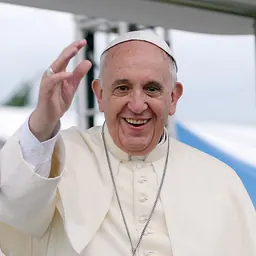
Meisner participated in the 2013 papal conclave that elected Pope Francis. At Pope Francis' inauguration, Meisner was one of the six cardinals who made the public act of obedience on behalf of the College of Cardinals.
On 25 December 2013, Cardinal Meisner turned 80 and lost the right to participate in future conclaves and he submitted his resignation, which Pope Francis accepted on 28 February 2014. Diocesan administrator Stefan Heße led the archdiocese until a successor, Rainer Woelki, was appointed on 11 July and installed as Archbishop on 20 September 2014.
Meisner died on 5 July 2017 while vacationing in Bad Füssing in Bavaria.
In 2020, Cardinal Woelki accused Cardinal Meisner of covering up sexual abuse. Woelki said how “Serious mistakes were repeatedly made for decades”, Woelki said and how those responsible had behaved “completely irresponsibly”, and must therefore be “discovered and named”.
Views
Papacy and Magisterium Meisner was known for his support of the Pope and of the teachings of the Church. Pope John Paul II asked for Cardinal Meisner to see him when he was in the Gemelli Hospital in Rome. Meisner had a very close relationship to Pope John Paul II and was a long-time friend of Joseph Ratzinger, later Pope Benedict XVI.
He said that Benedict "has the intelligence of 12 professors and is as pious as a child on the day of his first Communion."
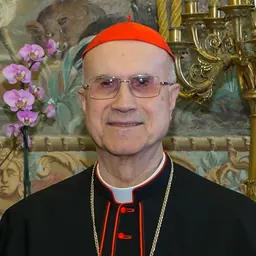
In 2009, Meisner "approached [Pope] Benedict on behalf of a number of cardinals to ask him to dump his Secretary of State, Italian Cardinal Tarcisio Bertone." "According to the interview in the Frankfurter Rundschau, Meisner told Benedict: 'Your Holiness, you have to make Cardinal Bertone resign! He has the responsibility, like in a secular government.'
It was widely recognized that Meisner was criticizing the stained-glass window in Cologne Cathedral by Gerhard Richter, which was unveiled just weeks before and of which he disapproved.
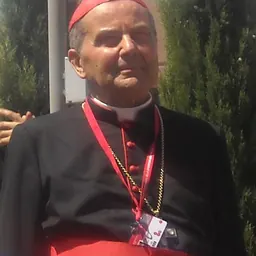
Amoris laetitia In April 2016, Pope Francis issued the apostolic exhortation Amoris laetitia. Meisner and three other cardinals (Carlo Caffarra, Walter Brandmüller and Raymond Leo Burke) submitted dubia (doubts) in private, followed by a public letter ("Seeking Clarity: A Plea to Untie the Knots in Amoris Laetitia") in November 2016, asking Francis to clarify various points of doctrine. The first dubia asked about the reception of the sacraments by the divorced and remarried. The public letter asked about fundamental issues of the Christian life and referenced Pope John Paul II's encyclical Veritatis splendor. In April 2017, following no reply to their letter, the cardinals requested a meeting with Francis, but there had been no response to this request by June 2017.
While waiting for a response from Francis, Pope Emeritus Benedict wrote a letter complimentary of Cardinal Meisner, in spite of the latter being "a fierce critic of Francis who spoke out against the pontiff allowing remarried divorcees to receive holy communion", according to The Guardian.
Select published works Die Fürstin und der Kardinal: Ein Gespräch über Glauben und Tradition, with Princess Gloria of Thurn and Taxis (Verlag Herder, 2008)
Don’t just read it —
keep it.
Full-length biographies made to live with: read them, listen on the way to work, watch them tonight.
- E-book
- Audio
- Video
Instant download · yours to keep · every purchase keeps this site free
Important facts
People in Joachim Meisner's life
Named in this biography and alive at the same time



Related people
Same field, nearest in time

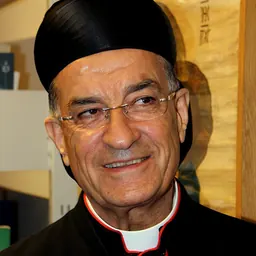
Contemporaries
People whose lives overlapped Joachim Meisner's
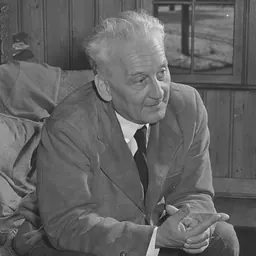

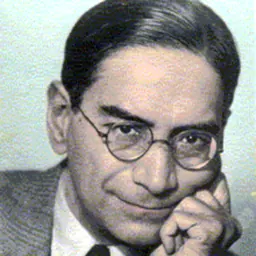


Frequently asked questions
Who was Joachim Meisner?
German cardinal and archbishop of Cologne, Catholic cardinal (1933–2017)
When was Joachim Meisner born?
Joachim Meisner was born on 25 December 1933 in Leśnica.
When did Joachim Meisner die?
Joachim Meisner died on 5 July 2017 in Bad Füssing.
What was Joachim Meisner's occupation?
Joachim Meisner was a catholic priest, writer, transitional deacon, archbishop, christian theologian and catholic bishop.
What nationality was Joachim Meisner?
Joachim Meisner was German.
Sources & further reading
Cite this page
APA: Biography.guide. (2026). Joachim Meisner. https://biography.guide/joachim-meisner/
MLA: "Joachim Meisner." Biography.guide, https://biography.guide/joachim-meisner/.
Chicago: "Joachim Meisner." Biography.guide. https://biography.guide/joachim-meisner/.
Data last updated: 2026-09-20 · Spot an error? Report a correction.
Page generated 2026-09-27 05:28 UTC