
Jo Ann Evansgardner
American psychologist and social activist
About Jo Ann Evansgardner
Lived 1925 – 2010 (aged 84). Jo Ann Evansgardner was an American psychologist, social activist and university teacher.
Jo Ann Evansgardner (April 19, 1925 – February 16, 2010) was an American psychologist and social activist. Born in Latrobe, Pennsylvania, she studied psychology at the University of Pittsburgh and met her husband, Gerald Gardner, whom she married the same year she received her bachelor's degree. The couple moved to Dublin, Ireland, but returned to Pittsburgh after five years, where Evansgardner received a doctorate in experimental psychology. She co-founded the Association for Women in Psychology in 1969 and was active alongside her husband in the NAACP and numerous feminist organizations.
In 1968, the couple joined the National Organization for Women (NOW) and served as joint presidents of the First Pittsburgh NOW chapter. In this role, Evansgardner worked to found KNOW, Inc. and was involved in the 1973 Supreme Court case of Pittsburgh Press Co. v. Pittsburgh Commission on Human Relations, which ended the practice of newspapers segregating help-wanted advertisements by gender. She was appointed as eastern regional co‐director for NOW and coordinated the national protests against AT&T.
Evansgardner sued the Westinghouse Broadcasting Company for sex discrimination in 1977, a case that went to the Supreme Court in Gardner v. Westinghouse Broadcasting Co. She was also a co-founder of the National Women's Political Caucus and a failed Republican candidate for the Pittsburgh City Council in 1971. She and her husband moved to Houston, Texas, in 1980, where she founded a local chapter of NOW at the University of Houston. They returned to Pittsburgh, where she died on February 16, 2010.
Early life Evansgardner was born Jo Ann Evans on April 19, 1925, in Latrobe, Pennsylvania. Her parents were Eugene and Elizabeth Evans, and her niece was Barbara Evans Fleischauer, a future state representative in West Virginia. She grew up in the neighborhood of Hazelwood in Pittsburgh, Pennsylvania. As a child, she wanted to become a physician but was dissuaded from the male-dominated profession. She graduated in 1950 with a bachelor's degree in psychology. She initially hyphenated her surname with her husband's but, due to issues with computers not allowing hyphenated names, instead chose to combine their names. She taught at Carnegie Mellon University from 1964 to 1966, as well as lecturing at several other universities. The nascent organization petitioned the APA to establish a Task Force on the Status of Women in Psychology and as a result, the following annual conference featured eleven seminars on the topic of women's psychology. Evansgardner received a distinguished publication award for contributions in editing and publishing from the AWPA in 1977. She was also a co-founder, alongside Ina Braden, of the Pittsburgh University Committee for Women's Rights.
Social activism Evansgardner was active in the civil rights movement, joining the National Association for the Advancement of Colored People (NAACP) with her husband in 1963. The couple were also active throughout the seventies and eighties with the American Civil Liberties Union (ACLU), the International Women's Year in 1975, the National Women's Conference in 1977, and reproductive rights groups. They joined the National Organization for Women (NOW) in 1968. They printed speeches and articles from feminists and other NOW members, including "The Tyranny of Structurelessness" by Jo Freeman and I'm Running Away from Home, But I'm Not Allowed to Cross the Street by Gabrielle Burton. Sheila Tobias, who had organized one of the first women's rights conferences in the country, became involved with KNOW and agreed to allow the publishing house to print the materials that she had gathered from professors at a variety of universities who taught about women's issues. Through this partnership, KNOW printed the first women's studies course materials.
In 1969, she was elected to the national board of NOW. The Commission upheld the complaint filed by First Pittsburgh NOW and the newspaper lodged a court case, arguing that this decision infringed on its right to freedom of the press under the First Amendment. The Supreme Court heard the case in its 1973 decision in the case Pittsburgh Press Co. v. Pittsburgh Commission on Human Relations and ruled by a 5–4 margin that segregating job advertising was discriminatory. The newspaper was forced to take out any references to sex from its classifieds, a ruling which also applied to the Pittsburgh Post-Gazette.
Evansgardner served as eastern regional co‐director for NOW and contested the role of legal vice‐president, although she was not appointed to the latter position. In this role, she helped to coordinate the national protests against AT&T. She coordinated demonstrations across fifteen cities in New York, Massachusetts, Minnesota, Florida, Washington, Pennsylvania, Illinois, Alabama, Ohio, Missouri, New Mexico, Texas, and California. The NOW chapters protested the company's discrimination against women in the areas of hiring, appointments, promotions, and benefits. She was also involved in the landmark lawsuit against the company which began in November 1970 led by the Equal Employment Opportunity Commission alleging racial and sexual discrimination. She helped organize the 1974 Wonder Woman Conference in Atlantic City, New Jersey, which she described as a "counter pageant" to contrast the Miss America pageant which was being held at the same venue concurrently. She worked with Heide, Patricia Hill Burnett, and Rona Fields on an international conference that was held on June 1, 1973, bringing together more than 300 women from 27 countries.
Evansgardner was known for being confrontational. She shoved a security guard at West Pennsylvania Hospital while attending a protest against the hospital banning abortions after the twelfth week of pregnancy. In 1970, she interrupted two United States Senate hearings to demand a focus on women's issues. The court compared the situation to a motion for summary judgment, which cannot be appealed under section 1292(a)(1).
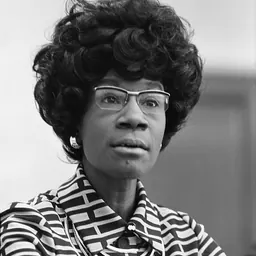
Other activism Evansgardner was a founder of the Professional Women's Caucus in 1968, and she was credited by Eleanor Smeal with instituting the creation of women's caucuses in professional organizations. She helped to found the National Women's Political Caucus (NWPC), which was created on July 12, 1971, to increase the percentage of women in political office to fifty percent. She was also involved with the debate to include girls in Little League Baseball, which ended in 1974 with the league agreeing to allow girls to participate. She also organized funding and access to birth control, rape crisis centers, and women's shelters. Evansgardner was invited to participate in several talk shows and candidate forums, where she used the opportunity to discuss feminist issues and distribute brochures on the ERA. During her campaign, the chancellor at the University of Pittsburgh refused to set up childcare facilities despite NOW requests and Evansgardner organized an unofficial daycare in the lobby of the Cathedral of Learning to protest the inadequacy of these facilities. She was a co-chair of Shirley Chisholm's presidential campaign in Pittsburgh, alongside Alma Speed Fox.
She was the only woman on the Allegheny County Study Commission and in 1973 and 1974, she drafted a home rule charter for the county, although it did not pass in the referendum. She also contested the 1979 election to the Pittsburgh school board, running as a Republican in the 4th district. She received 421 votes and lost to Democrat Solomon Abrams.
She and Gardner moved to Houston, Texas, from Pittsburgh in 1980. She founded a new chapter of NOW at the University of Houston while her husband, who taught engineering at the university, served as the faculty adviser. She presented a paper at the National Women's Studies Association annual meeting in June 1985, where she argued that the word 'feminism' should be replaced with 'isocracism', implying equality of power. Her suggestion was not adopted.
Later life Later in her life, Evansgardner became involved in environmental activism. After retiring, she and Gardner moved back to Hazelwood, where they built a geothermal house. She was honored in an exhibit titled "In Sisterhood: The Women's Movement in Pittsburgh" at the Pittsburgh Center for the Arts in January 2009. At the end of her life, Evansgardner had diabetes, heart disease, and Alzheimer's disease. Her husband died on July 25, 2009, and she died seven months later on February 16, 2010, at Forbes Hospice in Pittsburgh.
Don’t just read it —
keep it.
Full-length biographies made to live with: read them, listen on the way to work, watch them tonight.
- E-book
- Audio
- Video
Instant download · yours to keep · every purchase keeps this site free
Important facts
Family & relationships
People in Jo Ann Evansgardner's life
Named in this biography and alive at the same time






Related people
Same field, nearest in time


Contemporaries
People whose lives overlapped Jo Ann Evansgardner's


Frequently asked questions
Who was Jo Ann Evansgardner?
American psychologist and social activist
When was Jo Ann Evansgardner born?
Jo Ann Evansgardner was born on 19 April 1925 in Latrobe.
When did Jo Ann Evansgardner die?
Jo Ann Evansgardner died on 16 February 2010 in Pittsburgh.
What was Jo Ann Evansgardner's occupation?
Jo Ann Evansgardner was a psychologist, social activist and university teacher.
What nationality was Jo Ann Evansgardner?
Jo Ann Evansgardner was American.
Sources & further reading
· Wikipedia: Jo Ann Evansgardner
· DBpedia: Jo Ann Evansgardner
Cite this page
APA: Biography.guide. (2026). Jo Ann Evansgardner. https://biography.guide/jo-ann-evansgardner/
MLA: "Jo Ann Evansgardner." Biography.guide, https://biography.guide/jo-ann-evansgardner/.
Chicago: "Jo Ann Evansgardner." Biography.guide. https://biography.guide/jo-ann-evansgardner/.
Data last updated: 2026-09-22 · Spot an error? Report a correction.
Page generated 2026-09-27 05:00 UTC