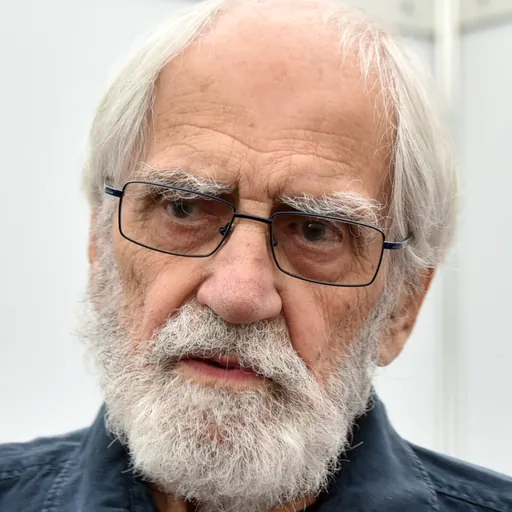
Jiří Stránský
Czech poet, playwright, political prisoner, translator, bookwriter and scriptwriter
About Jiří Stránský
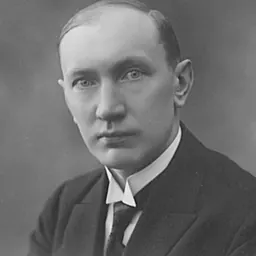
Lived 1931 – 2019 (aged 87). Jiří Stránský was a Czech writer, linguist, translator, playwright, poet and screenwriter.
Jiří Stránský (12 August 1931 – 29 May 2019) was a Czech author, playwright, translator, screenwriter, twice a political prisoner of the communist regime, and human rights advocate. He was the grandson of Czechoslovak politician Jan Malypetr.
In 1953, he was arrested by the communists and sentenced to eight years of forced labor for "treason". He was released in 1960. In 1974, he was arrested again, charged with embezzlement and sentenced to another 3 to 5 years, but was released after one and a half. While imprisoned, he met with several Catholic writers, an experience that encouraged him to become a writer.
After the fall of the communist regime, he was an author and head of the international section of the Czech Literary Fund. In 1992, he was elected President of the Czech section of International PEN. He was chairman of the council of the National Library from 1995 to 1998.
He was a founding signatory of the Prague Declaration on European Conscience and Communism.
His signature also appears on Charter 77.
Notable figure in the Czech Republic Stránský is a notable figure to the Czech public for his significant resistance and opposition to totalitarianism and injustices before 1989. Being creative as well, he has produced as a writer, screenwriter, playwright, poet and translator. Stránský has other achievements as a scout, as well.
His stature in Czech society also has an origin in some of his family members, who were also prominent figures in the Czech lands. Stránský is the maternal grandson of Jan Malypetr, a once prominent Czech politician; the son of , a lawyer; and also a relative of his father's cousin and the founder of Czech Scouts, Antonín Benjamin Svojsík, who has roots in the early years and forms of scouting.
His immediate family—in particular, his father—also acted in resistance to the injustices of communism, which paired with his own, barred him from finishing school. Thus, in his life leading up to 1989 and the fall of Communism in Europe, he was falsely accused of vague criminal acts against the Communist state of Czechoslovakia (now the Czech Republic), and subsequently imprisoned for various lengths of time. Even so, following the fall of communism in 1989, Stránský found success and received many notable awards for his work as an artist and for his steadfast resistance to totalitarianism. Many of his popular works were also duly published widely made into film, television shows, and radio plays.
Early life Like most Czech youth in Czechoslovakia, scouting and sokol made up a sizable amount of his life, like school. Since his ancestor was a notable founder of scouting in the Czech region, bringing the popular British form over, and his father played a notable role in their community's sokol as a mayor, Jiří valued his time spent being a part of these groups, citing the training he received in each as important skills in survival. While in the scouts, he was given the name, Jira. Jiří Stránský was active in other areas as well. At the pre-teen age of fourteen, Jiří banded with the May Uprising of 1945 to resist the current communist regime and was awarded the Distinction of Military Merit of the 2nd degree for being the youngest to engage in the coordinated defiance against the government. At the time, Jiří was twenty-one years old, which qualified as a factor to halve the usual 16-year sentence to 8 years. His sentence was for doing forced-labor mining for uranium. Looking back on his time doing forced-labor, he would satirically claim that of all the forced-labor to which one can be sentenced, work at the uranium mines is not the most ideal.
Plays
Latríny, 1972 Labyrint, 1972 Claudius a Gertruda, which premiered on 7 December 2007, theater association Kašpar, in theater in Celetné, directed by Jakub Špalek
Films based on his work Bumerang, 1996, directed by Hynek Bočan Zdivočelá země, 1997 Zdivočelá země, series 1997–2001, directed by Hynek Bočan Uniforma, 2001, directed by Hynek Bočan Žabák, (Frog), 2001, directed by Hynek Bočan Kousek nebe, (A piece of heaven), 2005, directed by Petr Nikolaev Balada o pilotovi, (Ballad of the pilot, festival title A Pilot Tale), 2018, directed by Ján Sebechlebský
Awards
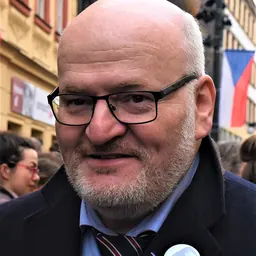
2015: Knight of Czech Culture - Award and Title of the Ministry of Culture of the Czech Republic (presented by Minister of Culture Daniel Herman) 2015: Arnošt Lustig Award Medal of Merit (Czech Republic) Artis Bohemiae Amicis Medal Karel Čapek Prize 1 June Award Order of the Silver Wolf (2011) Memory of Nation Award (2013)
Don’t just read it —
keep it.
Full-length biographies made to live with: read them, listen on the way to work, watch them tonight.
- E-book
- Audio
- Video
Instant download · yours to keep · every purchase keeps this site free
Important facts
People in Jiří Stránský's life
Named in this biography and alive at the same time



Related people
Same field, nearest in time


Contemporaries
People whose lives overlapped Jiří Stránský's

Frequently asked questions
Who was Jiří Stránský?
Czech poet, playwright, political prisoner, translator, bookwriter and scriptwriter (1931-2019)
When was Jiří Stránský born?
Jiří Stránský was born on 12 August 1931 in Prague.
When did Jiří Stránský die?
Jiří Stránský died on 29 May 2019 in Prague.
What was Jiří Stránský's occupation?
Jiří Stránský was a writer, linguist, translator, playwright, poet and screenwriter.
What nationality was Jiří Stránský?
Jiří Stránský was Czech.
Sources & further reading
Cite this page
APA: Biography.guide. (2026). Jiří Stránský. https://biography.guide/jiri-stransky/
MLA: "Jiří Stránský." Biography.guide, https://biography.guide/jiri-stransky/.
Chicago: "Jiří Stránský." Biography.guide. https://biography.guide/jiri-stransky/.
Data last updated: 2026-09-21 · Spot an error? Report a correction.
Portrait: Wikimedia Commons · author & licence
Page generated 2026-09-27 04:59 UTC