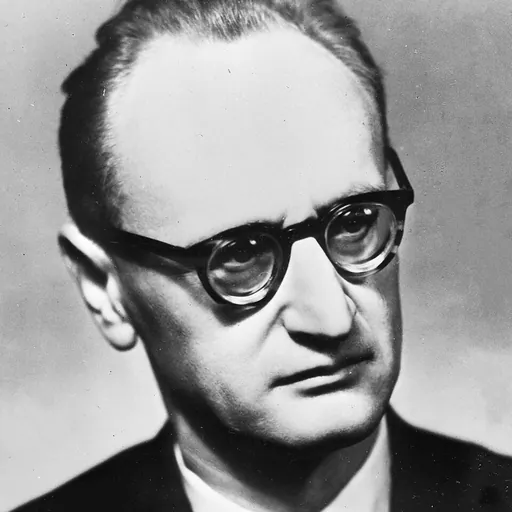
Jiří Hájek
Czechoslovak politician (1913-1993), member of Czechoslovak national parliament, minister of foreign affairs and minister of education
About Jiří Hájek
Lived 1913 – 1993 (aged 80). Jiří Hájek was a Czech writer, politician, diplomat, university teacher, political scientist and jurist.
Jiří Hájek (; 6 June 1913 – 22 October 1993) was a Czech politician and diplomat. Together with Václav Havel, Zdeněk Mlynář, and Pavel Kohout, Hájek was one of the founding members and architects of Charter 77.
Early life and early political career Hájek was born on 6 June 1913 in Krhanice, Bohemia, Austria-Hungary. He studied and worked as a lawyer in the Charles University in Prague. From a young age he was a member of the Czechoslovak Social Democratic Party. During World War II Hájek was imprisoned (1939–1945). After the war he became a member of parliament for the Czechoslovak Social Democratic Party (1945–1948) and probably also a secret member of the Communist Party (code name E-22). During 1948–1969, he was a member of the Central Committee of the Communist Party of Czechoslovakia, during 1950 – 1953 he was the rector of the University of Economics.
Diplomacy From 1955 Hájek worked in diplomacy: in 1955–1958 as an ambassador in Britain, in 1958–1962 as a deputy of the minister of foreign affairs, and in 1962–1965 he represented Czechoslovakia in United Nations. Between 1965 and 1968 he was the minister of education. From April to September 1968, he served as the minister of foreign affairs in Dubček's government. After the Soviet Union army took control over Czechoslovakia (21 August 1968) he protested against this in a speech at the United Nations (where he used the word occupation) – this caused his dismissal from high offices and even from the communist party (1970).
Late life Until 1973, Hájek worked in the Historical Institute of Czechoslovak Academy of Sciences.
Together with Václav Havel, Zdeněk Mlynář, and Pavel Kohout, Hájek was one of the founding members and architects of Charter 77.
Jiří Hájek emerged as one of three leading spokesmen of Charter 77, thus becoming the target of police interrogations and threats. He was a strong defender of this uncompromising document, which voiced the principles of universal human rights. In 1987, Hájek was awarded the first ever Professor Thorolf Rafto Memorial Prize.
After the fall of socialism in Czechoslovakia (1989) Hájek served as an advisor of Alexander Dubček (1990–1992) but was unable to obtain significant political influence.
He died of an unspecified cancer in Prague on 22 October 1993.
Don’t just read it —
keep it.
Full-length biographies made to live with: read them, listen on the way to work, watch them tonight.
- E-book
- Audio
- Video
Instant download · yours to keep · every purchase keeps this site free
Important facts
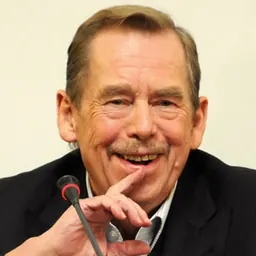
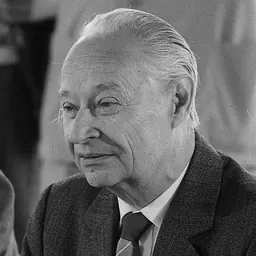
People in Jiří Hájek's life
Named in this biography and alive at the same time



Related people
Same field, nearest in time
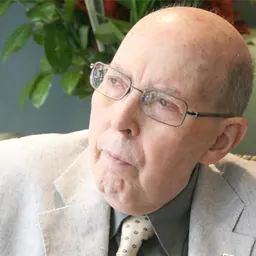

Contemporaries
People whose lives overlapped Jiří Hájek's




Frequently asked questions
Who was Jiří Hájek?
Czechoslovak politician (1913-1993), member of Czechoslovak national parliament, minister of foreign affairs and minister of education
When was Jiří Hájek born?
Jiří Hájek was born on 6 June 1913 in Krhanice.
When did Jiří Hájek die?
Jiří Hájek died on 22 October 1993 in Prague.
What was Jiří Hájek's occupation?
Jiří Hájek was a writer, politician, diplomat, university teacher, political scientist and jurist.
What nationality was Jiří Hájek?
Jiří Hájek was Czech.
Sources & further reading
Cite this page
APA: Biography.guide. (2026). Jiří Hájek. https://biography.guide/jiri-hajek/
MLA: "Jiří Hájek." Biography.guide, https://biography.guide/jiri-hajek/.
Chicago: "Jiří Hájek." Biography.guide. https://biography.guide/jiri-hajek/.
Data last updated: 2026-09-23 · Spot an error? Report a correction.
Portrait: Wikimedia Commons · author & licence
Page generated 2026-09-27 05:06 UTC