
Jimmy Nesbitt
Royal Ulster Constabulary officer
About Jimmy Nesbitt
Lived 1934 – 2014 (aged 79). Jimmy Nesbitt was a British.
James Nesbitt MBE (29 September 1934 – 27 August 2014) was a Royal Ulster Constabulary (RUC) Detective Chief Inspector who was best known for having headed the Murder Squad team investigating the notorious Shankill Butchers' killings in the mid-1970s. In 1980, he was given the MBE "in recognition of his courage and success in combating terrorism".
Early years
Nesbitt was born in 1934 From an early age Nesbitt was fascinated by detective stories and dreamed about becoming a detective himself.
As a child he avidly read all the celebrated murder trials in the newspapers.
C Division
In September 1973 he was promoted to Detective Inspector and moved to head up the RUC's C or "Charlie" Division based in Tennent Street, off the Shankill Road, the heartland of loyalism and home of many loyalist paramilitaries. The area had already been subjected to bombing attacks, rioting, home-burnings, vigilante patrols, street barricades, random sectarian murders and killings as part of sporadic loyalist feuds. Nesbitt's responsibilities were immense as C Division covered an entire fifteen square mile district which contained a population of 150,000 and more sectarian killer gangs than any other district in Northern Ireland. Furthermore, the majority of the violence committed within an area of just three square miles contained every paramilitary group – loyalist and republican – which existed in Northern Ireland at that time. The UVF Brigade Staff (Belfast leadership) was based on the Shankill Road.
Shortly before he was sent to C Division his policing abilities were highly praised in this assessment,
He stimulates interest among his colleagues, often drawing on his personal experiences marrying theory with practice. He is thoroughly sound and reliable and upholds the best traditions of the Royal Ulster Constabulary. He brings great credit to the Force. Described by Martin Dillon as a controlled man, he was also friendly, generous and displayed a "black" sense of humour. Moreover, he was a devoted family man and highly respected by his subordinates, who typically addressed him as "Boss" or "Sir". Belfast News Letter journalist Bobbie Hanvey who interviewed him, described him as "gentle in manner, extremely soft-spoken and a dapper dresser.
During his tenure as Detective Chief Inspector at Tennent Street, Nesbitt and his team investigated a total of 311 killings and solved around 250 of the cases. Over one weekend in the 1970s, there were a total of nine murders committed in his district. He personally conducted interviews with some of the most ruthless and dangerous killers in Northern Ireland.
Shankill Butchers' killings
By 1975, Nesbitt was encountering death and serious injury on a daily basis as the violence in Northern Ireland showed no signs of abating; however towards the end of that year, he was faced with the first of a series of brutal killings that added a new dimension to the relentless tit-for-tat killings between Catholics and Protestants that had already made 1975 "one of the bloodiest years of the conflict". By this time he had already earned 48 commendations for his excellent detective work. He had been in bed when he received a telephone call from the duty officer at the station advising him about the body "dumped on his patch". He arrived at the murder scene as the victim's body was being taken away by mortuary personnel. Nesbitt addressed his nine-man murder squad on 26 November with the following statement: "We're looking for somebody more brutal than the average terrorist and we'd better get to him". Later Nesbitt's team of ten would be augmented by men from the Belfast Regional Crime Squad and an undercover surveillance team. The man calling himself "Major Long" had claimed Quinn was a "militant Republican" who had been killed in retaliation for the fatal shooting of two Protestant policemen by the IRA the day before. The name "Major Long" derived from "The Long Bar", one of the Shankill Road pubs the "Butchers" frequented and often set out from to carry out their killings as they had done on the night of 6/7 February. Nesbitt did not connect the name "Long" to the Shankill pub which was a known haunt by loyalist paramilitaries. Nesbitt concluded the latest killings were perpetrated by the same person or persons that had killed Crossin. By this stage the media was already using the term "the Butchers" to describe the killings. Despite Nesbitt and his men often working 18 hours a day, seven days a week in an attempt to apprehend the culprits, Nesbitt's major obstacles in solving the crime was the lack of manpower, resources and the reluctance of the local population to come forward out of fear of reprisals from paramilitaries. Furthermore, the killers left behind no witnesses or evidence which provided clues as to their identity.
When a paramilitary killing took place, Nesbitt and his Murder Squad were aided by other members of CID for at least three days. The detectives attempted to cover every patch of ground in the area where it was believed the paramilitaries operated. When the period of time terminated, the squad went back to teamwork and the other members of the force resumed their handling of crimes unconnected with paramilitary activity. Nesbitt and his men viewed all paramilitaries as criminals no matter from which community they originated.
He received his first lead in the "Butchers"' killings when the woman who found Francis Rice's body said that on the previous night she heard voices with Belfast accents in the entry off Esmond Street and the chugging noise of a taxi. Her home overlooked the entry and the sounds had been clearly audible. Black London-style taxis were frequently used in Belfast as a means of transportation and over 200 plied up and down the Shankill Road every day. As a result, Nesbitt ordered that all the taxis in the Shankill were to be taken in and forensically tested, including a black taxi belonging to one of the gang, William Moore, a former meat packer. However, as the vehicle had been thoroughly cleaned, no evidence remained to incriminate Moore in the attacks. Moore subsequently destroyed his taxi.
Lenny Murphy
Nesbitt did not know at the time that William Moore was part of the murderous gang led by Brookmount Street resident Lenny Murphy, who commanded a UVF platoon that operated mainly from the "Brown Bear" pub, located on the corner of Mountjoy Street and the Shankill Road, not far from the Tennent Street station. Murphy had a pathological hatred of Catholics, and as a means of manifesting this hatred on the Catholic community at large, had formed a murder gang with like-minded friends from his "Brown Bear" platoon. The gang's modus operandi involved the abduction of innocent men walking home at night from areas that were overwhelmingly Catholic due to the sectarian geography of Belfast. Once the victims were hit over the head with a wheel brace and dragged into Moore's taxi, they were driven away to be subjected to a beating and torture session that ended with their being dumped, usually into a Shankill alleyway, where their throats were then sliced with butcher's knives. On the night Francis Rice was killed, Murphy had brought along two female acquaintances to observe the beating and murder. In addition to the cut-throat killings, Murphy and the Shankill Butchers also carried out sectarian shootings of random Catholics and punishment killings against their loyalist rivals, the most notable being that of Noel "Nogi" Shaw on 30 November 1975 as part of an internal UVF feud. Inside the "Lawnbrook Social Club", in full view of his unit, Murphy savagely beat, pistol-whipped and then repeatedly shot Shaw in the head; afterwards he ordered his body to be placed in a laundry basket. Shaw was a part of the UVF "Windsor Bar" platoon which was commanded by Anthony "Chuck" Berry and its members were rivals of the "Brown Bear" gang controlled by Murphy. The two pubs were a quarter of a mile apart from one another. Police from Nesbitt's C Division found Shaw's body in a back street off the Shankill several hours after he'd been killed.
After the examination of the Shankill taxis failed to obtain results, Nesbitt called in all the informers C Division used in West Belfast and even arrested a senior UVF member on false pretexts to offer him a deal in exchange for information; but nobody was able to tell him anything about the perpetrators. He then launched a potentially risky plan to entrap the killers which he codenamed "Operation Knife Edge". The plan involved putting plainclothes RUC men on the streets at night and having them behave as if they were drunk in the hope of luring the murderers. Although the policemen were placed in streets where the "Butchers" usually abducted their victims and were closely observed by detectives in nearby cars, the "Butchers" gang never approached them.
He instructed police to drive a well-disguised McLaverty around the Shankill in an unmarked car in the hope that he would be able to recognise some of his assailants outside some of the pubs and drinking clubs the loyalist paramilitaries were known to frequent. This took place on 19 May, the day of local government elections which meant the Shankill Road was even more crowded than usual. as he had interviewed him a number of times on previous occasions. Following the trial which was held in February 1979, William Moore's mother personally thanked Nesbitt for taking her son off the streets and putting him into jail. Nesbitt later ruefully commented that "the big fish got away" which was a reference to Murphy and Messrs "A" and "B". He later visited Moore in prison in a futile attempt to persuade him to name those who had escaped being charged with the murders.
The investigation delivered its verdict in February 1993 and exonerated all those named as Committee members who did not have previous terrorist convictions arguing that they were "respectable members of the community" and in some cases "the aristocracy of the country". He added further that all bar one of the RUC officers named in the programme as having been involved in Committee's "Inner Force" did not actually exist and exonerated the sole real officer, Trevor Forbes. The report claimed that the show had been a hoax perpetrated by a disreputable, unnamed witness, and Nesbitt added that this witness had been active since 1985 when he sold false information about the Inner Force to Martin O'Hagan, who subsequently published it in the Sunday World.
McPhilemy denied the veracity of Nesbitt's argument and published a book in 1998 in which he discussed the investigation and also offered further evidence for the existence of the Committee and the Inner Force. McPhilemy argued Nesbitt's investigations had been perfunctory at best, failing for instance to uncover the fact that Jim Sands, the Ulster Independence Committee member who was the chief source for the documentary, was not unknown to one of the Committee's alleged two leading hit-men Billy Wright as Nesbitt had claimed but that rather the two had known each other since school. McPhilemy added that Sands, who had been questioned at some length during the Nesbitt Inquiries, had effectively been coached by the RUC as part of a whitewash. The book also reproduced the full transcript of a conversation between Sunday Express journalist Barrie Penrose and Nesbitt, in which Penrose made it clear that he was opposed to the initial programme whether it was true or not. Amongst the controversial statements made, Nesbitt was quoted as telling Penrose that he was aware of a UVF internal inquiry into the show which, he told Penrose, had pointed the finger at UVF Mid-Ulster Brigade members Jackie Whitten and Graham Long as possible sources for the documentary makers.
Awards and later years Prior to his retirement, Nesbitt had received a total of 67 commendations, which is the highest number ever given to a policeman in the history of the United Kingdom.
When he was asked by journalist Bobbie Hanvey his own opinion on how criminals were able to live with themselves after committing their crimes, his response was that he'd once interviewed a murderer who had killed more than once and admitted to him that, "he had been advised by a leading UVF man from Mid-Ulster that the best thing to do was to keep on committing murders. This way, you would forget them because you always remember your first victim and if you kept killing they would all eventually disappear – become jumbled up and none would stand out in your mind". Murphy was already dead at the time of the interview having been fatally shot by the Provisional IRA on 16 November 1982.
Nesbitt died on 27 August 2014 after a brief illness.
In his book The Shankill Butchers: the real story of cold-booded mass murder, Martin Dillon summed Nesbitt up as "undoubtedly the most professional detective in Northern Ireland". Journalist Chris Ryder described Nesbitt as "one of the most experienced and painstaking of the RUC's detectives".
Don’t just read it —
keep it.
Full-length biographies made to live with: read them, listen on the way to work, watch them tonight.
- E-book
- Audio
- Video
Instant download · yours to keep · every purchase keeps this site free
Important facts
People in Jimmy Nesbitt's life
Named in this biography and alive at the same time

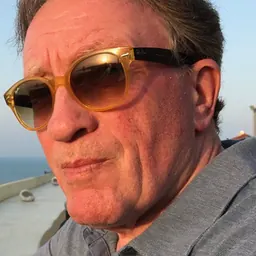



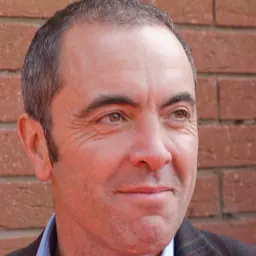
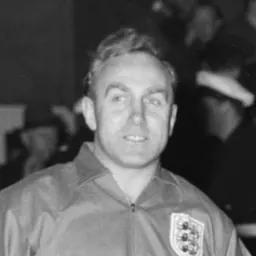
Contemporaries
People whose lives overlapped Jimmy Nesbitt's






Frequently asked questions
Who was Jimmy Nesbitt?
Royal Ulster Constabulary officer (1934-2014)
When was Jimmy Nesbitt born?
Jimmy Nesbitt was born on 29 September 1934 in Belfast.
When did Jimmy Nesbitt die?
Jimmy Nesbitt died on 27 August 2014.
What nationality was Jimmy Nesbitt?
Jimmy Nesbitt was British.
Sources & further reading
· DBpedia: Jimmy Nesbitt (policeman)
Cite this page
APA: Biography.guide. (2026). Jimmy Nesbitt. https://biography.guide/jimmy-nesbitt/
MLA: "Jimmy Nesbitt." Biography.guide, https://biography.guide/jimmy-nesbitt/.
Chicago: "Jimmy Nesbitt." Biography.guide. https://biography.guide/jimmy-nesbitt/.
Data last updated: 2026-09-20 · Spot an error? Report a correction.
Page generated 2026-09-27 05:30 UTC