
About Jim Coleman
Lived 1911 – 2001 (aged 89). Jim Coleman was a Canadian sports journalist and sports journalism, known for Calgary Stampede, Postmedia Network and The Canadian Press.
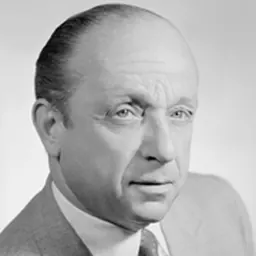
James Alexander Coleman (October 30, 1911 – January 14, 2001) was a Canadian sports journalist, writer and press secretary. His journalism career began with The Winnipeg Tribune in 1931, and included tenures with The Province and The Globe and Mail. He became Canada's first national print syndication sports columnist in 1950, writing for The Canadian Press and Southam Newspapers. He also appeared as a radio sports commentator and hosted The Jim Coleman Show on CBC Television, and served as press secretary for the Ontario Jockey Club and Stampede Park in Calgary. His father was D'Alton Corry Coleman, a former journalist and later president of the Canadian Pacific Railway. While travelling about North America to sporting events as a youth with his father, Coleman developed a lifelong love of horse racing, Canadian football and ice hockey.
Coleman was active for 70 years as a journalist, preferred to use a typewriter instead of a computer, wrote four books, and his final column was published on the day he died. Fellow journalist Milt Dunnell felt that Coleman "was one of the finest sports writers in North America". The Canadian Press described Coleman as "known for his colourful writing, encyclopedic memory, dapper dress and ever-present cigar". His parents were Irish Canadians. He grew up without his mother Anna Coleman, who died in 1920. His father D'Alton Corry Coleman, who was a former journalist and later president of the Canadian Pacific Railway (CPR), introduced Coleman to sports while travelling about North America as a youth.
Coleman's first experience with horse racing was a visit to Minoru Racetrack in Brighouse with his aunt. She placed C$2 wager on Mineral Jim, a horse he chose which finished in third place.
Coleman and his brother travelled about Canada and the United States in the care of a train conductor or CPR official, and met their father often with a limousine to attend sporting events.
Coleman grew up living in hotel suites from Vancouver to Montreal, He received his first typewriter at age 13 from his father, and was educated at Victoria College, British Columbia and then at McGill University.
One of Coleman's early assignments included reporting on the demonstration sport of curling at the 1932 Winter Olympics held in Lake Placid, New York.
Coleman resigned his position with The Globe and Mail in January 1950. He felt that despite having "freedom of expression", he spent "every waking minute seeking a subject about which to write", and that "writing a daily column is a job that ends only once".
Horse racing
Coleman had a lifelong love for horse racing.
Coleman published the autobiography, A Hoofprint on My Heart (1971), which summarized his passion for horse racing, and "told the story of a little boy who always wanted to own a race horse". Coleman stated that Dunnell had his pocket picked multiple times without his "personal protection", but was not robbed when he would walk two paces behind Dunnell, who preferred to carry his wallet in his right hip pocket. He later attended the 20th Grey Cup in 1932, where Warren Stephens threw the first touchdown pass in a Grey Cup game.
"The football game for the Grey Cup was contested officially in the stadium and was continued unofficially in the hotel lobby. At 5:01 p.m. the goalposts were borne triumphantly through the front doors and were erected against the railings of the mezzanine. At 5:02 p.m. two platoons of bellboys circumspectly removed the potted palms, flower vases and anything that weighed less than three thousand pounds. The gaudily caparisoned Calgary supporters were boisterous and noisy but well-behaved and courteously declined to ride their horses into the elevators. Any minor untoward incidents were occasioned by youthful local yahoos who suffered from the delusion that the consumption of two pints of ale and the acquisition of a pseudo-western twang entitled them to ride the range astride any convenient chesterfield". — Jim Coleman, November 28, 1948 He invented the Curse of Muldoon in 1943, and admitted to have made it up at a publishing deadline.
Later in his career, Coleman covered Vancouver Canucks games. He was reported to prefer interviewing veteran players, and was quoted as saying to fellow journalists, "Don't fall in love with the flashy rookie at camp".
In retirement, Coleman wrote a weekly opinion column and compiled a nostalgia column called "Memory Lane" for The Province. His final column published on the day he died. He had proclaimed himself the "vice-president in charge of ancient history" at The Province.
Coleman was married to Maggie Coleman. He lived and worked in Toronto for more than 40 years, before they retired to Vancouver. When Coleman was named to the Order of Canada he hid the invitation from his wife, who later forced him to go receive the honour. In 1984, he was inducted into the Canadian Horse Racing Hall of Fame in the builder category, He was inducted into Canada's Sports Hall of Fame in the builder category in 1985,
Legacy The Canadian Press described Coleman as a "legendary sports columnist" and "known for his colourful writing, encyclopedic memory, dapper dress and ever-present cigar". Milt Dunnell felt that, "In my estimation, he was one of the finest sports writers in North America". James Travers of the Toronto Star noted that Coleman's columns were about the people involved in the games instead of the games themselves, and described his writing as "evocative, touching, funny, fast, clean and professional".
Coleman never used computers. The Underwood typewriter which he wrote on until he died was placed on display at the BC Sports Hall of Fame. Jim Taylor published the book, The Best of Jim Coleman: Fifty Years of Canadian Sport from The Man Who Saw It All in 2005. Taylor found all of Coleman's 2,500 columns stuffed into fourteen flower boxes inside of a filing cabinet, read every one then selected 150 columns from 1939 to 1986 for the book.
Don’t just read it —
keep it.
Full-length biographies made to live with: read them, listen on the way to work, watch them tonight.
- E-book
- Audio
- Video
Instant download · yours to keep · every purchase keeps this site free
Important facts
more
Woodbine Entertainment GroupPeople in Jim Coleman's life
Named in this biography and alive at the same time




Related people
Same field, nearest in time


Contemporaries
People whose lives overlapped Jim Coleman's





Frequently asked questions
Who was Jim Coleman?
Canadian sports journalist (1911-2001)
When was Jim Coleman born?
Jim Coleman was born on 30 October 1911 in Winnipeg.
When did Jim Coleman die?
Jim Coleman died on 14 January 2001 in Vancouver.
What was Jim Coleman's occupation?
Jim Coleman was a sports journalist and sports journalism.
What was Jim Coleman known for?
Jim Coleman was known for Calgary Stampede, Postmedia Network, The Canadian Press, The Globe and Mail, The Province and The Winnipeg Tribune.
What nationality was Jim Coleman?
Jim Coleman was Canadian.
Sources & further reading
· DBpedia: Jim Coleman (journalist)
Cite this page
APA: Biography.guide. (2026). Jim Coleman. https://biography.guide/jim-coleman-sports-journalist/
MLA: "Jim Coleman." Biography.guide, https://biography.guide/jim-coleman-sports-journalist/.
Chicago: "Jim Coleman." Biography.guide. https://biography.guide/jim-coleman-sports-journalist/.
Data last updated: 2026-09-22 · Spot an error? Report a correction.
Page generated 2026-09-27 05:29 UTC