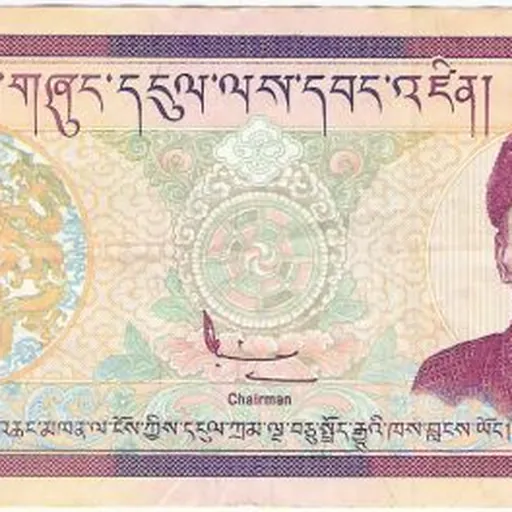
About Jigme Dorji Wangchuck
Lived 1929 – 1972 (aged 43). Jigme Dorji Wangchuck was a politician.
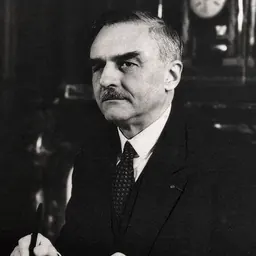
Jigme Dorji Wangchuck (, ; 2 May 1928 – 21 July 1972) was King of Bhutan from 30 March 1952 until his death in 1972.
He began to open Bhutan to the outside world, began modernization, and took the first step towards democratization.
Early life Jigme Dorji Wangchuck was born in 1928 in Thruepang Palace in Trongsa. At a young age, he was apprenticed in etiquette and leadership at the royal court of his father the King. Wangchuck was educated in a British manner in Kalimpong and Bishop Cotton School, Simla and he went on study tours to many foreign countries such as Scotland and Switzerland from where he drew inspiration to develop Bhutan with suitable adaptations. In 1943, he was appointed Trongsa Dronyer and then elevated as the 25th Paro Penlop in 1950, upon the death of the 24th Paro Penlop, Tshering Penjor (1902–1949). Wangchuck married Ashi Kesang Choden Wangchuck (born 1930), the daughter of Gongzim (Lord Chamberlain) Sonam Topgay Dorji (1896–1953), at the Ugyen Pelri Palace, Paro, on 5 October 1951. With Queen Ashi Kesang Choden, they had five children. The royal wedding was held at the Garden Palace. He also had a concubine, with whom he fathered four additional children. The following year, Wangchuck became the King after his father died in Kuenga Rabten Palace. Coronation was held in Punakha Dzong on 27 October 1952. Wangchuck not only achieved the reorganisation of society and government, but also consolidated Bhutan's sovereignty and security. He mobilised resources from the international donors as aid. Wangchuck's strategy was to broaden the source of aid by developing relationships with other countries. Bhutan joined the Colombo Plan in 1962 to obtain international aid. However, India became the main source of financial and technical assistance. He was a deft and farsighted planner in the sense that he modernised Bhutan without destabilizing its culture and tradition. Wangchuck brought modern techniques and methods to preserve and promote the culture of Bhutan, yet at the same time, he introduced Western science and technology.
Political and social reforms In the context of Bhutan, there were small groups who were bonded labourers. They would work on the farms of the aristocratic and prominent families. In return, they would receive food, lodging and clothes. As soon as he became the King, labourers who worked on the royal lands were made into tenants and sharecroppers instead of indentured labourers. Later, similar indentured labourers were set free in other areas of the country, especially in some parts of Eastern Bhutan, where they were concentrated. In 1953, Wangchuck opened the National Assembly of Bhutan in 1953 in Punakha Dzong. Along with the promulgation of Thrimzhung Chenmo, a mechanism to implement and enforce laws was needed. Wangchuck decided to open the judiciary, first with the appointment of Thrimpons (judges) in districts, and then finally to the High Court, which was set up in 1968. These administrative and social reforms were prior to any economic modernisation programmes. In 1955, he intensified the conversion of commodity taxes to cash taxes by assessing land for cash taxation.
Culture and education The king paid considerable policy attention on preserving Bhutanese culture so that Bhutan could always perpetuate itself as a culturally distinct nation, in particular with a flourishing Buddhist culture. He commissioned Buddhist monuments, including a large statue of the Buddha near the parliament building in Thimphu, as well as ornate copies of Buddhist texts such as the Kangyur and Tengyur. In 1961, motor road transport reached Thimphu. The systematic envisioning of the economic future of Bhutan through FYPs was put into practice in 1961. The idea of budgeting and programming on a five-year basis is a legacy from that period. The construction of roads expanded vigorously to the end of Jigme Dorji Wangchuck's reign; by his death, more than 1200 km (750 miles) of road had been built in the country.
Death Wangchuck suffered from long-term heart problems; he had his first heart attack at the age of 20.
Styles 1929–1944: Dasho Jigme Dorji Wangchuck. 1944–1946: Trongsa Dronyer Dasho Jigme Dorji Wangchuck. 1946–1952: Paro Penlop Dasho Jigme Dorji Wangchuck. 1952–1963: Trongsa Penlop Dasho Jigme Dorji Wangchuck. 1963–1972: His Majesty Druk Gyalpo Jigme Dorji Wangchuck, King of Bhutan.
Patronages Life Member and Patron of Maha Bodhi Society.
Honours
National honours 70px Grand Master of the Royal Order of Bhutan (Druk Thuksey = Son of the Heart of the Thunder Dragon, 1966).
Foreign honours
Ancestry
Don’t just read it —
keep it.
Full-length biographies made to live with: read them, listen on the way to work, watch them tonight.
- E-book
- Audio
- Video
Instant download · yours to keep · every purchase keeps this site free
Important facts
Family & relationships
People in Jigme Dorji Wangchuck's life
Named in this biography and alive at the same time

Related people
Same field, nearest in time


Contemporaries
People whose lives overlapped Jigme Dorji Wangchuck's


Frequently asked questions
Who was Jigme Dorji Wangchuck?
King of Bhutan (1929-1972)
When was Jigme Dorji Wangchuck born?
Jigme Dorji Wangchuck was born on 2 May 1929 in Thimphu.
When did Jigme Dorji Wangchuck die?
Jigme Dorji Wangchuck died on 21 July 1972 in Nairobi.
What was Jigme Dorji Wangchuck's occupation?
Jigme Dorji Wangchuck was a politician.
What nationality was Jigme Dorji Wangchuck?
Jigme Dorji Wangchuck's recorded nationality: Bhutan.
Sources & further reading
· Wikipedia: Jigme Dorji Wangchuck
· DBpedia: Jigme Dorji Wangchuck
Cite this page
APA: Biography.guide. (2026). Jigme Dorji Wangchuck. https://biography.guide/jigme-dorji-wangchuck-politician/
MLA: "Jigme Dorji Wangchuck." Biography.guide, https://biography.guide/jigme-dorji-wangchuck-politician/.
Chicago: "Jigme Dorji Wangchuck." Biography.guide. https://biography.guide/jigme-dorji-wangchuck-politician/.
Data last updated: 2026-09-24 · Spot an error? Report a correction.
Portrait: Wikimedia Commons · author & licence
Page generated 2026-10-04 09:13 UTC