
Jesus Permuy
Cuban-American architect (born 1935)
About Jesus Permuy
Born 1935.
Jesús A. Permuy (born 1935) is a Cuban-American architect, urban planner, human rights activist, art collector, and businessman. He is known for an extensive career of community projects and initiatives in Florida, Washington, D.C., Europe, and Latin America.
Biography Jesús Permuy was born in Havana, Cuba to Spanish parents who had emigrated from the Galicia region of Spain to Havana a decade prior to his birth. After completing his secondary education, Permuy studied architecture at the School of Architecture and Planning in the University of Havana. His studies were interrupted by the outbreak of the Cuban Revolution.
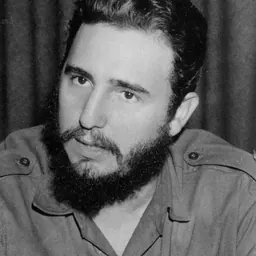
Permuy played a leading role in the opposition to Fidel Castro and the Communist forces through the Movimiento de Recuperación Revolucionaria (Movement for Revolutionary Recovery – MRR), the most prominent faction in the anti-Castro counterrevolution coalition and resistance, eventually serving as its National Coordinator. Following the failed Bay of Pigs Invasion, he fled first to Venezuela for several months, and then permanently relocated to the United States where he joined the Cuban community in exile. There he continued both his architecture and urban planning studies and career. He would also become known internationally for taking up activism in support of democracy and human rights for the Cuban people in the face of ongoing abuses by the Castro government. As such, Permuy would become one of the leading figures organizing and mobilizing the international community against the Castro government from the 1970s to the early 21st century through various organizations and platforms, including the United Nations and the United States Congress. He launched The Permuy Gallery with his first wife, prominent art promoter Marta Permuy, which became historically significant as one of the first Cuban Art galleries in South Florida following the Cuban exodus. Over the course of his career Permuy has had leading public roles in multiple civic, community, and religious organizations, including service as a longtime Councilman of the Agrupacion Catolica Universitaria, and hosted a weekly radio show on Radio Paz. Following his legacy, the Permuy family has remained active in art, architecture, politics, and community development initiatives.
Movement for Revolutionary Recovery
Following Fidel Castro's rise to power in 1959 in the aftermath of the Cuban Revolution and his subsequent dismantling of Cuba's democratic systems and institutions, Permuy became involved in efforts to advocate for democracy and organize resistance to the entrenchment of the Castro regime and its progression into authoritarian Communism. Permuy was first recruited into the Movimiento de Recuperación Revolucionaria (Movement for Revolutionary Recovery; MRR) in 1959 by Rogelio Gonzalez Corzo, the organization's National Coordinator.
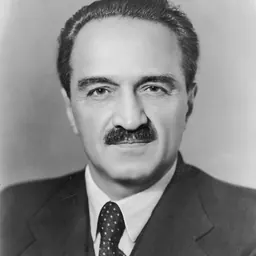
Permuy initially helped lead the MRR's student arm, overseeing the members and activities in seven of the thirteen schools of the University of Havana, Cuba's primary university. Among his actions in the student branch of the movement, Permuy helped organize a major protest of over 100 University of Havana students against the state visit of top Soviet Minister Anastas Mikoyan on February 5, 1960, during which the protestors removed Mikoyan's wreath at the José Martí Monument in the Parque Central and replaced it with their own. Permuy was then arrested as a result of his role in the protest, though he was able to secure a release. Built on a Jesuit property known as El Salado, the project created a new complex for the school to expand their summer programs, including eight pavilions, dormitories, a chapel, a cafeteria, and a game room. Alongside his architecture career, in 1967 he received a Master of City and Regional Planning degree from the Catholic University of America in Washington, D.C., and became certified by both the American Institute of Certified Planners (AICP) and the American Planning Association. Permuy's thesis, The Town Center: A Unifying Force, Severna Park. Maryland: A Case Study of the Problem of Structuring Identity in a Suburban Situation, outlined his urban planning philosophy of elevating socioeconomic conditions for both individuals and communities, such as through the plaza design model of cultural gathering spaces; it has subsequently been cited in published literature by the Council of Planning Librarians and the U.S. Department of Education. While residing in Washington, D.C., Permuy served as Head Planner of the Anne Arundel County Planning and Zoning Department's Project Planning Section in Maryland.
After relocating back to South Florida in 1969, he served as Planning Division Supervisor of Metro Dade County (now Miami-Dade County) Department of Housing and Urban Development (HUD) until 1973, when the Miami Herald reported that he resigned from the position for the private sector role of Vice President of International Investment Group Inc.'s Housing and Development branch. During his tenure as Planning Division Supervisor, Permuy oversaw revitalization initiatives in several socioeconomically challenged areas as well as restoration programs of cultural resources and historic districts in the region, including in Coral Gables and Coconut Grove. Permuy recommended a site on the Miami River, which was met with some protest, but unanimously approved by the Miami City Commission. Permuy would go on to be a member of the five-person jury that chose the final design from a pool of thirteen submissions. The park also served as a safe gathering place for children in the Miami area during the instability of the drug crisis of the 1970s and 1980s. He was elected Vice Chair of the Taskforce later that year. In 1984 he was made co-chairman and helped develop the East Little Havana Redevelopment Plan, which was submitted to the City of Miami at the conclusion of the Taskforce that year. During this period, Ferré also appointed Permuy as Vice President and Government Alternate of the Allapattah Advisory Board and Community Action Agency to develop long-term socioeconomic growth plans for the area. the Latin Community Board. and is a Principal in the firm Permuy Architecture. His international human rights advocacy included official activities with the United Nations, the United States Congress, the United States Department of State, world leaders, diplomats, military and cultural figures.
In 1967, Permuy was founder and President of the Washington D.C. delegation of the Christian Democratic Movement of Cuba, also referred to as the Cuban Christian Democrat Movement, an organization Permuy would play a leading role in for decades. After returning to Miami from Washington D.C. in the late 1960s, Permuy founded the Center for Human Rights of Miami (also known as the Human Rights Center of Miami) in 1974 and served as its president for over thirty years. The center advocated for human rights internationally, helped release Cuban political prisoners, and reconnect emigrating families in Cuba with their relatives in the United States. The City of Miami supported the Human Rights Center by offering the use of the newly-established Manuel Artime Community Center as its headquarters. When Permuy began his international diplomatic trips with the Center for Human Rights in the 1970s, he funded his trips through grassroots small donations from the Greater Miami community, including phone-in radio marathons, a tradition that would continue for more then 20 years into the 1990s.
The 1980s would be a turning point in Permuy's human rights campaign in which substantial gains would become evident, though not yet systemic. The Center for Human Rights continued to grow in its membership and the scope of activities with a major development being the addition of prominent Franciscan priest and artist Miguel Angel Loredo, who would become another high profile member of the Center's delegations as well as its Vice President. Other key members of the Center included Maria C. Garcia Palacio, Jose A. Costa, Alcides Martinez, Rafael Naranjo, and Rodolfo I. Yaniz. By that point the MDC had grown to have chapters in several large cities with significant Cuban populations such as New York City and Los Angeles. The bill passed and was signed into law by President George H. W. Bush on October 23, 1992.
In 1993, Permuy and a delegation from the Center for Human Rights participated in an event with Cuban singer Celia Cruz in Geneva organized by Cuban-Swiss gallerist Orlando Blanco in which Cruz voiced support for their efforts to bring democracy to Cuba and the release of Cuban political prisoners.
In 1994, during the early stages of the unfolding Cuban Balerso crisis, Permuy was the first to brief U.S. Ambassador to the United Nations Geraldine Ferraro on the situation in Guantánamo Bay.
In addition to his work in the Center for Human Rights and the Christian Democratic Movement of Cuba, Permuy had also held leadership roles in several organizations from the 1970s to the 2000s that raised awareness of human rights abuses in Cuba and other dictatorships, where he engaged in lobbying, media campaigns, and co-founded commissions and subcommittees to support diplomatic efforts in support of human rights. These included serving as Vice President and co-founder of the Human Rights Commission of Christian Democratic International, Vice President of the Christian Democratic Organization of America's Caribbean Region, President of the Christian Democratic Party of Cuba, as well as President and later Chairman of the Cuban Municipalities in Exile. In the early 2000s, Permuy served as President of Unidad Cubana (Cuban Unity), an influential federation of over thirty Cuban organizations advocating for the Cuban community in exile.
Though primarily known for his efforts to advocate for the human rights of Cubans, Permuy has also advocated on behalf of and highlighted causes in Africa, Latin America and the Caribbean, Europe and Asia, including Sierra Leone, Ivory Coast, Senegal, Western Sahara, Haiti, Nicaragua, El Salvador, Honduras, Lithuania, and the Philippines. Its participants included several prominent Cuban cultural figures including modernist painters Peláez, Mijares, Cundo Bermúdez, Rafael Soriano, members of the Cuban Vanguardia, as well as noted sculptors including Roberto Estopiñán and Tony Lopez. As a multidisciplinary event, Operación Cultura also featured leading Cuban writers such as leading poet Carmina Benguría, journalist Sergio Carbó, and former Cuban Minister of Foreign Affairs Jorge Mañach. Through its run in the early and mid 1970s, the Permuy Gallery was significant for being one of the first Cuban art galleries in the United States following the Cuban exodus and held many events, exhibitions, and cultural salon gatherings. In 2018 the Permuy Architecture firm began hosting an annual holiday art exhibition in honor of the Permuy Gallery and its legacy. The tradition is held on a Friday as a nod to the Friday Gallery Nights and features artwork from the Permuy collection. His parents relocated to Cuba in the early 20th century during the period of political turmoil in Spain between the Rif War and the Spanish Civil War. His father, a businessman, died when Permuy was a child, therefore he and his two brothers were raised by their mother. After his own emigration to the United States and career there, he went on to have seven children with his first wife, Marta, and one child with his second wife Marie Carmen. His children and grandchildren have furthered his legacy in the community through their own subsequent careers. His eldest son, Ignacio Permuy, is also an architect and the President and founder of the Permuy Architecture firm, in which Jesús is a principal. Another son, Pedro Pablo Permuy, continued the family's involvement in politics through an extensive career that included serving as a senior advisor to Secretary of State Madeleine Albright, and later being appointed by President Bill Clinton to serve as Deputy Assistant Secretary of Defense during his second term. Jesús Permuy is also uncle-in-law to the late MasTec and Cuban American National Foundation founder Jorge Mas Canosa. In 2010, the Miami-Dade County Mayor Carlos Álvarez and the County Commission awarded him a Certificate of Appreciation in recognition of his service on the Social and Economic Development Council and his work in the community. In 2018, a public ceremony was held in his honor during which Ros-Lehtinen presented him with a Flag of the United States that she had flown over the United States Capitol earlier that year in recognition of his community contributions. Permuy was also presented with the Key to the City of Coral Gables, Florida by Mayor Raul Valdes-Fauli. The resolution was sponsored by County Commissioner and former Miami Mayor Xavier Suarez and passed unanimously. The dedication ceremony was held in Miami City Hall on February 18, 2020, to coincide with the 60th anniversary of Permuy's involvement in a pro-democracy protest against the 1960 Havana state visit of top Soviet Premier Anastas Mikoyan. Speakers in the ceremony included his sons Ignacio and Pedro Pablo as well as former Miami Mayor Tomás Regalado, then-Coral Gables Vice Mayor Vince Lago, and the keynote delivered by Xavier Suarez. The ceremony was noted as a rare instance of a Proclamation being read in its entirety during a Miami City Commission meeting. That year Permuy was also interviewed for the Freedom Tower's Centennial Oral History Project, as well as by the FIU Maurice Ferré Institute for Civic Leadership. The latter was published in 2026 as part of the Ferré Institute's Archival Video Series on Leadership.
Don’t just read it —
keep it.
Full-length biographies made to live with: read them, listen on the way to work, watch them tonight.
- E-book
- Audio
- Video
Instant download · yours to keep · every purchase keeps this site free
Important facts
People in Jesus Permuy's life
Named in this biography and alive at the same time



Contemporaries
People whose lives overlapped Jesus Permuy's


Frequently asked questions
Who is Jesus Permuy?
Cuban-American architect (born 1935)
When was Jesus Permuy born?
Jesus Permuy was born in 1935 in Havana.
Sources & further reading
Cite this page
APA: Biography.guide. (2026). Jesus Permuy. https://biography.guide/jesus-permuy/
MLA: "Jesus Permuy." Biography.guide, https://biography.guide/jesus-permuy/.
Chicago: "Jesus Permuy." Biography.guide. https://biography.guide/jesus-permuy/.
Data last updated: 2026-09-20 · Spot an error? Report a correction.
Page generated 2026-09-27 05:30 UTC