
About Jessie Oonark
Lived 1906 – 1985 (aged 79). Jessie Oonark was a Canadian draftsperson, printmaker and textile artist.
Jessie Oonark, ( ᔨᐊᓯ ᐅᓈᖅ; 2 March 1906 – 7 March 1985) near the estuary of the Back River in the Keewatin District of the Northwest Territories (now Nunavut)—the traditional lands of the Utkuhiksalingmiut Utkukhalingmiut, Utkukhalingmiut (the people of the place where there is soapstone). Her artwork portrays aspects of the traditional hunter-nomadic life that she lived for over five decades. She moved from the fishing camp near the mouth of Back River on Chantrey Inlet in the Honoraru
Oonark learned early how to prepare skins and sew caribou skin clothing. They subsisted mainly on trout (lake trout and Arctic char), whitefish, and barren-ground caribou. The knife used by women, the ulu, their traditional skin clothing, the kamik, the amauti were recurring themes in her work. Despite a late start – she was 54 years old when her work was first published – she was an active and prolific artist over the next 19 years, creating a body of work that won critical acclaim and made her one of Canada's best known Inuit artists.
Biography
Jessie Oonark's parents were Qiliikvuq and Aghlquarq
Oonark was married at a young age to Qabluunaq, (Kabloona, Kabloonak) the son of Naatak and Nanuqluq from Gjoa Haven. Just as it was true for the art of other first-generation Inuit artists from that area—Luke Anguhadluk and Marion Tuu'luq—Utkuhiksalingmiut oral history and legends were strongly reflected in Jessie's artwork. In later years, in Baker Lake, they became a small minority, and fewer people could speak the language.
Starvation The annual caribou migration shifted away from the area where they lived, leaving many Inuit to starve. The Back River Inuit, including Oonark and her family, had a hard time during the starvation period of the 1950s. Bill Larmour was the DIAND arts and crafts officer in Baker Lake from 1961 to 1962.
Artistic career In 1958, after observing school children drawing in Baker Lake, Oonark casually remarked to the school teacher that she could draw better than that.
Edith Dodds, the wife of the Northern Service Officer, Sam Dodds, sent six of Oonark's drawings to James Archibald Houston at the West Baffin Co-operative in Cape Dorset. Two of her drawings—Inland Eskimo Woman/Eskimo Woman and Tattooed Faces— were made into single colour stone cut prints under the name of Una (Kazan River) at the newly established Cape Dorset print shop and included in the 1960 Cape Dorset print collection and catalogue. A print from her drawing "People of lnland” appeared in the 1961 Cape Dorset Print collection. It was the first and only time the Cape Dorset print shop included work from an Inuk outside Cape Dorset.
In 1961, William Larmour, crafts officer with the Department of Indian and Northern Affairs established a federal government arts and crafts program with Jessie Oonark as one of their key artists. artist, academic, collector of Inuit art, author of the influential book entitled Sculpture of the Eskimo. By the time they arrived Oonark was already an accomplished artist.
In 1970, the first Baker Lake Print Collection was released and exhibited at the Art Gallery of Alberta. The stone cut print by Thomas Manik of Oonark's drawing entitled "Woman" (1970) was featured on the cover and her work was prominent in the exhibition. She continued to contribute images to the Baker Lake Print collections until 1985.
In 1970, the National Museum of Man in Ottawa organized a touring exhibition of 50 of Oonark's drawings and works by sculptor John Pangnark. It toured major galleries in Canada for eight months. In the spring of 1972, Baker Lake print collection was released and it included five Oonark prints, two of which are based on small wall hangings. The stencil print, Young Woman, was featured on the cover of the catalogue. Later that year, an Oonark wall hanging was commissioned by the Ivey Business School, University of Western Ontario, was featured on the cover of their publication, The Business Quarterly.
In May 1975, Oonark was elected a Member of the Royal Canadian Academy of Arts. Later that year, the Baker Lake print collection is released featuring 11 Oonark prints, a new record for the artist. By 1976, Oonark was well known in her community. That year, her work was featured on two stamps for the United Nations commemorating the United Nations Conference on Human Settlements. The first day of Issue was May 28, 1976.
In 1984, she was made an Officer of the Order of Canada.
In 1986, the Winnipeg Art Gallery mounted a retrospective of her work with a major touring exhibition and catalogue both entitled Jessie Oonark: a Retrospective. By 1987 Oonark already has had eleven solo exhibitions and more than fifty national and international group exhibitions.
In 1994, Bernadette Driscoll-Ellgelstad, curated the exhibition entitled Northern Lights: Inuit Textile Art from Arctic Canada which included wall hangings by Jessie Oonark and her daughters, Janet Kigusiuq, Victoria Mamnguqsllaluk, her relatives Ruth Qaulluaryuk and other women from the Back River area along with artists from Baker Lake.
On 18 November 2015, Oonark's 1969 wall hanging depicting a hunting scene, made of duffel, felt and embroidery floss, sold for $70,800, a new record for the Baker Lake artist. The wall hanging was one of 333 pieces of art up for sale, organized by Walker's Fine Art Auctions in Ottawa.
Style
Themes in her artwork Oonark's work includes visual puns and shape-shifting, descriptive works depicting clothing, tools and cultural objects of importance to the Utkuhihalingmiut as well as images based on storytelling, legends and shamanism. For example, her work entitled "Two Fish Looking for Something to Eat" (1978), when viewed as a horizontal image, suggests two swimming fish-like creatures and depicts her version of the cannibal fish legend. When viewed vertically one figure resembles a standing woman whose face fills the amaut. Is she birthing or eating the small blue fish? The fish-figure wearing a man's parka seems to be kiss-touching rather than eating.
Jessie Oonark, although familiar with oral traditions and legends, is never satisfied with a one-layered literal illustration. The horizontal print Two Fish Looking for Something to Eat depicts her version of the cannibal fish story but her double vision leaves room for ambiguity. The cannibal fish also appears in her print "Untitled (Yellow fish)" (1977).
Jessie Oonark's verbal descriptions of her own work are often cryptic,
Shamanism Oonark's father Aglaguaq and her grandfather were said to be shamans.
The colour stonecut and stencil print on laid Japanese paper printed by Thomas Sivuraq of a drawing by Jessie Oonark called "A Shaman's Helping Spirits" (1971), in the permanent collection of the National Gallery of Canada depicts a horned shaman, with animal helping spirits and with a small spirit on his head. Oonark's father—Aglaquarq—used his shamanic powers infrequently but Oonark vividly remembered his helping spirit— Uupitanaisuak. referring to the Kiviuq (Qiviuk), an Inuk who faced dangerous obstacles in his journeys by kayak, which was described by Franz Boas as the most widely known Inuit legend in the circumpolar region.
Clothing and tools The knife used by women, the ulu, their clothing, the amauti were recurring themes in her work.
Birds Bernadette Driscoll explained the presence of birds — in the drawing and print "Dream of the Bird Woman" and in Oonark's other artworks — demonstrated the "symbolic significance of the importance of birds as a symbol of flight and in several instances as a reference to shamanism as in "Angagkok Conjuring Birds (1979) but also as a harbinger of spring and itself a symbol of fecundity and rebirth."
Christianity Reverend Alan Whitton was the Anglican minister at Saint Aidan's Church, Baker Lake, from 1963 until 1972. During that time his wife Elizabeth Whitton, befriended Oonark. In 1966 Elizabeth organized a sewing projects with Oonark and others where they produced mittens, parkas, slippers, duffel socks as well as appliquéd images from scraps for sale. At Easter in 1968 Elizabeth Whitton asked Oonark to do drawings about their church for their local women's auxiliary magazine. Oonark's drawings included depictions of Reverend Whitton, catechist Thomas Tapatai, local Inuit parishioners including women with traditional Inuit tattoos and the church exterior. Oonark continued to use these themes in later work, for example in her 1971–1972 wall hanging for Saint Jude's Cathedral in Iqaluit
On September 4, 2016, the CBC released an article titled, "Inuit Art Centre to Reveal Beauty of the North in the South" discussing Winnipeg's $65-million centre that will house the world's largest collection of Inuit art. In it, they reference the important role printmaking played, especially for female artists like Oonark, Kenojuak Ashevak and Helen Kalvak, who gravitated towards visual arts, while men focused on stone-carving which required more physical strength.
All her children, Janet Kigusiuq, Victoria Mamnguqsualuq Kayuryuk, Josiah Nuilalik, Nancy Pukirniq, Miriam Marealik Qiyuk, Peggy, Mary Yussipik and William Noah are artists. Her untitled wall hanging (1973), one of her largest art works, is in the main lobby (foyer) of the National Arts Centre in Ottawa.
Later life
Oonark began to experience numbness in her hands and feet and in 1979, when a surgical intervention failed to check the symptoms, she lost much of her manual dexterity and produced only a few more pieces afterwards.
Don’t just read it —
keep it.
Full-length biographies made to live with: read them, listen on the way to work, watch them tonight.
- E-book
- Audio
- Video
Instant download · yours to keep · every purchase keeps this site free
Important facts
more
ᔨᐊᓯ ᐅᓈᖅFamily & relationships
People in Jessie Oonark's life
Named in this biography and alive at the same time
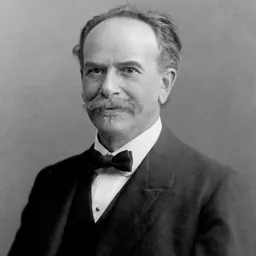

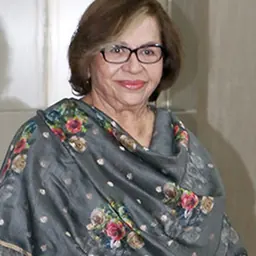
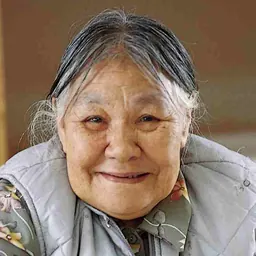


Related people
Same field, nearest in time



Contemporaries
People whose lives overlapped Jessie Oonark's

Frequently asked questions
Who was Jessie Oonark?
Canadian artist (1906–1985)
When was Jessie Oonark born?
Jessie Oonark was born on 2 March 1906 in Baker Lake.
When did Jessie Oonark die?
Jessie Oonark died on 2 March 1985 in Churchill.
What was Jessie Oonark's occupation?
Jessie Oonark was a draftsperson, printmaker and textile artist.
What nationality was Jessie Oonark?
Jessie Oonark was Canadian.
Sources & further reading
Cite this page
APA: Biography.guide. (2026). Jessie Oonark. https://biography.guide/jessie-oonark/
MLA: "Jessie Oonark." Biography.guide, https://biography.guide/jessie-oonark/.
Chicago: "Jessie Oonark." Biography.guide. https://biography.guide/jessie-oonark/.
Data last updated: 2026-09-20 · Spot an error? Report a correction.
Page generated 2026-09-27 05:04 UTC