
Jessie Bonstelle
American theater manager, director and actress
About Jessie Bonstelle
Lived 1871 – 1932 (aged 60). Jessie Bonstelle was an American actor, stage actor and theatre director.
Jessie Bonstelle (born Laura Justine Bonesteel; November 18, 1871 – October 14, 1932) was an American theater director, actress, and drama company manager. Encouraged by her mother, she sang and performed in the theater from a young age; she went on to become a famous leading lady and made several performances on Broadway. Later she became a director, managing many stock companies, directing Broadway productions and training many young performers who went on to be famous actors. In 1925, she founded her own theater in Detroit. Reorganized in 1928 as the Detroit Civic Theatre, it was one of America's first civic theaters, and her methods influenced community theater projects elsewhere. She has been described as "one of the pioneering women stage directors in the early twentieth century". She was born on November 18, 1871. Originally surnamed Bonesteel, later in life she changed it to Bonstelle after, according to legend,
Bonstelle's mother, who herself had wanted to be an actress, home-schooled her in reading, writing, singing, dancing, and even in reciting Shakespeare. Jessie's first public performance was singing temperance songs in church at the age of two years. Her career as a manager and director began around 1900 when Jacob J. Shubert offered her the management of a stock company in Rochester. It then toured nationally before having a "successful and lengthy run" on Broadway which began in October 1912. It was also performed in London after World War I. From 1912 to 1917 she was a director at the Northampton Municipal Theater in Massachusetts.
Bonstelle sold her stake in the Garrick Theater in 1924. She and her company founded the Bonstelle Playhouse in Detroit, which opened on January 1, 1925. she bought a former synagogue on Woodward Avenue, Temple Beth El, for $500,000 and commissioned C. Howard Crane to renovate it. At first she carried on producing mostly Broadway-style plays. In her plan for the theater she emphasized the importance of providing the public with the best drama, including both classics and modern works, and improving young people's knowledge of dramatic literature. Funded by public subscription, it had ticket prices as low as $1.50. Local clergy publicly praised her work with the theater.
In June 1932 Bonstelle went to Hollywood; possible reasons include a desire to direct films, to found an acting school, or to explore the possibility of a new stock company. She returned to Detroit after falling ill and learning she had cancer. There she began a campaign to keep open the Civic Theatre, which was adversely affected by the Great Depression, but became seriously ill.
On October 16, her body lay in state at the theater and the New York Times reported that twenty-five thousand people went to see her bier. A memorial service was held there which thousands attended and at which mayor Frank Murphy spoke. She was buried in Rochester at Mount Hope Cemetery next to her husband.
Character Bonstelle was a perfectionist who was passionate about her work. She ran grueling rehearsals and kept control over the direction, even on productions she was not directing. However, she was willing to help actors if they were struggling, and was respected for her passion and drive. However, Broadway critics did not rate her directing highly.
Bonstelle's Playhouse was one of America's first civic theaters, and, uniquely in the 1920s, a profitable one. Though it closed in 1933, a year after her death, due to the rise of the movie industry and the Depression, it was purchased by Wayne State University in 1956 for the use of its theater department. In 1963 it was renamed the Bonstelle Theatre in her memory. Bonstelle's approach gained nationwide attention and she was interviewed by authorities from other cities which wanted information about her plan. Her theater influenced the future Federal Theatre Project.
She was well known for spotting talent in young actors, and was skilled at developing that talent. She trained many actors and actresses who later became well known, including Katharine Cornell and William Powell.
Don’t just read it —
keep it.
Full-length biographies made to live with: read them, listen on the way to work, watch them tonight.
- E-book
- Audio
- Video
Instant download · yours to keep · every purchase keeps this site free
Important facts
People in Jessie Bonstelle's life
Named in this biography and alive at the same time

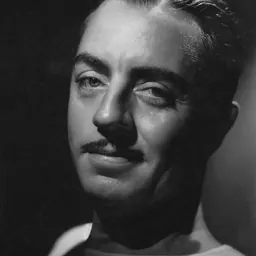

Related people
Same field, nearest in time


Contemporaries
People whose lives overlapped Jessie Bonstelle's



Frequently asked questions
Who was Jessie Bonstelle?
American theater manager, director and actress (1870-1932)
When was Jessie Bonstelle born?
Jessie Bonstelle was born on 30 November 1871 in Greece.
When did Jessie Bonstelle die?
Jessie Bonstelle died on 14 October 1932 in Detroit.
What was Jessie Bonstelle's occupation?
Jessie Bonstelle was an actor, stage actor and theatre director.
What nationality was Jessie Bonstelle?
Jessie Bonstelle was American.
Sources & further reading
Cite this page
APA: Biography.guide. (2026). Jessie Bonstelle. https://biography.guide/jessie-bonstelle/
MLA: "Jessie Bonstelle." Biography.guide, https://biography.guide/jessie-bonstelle/.
Chicago: "Jessie Bonstelle." Biography.guide. https://biography.guide/jessie-bonstelle/.
Data last updated: 2026-09-22 · Spot an error? Report a correction.
Page generated 2026-09-27 05:25 UTC