
About Jessica Hayllar
Lived 1858 – 1940 (aged 82). Jessica Hayllar was a British painter.
Jessica Ellen Hayllar (16 September 1858 – 7 November 1940) was a British artist and painter.
Hayllar was born in London and was the eldest daughter of the nine children born to Ellen Phoebe Cavell (1827–1899) and her husband James Hayllar (1829–1920). The family lived at Mecklenburgh Square in London and also rented a country house in Suffolk for several months each year before moving to a large house, Castle Priory, by the Thames at Wallingford, then in Berkshire. Hayllar and her four sisters attended a day school in Gower Street and all were given art lessons by their father, who was himself a well-regarded painter. Windows and doorways were another frequent theme in her work. She was the third child and the oldest daughter.
Hayllar lived with her parents throughout her life and never married. In 1899, Jessica moved with her parents from Castle Priory to a smaller home in Bournemouth, where she continued to live with her father after her mother's death.
Styles and influences Jessica Hayllar, A Coming Event, 1886, oil on canvas, previously in the Forbes Collection, Private Collection. Jessica Hayllar's work was obviously strongly influenced by that of her father, James Hayllar, who was her primary artistic instructor. Based on James’ instruction, his daughters’ artworks were meant to be meticulously realistic. Compared to her father's work, Jessica Hayllar's work is less academic. It tends to be smaller scale and less elaborate, with fewer figures. It is also less idyllic and sentimental. The influence of James Hayllar is, however, felt in Jessica Hayllar's meticulous details and near-photographic realism. It is seen also in Hayllar's subject matters, which focus on upper middle-class life and the social spaces of middle class femininity. Hayllar himself often painted portraits, genre scenes, and still life pieces. Jessica's work is often tied to that of her sisters, Mary, Edith, and Kate. In the Castle Priory years of Hayllar's work, they undoubtedly were large influences on each other. However, Jessica is the only sister who painted throughout her entire life. In contrast, Mary and Edith stopped painting after their marriages, and Kate became a nurse.
Jessica Hayllar may have been influenced early on by her neighbor, artist George Dunlop Leslie, who moved next door to the Hayllars in 1883. Just as she often modelled for her father, Hayllar may have been a model for Leslie as well. Leslie had a clear stylistic influence on Jessica's sister Mary, but his own tendency to paint domestic scenes may have influenced Jessica Hayllar as well.
Hayllar's work may have also been influenced by photography, since the Hayllar family used photographs to keep records of their works. Hayllar may have even used photography as an aid for her work. Her compositions appear to reflect the influence of photography with their detailed focus, flattened picture space, precise design, and cut-off compositions.
Much of Hayllar's art centers around daily life, including many scenes of the Hayllar family home in Wallingford. Her artwork has been called “a fascinating insight into the life of a typical middle-class Victorian household.” Hayllar focused on still lifes, flowers, and images of middle-class women and children at home. Hayllar painted a large number of domestic scenes, using her family members as models, a method that was meant to indicate morality and piety. These works often reveal the elaborate social rituals that characterized Victorian bourgeois life. Most of Jessica Hayllar's work presents an idealized view of female domesticity; this may have been her opinions as a Victorian-era woman, or it may have been a simple decision to paint what would sell best. Notably, two of Hayllar's works, Finishing Touches (1887) and Autumn Sunlight (1891), depict women producing art in the home. This practice of female artists painting each other was a way to elevate their profession beyond a simple hobby. Women in Hayllar's art interact with each other through the domestic space, but their preoccupation in domestic work deflects male voyeurism.
Much of Hayllar's work is about domestic space, and domestic settings are often emphasized more than figures or events. This is perhaps best evident in Fresh from the Altar, which focuses on the overall space of the home rather than the figure of the bride. Hayllar's art frequently shows flowers, furniture, and other aspects of decorative design. Hayllar often repeated the same motif of a series of open doorways. This was visually interesting because it created depth, so it was easily marketable. Another major theme in Hayllar's art is children interacting with adults, particularly mother figures. She often shows mothers educating their children. Servants are sometimes included in Hayllar's art as symbols of household order and gatekeepers to middle class domestic ritual. Hayllar also displays an interest in exotic imported objects, reflecting the influence of Japonisme and possibly also cultural imperialism. In her work, she often included one certain Japanese folding screen depicting small birds and cranes. Hayllar used this screen as a device to create intimate spaces, conceal aspects of the composition, act as a background, or emphasize the subject matter. The birds on the screen may be symbolic of a long, happy life, a message conducive to the warm home atmospheres that Hayllar created.
As a Victorian woman, Hayllar worked in the intersection between increasing education and employment for women and the concept of “separate spheres,” in which women were meant to be domestic and men were meant to be public. The “Cult of True Womanhood” idealized women as moral and spiritual models for men. This meant they were in charge of educating their children and supporting their children. This gave them a domestic voice, but it generally restricted their ability to work in more public spheres.
Survey of criticism Christopher Wood has provided much of the published research about the Hayllar family. He saw the sisters primarily as “talented amateurs” and viewed their value primarily as providing a documentary-style record of Victorian middle-class country life.
Deborah Cherry discusses Hayllar's art as playing into themes of patriarchy as well as imperialism. She draws this conclusion based on the prevalence of domestic scenes in Hayllar's work, which appears to depict happy domesticity. Cherry sees Hayllar's work as representing a closed, contained world that signifies Victorian customs as ideal social order. For Cherry, this kind of work is a form of containing the social crisis of the time—women's increased opportunities, redefining of gender roles, the rise of socialism, and the struggle between colonies and colonizers.
Mary Gabrielle Hayllar's doctoral dissertation acts as a biography of the lives of the Hayllar sisters. In it, the author argues against Cherry's patriarchal assertions. Mary Gabrielle Hayllar sees the Hayllar's artistic decisions as primarily based on the desire to make money, rather than the desire to espouse Victorian ideals. Mary Hayllar argues that the sisters were more than amateurs, and she discusses the market appeal of their works. She frames this as adding a strong aspect of modernity to the Hayllar sisters’ works.
Contribution to field Domestic-focused art like Jessica Hayllar's shaped and disseminated middle-class Victorian ideals. While Hayllar's impact has not been strongly addressed in scholarship, her contribution is still significant because it indicates the possibility for Victorian women artists to be successful in both shows and income. Hayllar's manipulation of space can be understood in a greater context of women artists using space to define their roles in society. Her work can be used to see into middle-class Victorian life and to view how women in mainstream Victorian society defined themselves.
Additional works
Don’t just read it —
keep it.
Full-length biographies made to live with: read them, listen on the way to work, watch them tonight.
- E-book
- Audio
- Video
Instant download · yours to keep · every purchase keeps this site free
Important facts
People in Jessica Hayllar's life
Named in this biography and alive at the same time

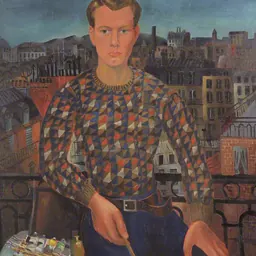

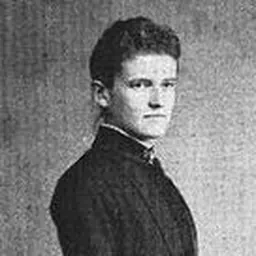
Related people
Same field, nearest in time
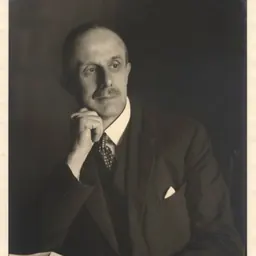

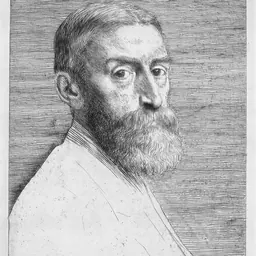


Contemporaries
People whose lives overlapped Jessica Hayllar's


Frequently asked questions
Who was Jessica Hayllar?
English artist (1858–1940)
When was Jessica Hayllar born?
Jessica Hayllar was born on 16 September 1858 in London.
When did Jessica Hayllar die?
Jessica Hayllar died on 7 November 1940 in Worplesdon.
What was Jessica Hayllar's occupation?
Jessica Hayllar was a painter.
What nationality was Jessica Hayllar?
Jessica Hayllar was British.
Sources & further reading
Cite this page
APA: Biography.guide. (2026). Jessica Hayllar. https://biography.guide/jessica-hayllar/
MLA: "Jessica Hayllar." Biography.guide, https://biography.guide/jessica-hayllar/.
Chicago: "Jessica Hayllar." Biography.guide. https://biography.guide/jessica-hayllar/.
Data last updated: 2026-09-20 · Spot an error? Report a correction.
Page generated 2026-09-27 05:07 UTC