
About Jerzy Neyman
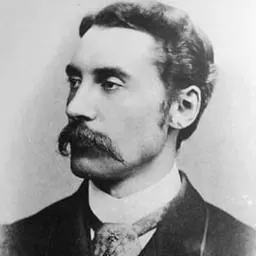
Lived 1894 – 1981 (aged 87). Jerzy Neyman was a Polish and American mathematician, philosopher, statistician and university teacher, known for Confidence interval, Galaxy clusters and Hypothesis testing.
Jerzy Spława-Neyman (; April 16, 1894 – August 5, 1981) was a Polish mathematician and statistician who first introduced the modern concept of a confidence interval into statistical hypothesis testing and, with Egon Pearson, revised Ronald Fisher's null hypothesis testing. Neyman allocation, an optimal strategy for choosing sample sizes in stratified sampling, is named for him.
Spława-Neyman spent the first part of his professional career at various institutions in Warsaw, Poland, and then at University College London, and the second part at the University of California, Berkeley.
Life and career He was born into a Polish family in Bendery, in the Bessarabia Governorate of the Russian Empire, the fourth of four children of Czesław Spława-Neyman and Kazimiera Lutosławska. His family was Roman Catholic, and Neyman served as an altar boy during his early childhood. Later, Neyman would become an agnostic. Neyman's family descended from a long line of Polish nobles and military heroes. He graduated from the Kamieniec Podolski gubernial gymnasium for boys in 1909 under the name Yuri Cheslavovich Neyman. He began studies at Kharkiv University in 1912, where he was taught by Ukrainian probabilist Sergei Natanovich Bernstein. After he read 'Lessons on the integration and the research of the primitive functions' by Henri Lebesgue, he was fascinated with measure and integration.
In 1921 he returned to Poland in a program of repatriation of POWs after the Polish-Soviet War. He earned his Doctor of Philosophy degree at University of Warsaw in 1924 for a dissertation titled "On the Applications of the Theory of Probability to Agricultural Experiments". He was examined by Wacław Sierpiński and Stefan Mazurkiewicz, among others . He spent a couple of years in London and Paris on a fellowship to study statistics with Karl Pearson and Émile Borel. After his return to Poland, he established the Biometric Laboratory at the Nencki Institute of Experimental Biology in Warsaw.
He published many books dealing with experiments and statistics, and devised the way which the FDA tests medicines today.
Neyman proposed and studied randomized experiments in 1923. His paper "On the Two Different Aspects of the Representative Method: The Method of Stratified Sampling and the Method of Purposive Selection", given at the Royal Statistical Society on 19 June 1934, was the groundbreaking event leading to modern scientific sampling. He introduced the confidence interval in his paper in 1937. Another noted contribution is the Neyman–Pearson lemma, the basis of hypothesis testing.
He was an Invited Speaker of the ICM in 1928 in Bologna and a Plenary Speaker of the ICM in 1954 in Amsterdam.
In 1938 he moved to Berkeley, where he worked for the rest of his life. Thirty-nine students received their PhDs under his advisorship. In 1966, he was awarded the Guy Medal of the Royal Statistical Society and, three years later, the U.S. National Medal of Science. He died in Oakland, California, in 1981.
Don’t just read it —
keep it.
Full-length biographies made to live with: read them, listen on the way to work, watch them tonight.
- E-book
- Audio
- Video
Instant download · yours to keep · every purchase keeps this site free
Important facts
People in Jerzy Neyman's life
Named in this biography and alive at the same time



Related people
Same field, nearest in time

Contemporaries
People whose lives overlapped Jerzy Neyman's


Frequently asked questions
Who was Jerzy Neyman?
Polish statistician (1894-1981)
When was Jerzy Neyman born?
Jerzy Neyman was born on 16 April 1894 in Bender.
When did Jerzy Neyman die?
Jerzy Neyman died on 5 August 1981 in Oakland.
What was Jerzy Neyman's occupation?
Jerzy Neyman was a mathematician, philosopher, statistician and university teacher.
What was Jerzy Neyman known for?
Jerzy Neyman was known for Confidence interval, Galaxy clusters, Hypothesis testing and Neyman–Pearson lemma.
What nationality was Jerzy Neyman?
Jerzy Neyman was Polish and American.
Sources & further reading
Cite this page
APA: Biography.guide. (2026). Jerzy Neyman. https://biography.guide/jerzy-neyman/
MLA: "Jerzy Neyman." Biography.guide, https://biography.guide/jerzy-neyman/.
Chicago: "Jerzy Neyman." Biography.guide. https://biography.guide/jerzy-neyman/.
Data last updated: 2026-09-25 · Spot an error? Report a correction.
Page generated 2026-09-27 05:11 UTC