
Jerome V Moloney
Irish-American optical scientist and mathematician
About Jerome V Moloney
Born 1948.
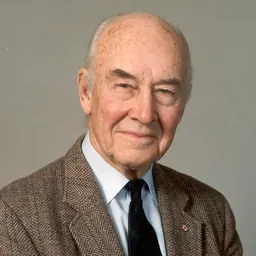
Jerome V. Moloney is an Irish-American professor of optical sciences and mathematics at the University of Arizona and serves as the director of the Arizona Center for Mathematical Sciences.
Biography Moloney earned his B.Sc. degree from University College Cork, Ireland, in 1970, and completed his Ph.D. at the University of Western Ontario, Canada, in 1976. From 1977 to 1979, he served as a research associate in physics at Universität Bielefeld in Bielefeld, Germany.
In 1979, he joined the Optical Sciences Center, University of Arizona, as a research associate. He, with colleagues at Arizona, suggested that the reason for the non-spreading propagation of X waves found by Di Trapani's was due to the interplay of Kerr nonlinearity and chromatic dispersion, and later, that optical carrier shock waves strongly influence long wavelength laser pulses propagating in the atmosphere. The phenomenon propagated to ultra-intense self-bending Airy beams in transparent dielectric media.
Moloney in 1999–2000, with colleagues at the University of Arizona as described in Optics Letters and Physical Review Letters, proposed and described a mechanism whereby multiple light filaments created by high-power lasers in the atmosphere could be sustained over long distances, a mechanism critical to the generation of laser lightning rods. The latter concept was further developed with colleagues from the University of Central Florida, described in Nature Photonics, and was recently implemented in a field experiment to divert lightning strikes away from buildings and populated areas.
Moloney, with the collaboration of a team of US and German researchers, established a rigorous theoretical foundation to describe how semiconductor lasers operate, transitioning this knowledge to the development of commercial semiconductor epitaxy design software for lasers and sensors. The team designed a series of continuous, room-temperature, vertical-external-cavity semiconductor laser sources (VECSEL) that deliver narrowband, milliwatt beams at terahertz-gap frequencies and a yellow laser wavelength for guidestar applications. Their devices incorporate a nonlinear optics element into the external-cavity laser. Moloney and his coworkers generated a narrowband emission at the uppermost frequencies of the terahertz gap and at the laser guidestar (yellow) wavelengths by mixing two IR beams. He proposed visible light VECSELs as practical compact Guidestar laser sources and recognized the potential of room temperature, tunable terahertz external-cavity surface-emitting lasers (TECSELs) as a practical technology for astronomical observations.
Selected publications
(2012) Heterodyne Detection of Intracavity Generated Terahertz Radiation, M. Scheller, A. G. Young, J. M. Yarborough, J. V. Moloney, S. W. Koch, C. Y. Drouet d’Aubigny, and C. K. Walker, IEEE Transactions on Terahertz Science and Technology, 2, 271 (2012) Computation of Optical Forces on Nanoparticles using FDTD Technique”, J. J. Liu, M. Brio and J. V. Moloney, JEMA, 4, 45 (2009) Curved plasma channel generation using ultraintense Airy beams. Science. American Association for the Advancement of Science. Pavel Polynkin, Miroslav Kolesik, Jerome V Moloney, Georgios A Siviloglou, Demetrios N Christodoulides (2008) Optical Forces on a Quantum Dot in Metallic Bowtie Structures. M. Reichelt, C. Dineen, S.W. Koch, J.V. Moloney. In: Photonics Technology Letters, IEEE, 431-43 (2008) 5-W Yellow Laser by Intracavity Frequency Doubling of High-Power Vertical-External-Cavity Surface-Emitting Laser. M. Fallahi, L. Fan, Y. Kaneda, C. Hessenius, J. Hader, H. Li, J.V. Moloney, B. Kunert, W. Stolz, S.W. Koch and J. Murray IEEE Phot. Tech. Letts, 20, 1700 (2006) Closed-loop design of a semiconductor laser. J. Hader, J.V. Moloney, M. Fallahi, L. Fan, S.W. Koch, Optics Letters 31, 3300 (2005) Microscopic Evaluation of Spontaneous Emission- and Auger Processes in Semiconductor Lasers, J. Hader, J.V. Moloney, S.W. Koch IEEE J. Quantum Electron. 41 No. 10 (2004) Nonlinear optical pulse propagation: From Maxwell's to unidirectional equations, M. Kolesik, J.V. Moloney Phys. Rev E., 70, 036604 (2002) Unidirectional pulse propagation equation”, M. Kolesik, J.V. Moloney and M. Mlejnek, Phys. Rev. Letts.,89, 2839021 (1999) Optically turbulent femtosecond light guide in air. M. Mlejnek, M. Kolesik, J. V. Moloney, and E. M. Wright Physical Review Letters, 83 (15), pp. 2938-2941 (1998) Dynamic spatial replenishment of femtosecond pulses propagating in air. M. Mlejnek, E.M. Wright, and J.V. Moloney. Optics Letters, 23(5), 382384 (1995) Light-polarization dynamics in surface-emitting semiconductor lasers. M San Miguel, Q Feng, Jerome V Moloney. American Physical Society. Physical Review A Vol. 52, Issue 2, Pg 1728
Books
Awards and recognition
2005 – Alexander von Humboldt Prize in Physics 2005 – Fellow of the Optical Society of America
Don’t just read it —
keep it.
Full-length biographies made to live with: read them, listen on the way to work, watch them tonight.
- E-book
- Audio
- Video
Instant download · yours to keep · every purchase keeps this site free
Important facts
People in Jerome V Moloney's life
Named in this biography and alive at the same time

Contemporaries
People whose lives overlapped Jerome V Moloney's





Frequently asked questions
Who is Jerome V Moloney?
irish-American optical scientist and mathematician
When was Jerome V Moloney born?
Jerome V Moloney was born on 14 February 1948.
Sources & further reading
Cite this page
APA: Biography.guide. (2026). Jerome V Moloney. https://biography.guide/jerome-v-moloney/
MLA: "Jerome V Moloney." Biography.guide, https://biography.guide/jerome-v-moloney/.
Chicago: "Jerome V Moloney." Biography.guide. https://biography.guide/jerome-v-moloney/.
Data last updated: 2026-09-20 · Spot an error? Report a correction.
Page generated 2026-09-27 04:57 UTC