
Jeremiah Anderson
American abolitionist
About Jeremiah Anderson
Lived 1833 – 1859 (aged 26). Jeremiah Anderson was an American abolitionist.
Jeremiah Anderson (April 17, 1833 – October 16, 1859) was an American abolitionist. Born in Indiana, Anderson left Yellow Springs, Iowa to attend Knox Academy in Galesburg, Illinois. He initially intended to become a minister, but worked in a sawmill before moving to Kansas Territory in 1857. He fought with freestaters James Montgomery and John Brown against those who fought as vigorously for slavery. Intending to free enslaved people, Anderson participated in John Brown's raid on Harpers Ferry (October 16 to 18, 1859), where he was mortally wounded.
Early life Jeremiah Goldsmith Anderson was born in Indiana on April 17, 1833. He was the son of John Anderson and Anna Westfall, the daughter of Colonel Jacob Westfall, of Tygert Valley, Virginia. Jacob Westfall, who fought in the American Revolutionary War, and John's parents were slaveholders. He had an older brother, John Q., 30, who was born in Kentucky; an older sister Mary Jane, 24, who was born in Indiana; and an older brother, Harrison, 20, also born in Indiana.
Raid on Harpers Ferry
Anderson traveled on June 20, 1859, with four others towards Chambersburg, Pennsylvania to establish a command center to prepare for the raid on Harpers Ferry. With him were John Henry Kagi, John Brown, and his sons Owen and Oliver.
A local man, Watson, a free black man who operated along the Underground Railroad, helped the men make connections with trustworthy white people. Kagi managed the receipt of weapons and other raiders in Chambersburg. Brown rented a farm outside of town and up to five miles from Harpers Ferry. Materials were brought to the farm and the remainder of Brown's forces arrived at the farm, called Kennedy Farmhouse, that became their "base of operations".
Assignments were made about where the men would be positions and their responsibility for the raid beginning the night of October 16, 1859. Anderson was stationed at the Armory's engine house with Daulphin Thompson. The objective was to take the armory, the arsenal, the town, and then the rifle factory. Then, they wanted to free all the slaves in Harpers Ferry. The men marched into Harpers Ferry, disconnecting the telegraph wire to Washington, D.C. and with the intention to take prisoners who disobeyed them and to fight only in self-defense. Residents noticed when Brown and his soldiers broke into the armory and alerted other townspeople. In the meantime, the rifle factory was possessed, some people were taken prisoner, but no one was shot. Aaron Dwight Stevens informed enslaved people that he saw on the road of the raid and stated that they were free. African Americans congregated at the armory and arsenal. Stevens led Anderson, Green, and Leary to the plantation of Lewis Washington, who was related to George Washington and had been a friend of John Brown. Stevens and the other men, intended to take the plantation owner prisoner and free his enslaved people. Anderson told the slaves that they had been freed and asked them join the fight to free other enslaved people. Washington and his weapons were captured and held, along with other prisoners, in the engine house of the armory, that Brown used as a fort.
Enslaved people had difficulty processing that they were free and what that might mean; their lives were so controlled that it was hard to sort out their options. Some joined with Brown's forces. Residents were concerned to see White and Black men walk the streets of Harpers Ferry with weapons, even though it was initially peaceful. The first death was that of Howard Shephard, a free Black man who worked at the railroad station. He ignored the raider's call to stop and was shot and killed.
The Jefferson Guards and Virginia troops closed off the bridges into Harpers Ferry and attacked Brown's raiders, cutting off a means of retreat. Anderson had been relaying messages between Brown and the engine house and Kagi at the rifle factory. Kagi asked to withdraw and Brown replied that he wanted more time. Anderson was mortally wounded by the thrust of a bayonet at the rifle factory. Ten of Brown's men and an unknown number of enslaved people were killed during the raid.
Memorial On November 23, 1859 (after Anderson was killed at Harper's Ferry, but before John Brown's execution), Anderson's brother, John Q., wrote a letter to Brown at Charles Town, Virginia (now in West Virginia). John asked for information about Anderson's death and stated the he had been two years a target in Kansas for the Border Ruffians and all, for what? Why because he purchased a claim & wished to settle on it & live by the sweat of his own brow. And now has died trying to enforce the golden rule.
Historical markers Chestnut Grove Road, north of Harpers Ferry Road, Dargan, Maryland, mentions the participants in the raid, including Anderson Three markers near Kennedy Farmhouse, One near the farmhouse Another named Kennedy Farm, about 500 feet away from the first marker A marker named for John Brown, about 600 feet away.
Don’t just read it —
keep it.
Full-length biographies made to live with: read them, listen on the way to work, watch them tonight.
- E-book
- Audio
- Video
Instant download · yours to keep · every purchase keeps this site free
Important facts
People in Jeremiah Anderson's life
Named in this biography and alive at the same time
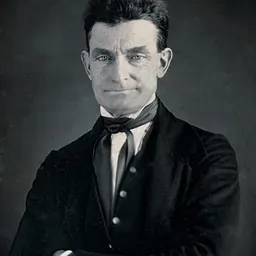

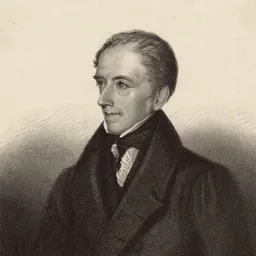


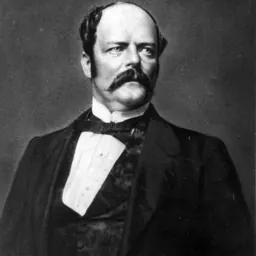

Related people
Same field, nearest in time

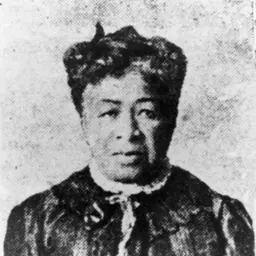

Contemporaries
People whose lives overlapped Jeremiah Anderson's


Frequently asked questions
Who was Jeremiah Anderson?
American abolitionist
When was Jeremiah Anderson born?
Jeremiah Anderson was born on 17 April 1833 in Putnam County.
When did Jeremiah Anderson die?
Jeremiah Anderson died on 18 October 1859 in Harpers Ferry.
What was Jeremiah Anderson's occupation?
Jeremiah Anderson was an abolitionist.
What nationality was Jeremiah Anderson?
Jeremiah Anderson was American.
Sources & further reading
· Wikipedia: Jeremiah Anderson
· DBpedia: Jeremiah Anderson (abolitionist)
Cite this page
APA: Biography.guide. (2026). Jeremiah Anderson. https://biography.guide/jeremiah-anderson/
MLA: "Jeremiah Anderson." Biography.guide, https://biography.guide/jeremiah-anderson/.
Chicago: "Jeremiah Anderson." Biography.guide. https://biography.guide/jeremiah-anderson/.
Data last updated: 2026-09-25 · Spot an error? Report a correction.
Page generated 2026-09-27 05:11 UTC