
Jens Rostgaard
Danish soldier, civil servant, judge and antiquarian
About Jens Rostgaard
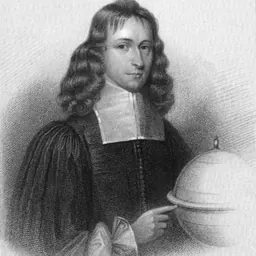
Lived 1650 – 1715 (aged 65). Jens Rostgaard was a Danish civil servant, soldier, judge and antiquarian.
Jens Rostgaard (24 August 1650 1715) was a Danish soldier, civil servant, judge and antiquarian, known for leading the militia against the Swedish landing at Humlebæk in 1700, and for writing the history of Copenhagen.
Biography Rostgaard came from peasant stock. From age 12 he was brought up at the home of his uncle, Hans Rostgaard, a tax collector, who had been rewarded with Krogerup Manor, for his attempt in 1659 to liberate Kronborg Castle from the Swedes during the Second Northern War. Rostgaard went to school in Helsingør, and later served as a clerk under his uncle. In a fight, Rostgaard killed a soldier of the garrison, but was acquitted for manslaughter, both by the local court, and by the Supreme Court. He then served in a regiment from Courland in service of the Dutch Republic, reaching the rank of sergeant. When the Scanian War began, he returned to Denmark, and was commissioned into the Zealand Life Regiment, where he served until 1680, when his resignation was accepted. Rostgaard then served as his old uncle's deputy, until 1684, when he succeeded him in his offices as tax collector and local administrator for Kronborg amt. During the Great Northern War, the Swedish army landed at Humlebæk, and Rostgaard led the local militia in a doomed attempt to stop the superior Swedish forces at the beach. He was rewarded with the position of Rådmand (alderman) in Copenhagen, and was from 1703 war commissary and tax commissioner for Sjælland, Møn, and Lolland-Falster. During the plague outbreak he was one of the commissioners in charge of maintaining a cordon sanitaire around Helsingør. Rostgaard's uncle gave him Nekselø, and he later acquired Farumgård and Sejerø. He collected historical texts, that he used writing the history of Copenhagen, 1168-1711; published posthumously in 1720.
Rostgaard stones In one of the gables of Damgaarden at Mørdrupvej 96 in Mørdrup is a large natural stone with the inscription "Jens Rostgaard 1691". It was originally located in a low stone wall on the farm but embedded in the wall by a previous owner, probably in the 1880s. It was probably created to mark Krogerup's ownership of the village of Mørdrup. Jens Rostgaard managed the estate until Frederiks Rostgaard became of legal age. Another Rostgaard stone is located in the village of Tibberup but is only inscribed with the year "1697".
Don’t just read it —
keep it.
Full-length biographies made to live with: read them, listen on the way to work, watch them tonight.
- E-book
- Audio
- Video
Instant download · yours to keep · every purchase keeps this site free
Important facts
People in Jens Rostgaard's life
Named in this biography and alive at the same time
Related people
Same field, nearest in time



Contemporaries
People whose lives overlapped Jens Rostgaard's




Frequently asked questions
Who was Jens Rostgaard?
Danish soldier, civil servant, judge and antiquarian
When was Jens Rostgaard born?
Jens Rostgaard was born on 24 August 1650 in Arrild.
When did Jens Rostgaard die?
Jens Rostgaard died on 11 November 1715 in Copenhagen.
What was Jens Rostgaard's occupation?
Jens Rostgaard was a civil servant, soldier, judge and antiquarian.
What nationality was Jens Rostgaard?
Jens Rostgaard was Danish.
Sources & further reading
Cite this page
APA: Biography.guide. (2026). Jens Rostgaard. https://biography.guide/jens-rostgaard/
MLA: "Jens Rostgaard." Biography.guide, https://biography.guide/jens-rostgaard/.
Chicago: "Jens Rostgaard." Biography.guide. https://biography.guide/jens-rostgaard/.
Data last updated: 2026-09-22 · Spot an error? Report a correction.
Page generated 2026-09-27 05:26 UTC