
Jeffrey V. Rosenfeld
Australian neurosurgeon
About Jeffrey V. Rosenfeld
Born 1952. Jeffrey V. Rosenfeld is an Australian neurosurgeon.
Jeffrey Victor Rosenfeld (born 19 November 1952 ) is an Australian neurosurgeon and professor of surgery. He is a senior neurosurgeon in the Department of Neurosurgery at The Alfred Hospital,
Early life and education
Rosenfeld grew up in the Melbourne suburb of Malvern, where he dreamed of being a doctor from the age of five, and he tended to the family cat wearing a borrowed lab coat. He attended Melbourne High School then studied medicine at the University of Melbourne, graduating in 1976 with an MB BS. This was followed by surgical training at the Royal Melbourne Hospital.
He went on to neurosurgical training, completing post-fellowship training at the Radcliffe Infirmary, Oxford, UK and was Chief Resident in Neurological Surgery at the Cleveland Clinic Foundation, Ohio, USA.
Medical career
Rosenfeld's first involvement with developing countries was when he travelled to Port Moresby, Papua New Guinea, as a trainee surgeon. He continued to make regular visits to PNG and disadvantaged countries. He has since operated on people from the US, UK, Africa, Papua New Guinea, and East Timor.
He was sent to war-ravaged Rwanda in 1995 as part of the UN peace-keeping mission (UNAMIR II), where he was a general surgeon with the rank of lieutenant-colonel. "We had stabbings, we had gunshot wounds," he said. "We had children who'd been macheted in the head in order to murder them and had miraculously survived those injuries.
Following his military medical training, Rosenfeld graduated from the Australian Reserve Command and Staff College. From 2006 to 2014, he served as Adjunct Professor at the Centre for Military and Veterans' Health, University of Queensland, contributing to research and education in military and veterans' healthcare.
Rosenfeld chaired the Australian Defence Force Human Research Ethics Committee from 2012 to 2015, overseeing the ethical review of defence-related human research. He subsequently served as Colonel Commandant of the Victoria Region of the Royal Australian Army Medical Corps (RAAMC) from 2014 to 2018, before being appointed National Colonel Commandant of the RAAMC by the Chief of Army, a position he held from 2018 to 2024.
In 2026, Rosenfeld was appointed Specialist Medical Review Councillor for Veterans' Entitlements by the Australian Government's Department of Veterans' Affairs. In this ministerial appointment, he serves on the independent body responsible for providing expert medical advice on matters relating to veterans' entitlements and compensation.
Academic
, he is Senior Neurosurgeon in the Department of Neurosurgery at The Alfred Hospital, and the Emeritus Professor of Surgery at Monash University.
In addition to his role as the Emeritus Professor of Surgery at Monash University,
In 2001, he won international acclaim for performing life-changing surgery to remove a hypothalamic hamartoma from a nine-year-old British boy, Sebastian Selo. The technique had previously been used successfully on 18 children at that time, but Selo was the most critical; since he was a baby he suffered up to 100 epileptic fits each day and difficulty speaking, caused by a tumour the size of a grape which had grown in his brain, about down, from the top of the head, and behind his eyes. A surgery attempt in Britain four years earlier had not been successful, and caused a disabling stroke. Rosenfeld liquefied the tumour using a high-frequency aspirator so that it could then be sucked away in a four-hour operation. A year later, Selo's seizures were rare, and they did not prevent him leading a normal life. They were re-united in Great Britain when Rosenfeld visited to teach the technique to British neurosurgeons. After the attention for that success, children from around the world were coming to the Royal Children's Hospital for the same surgery and Rosenfeld personally performed over 70 of them.
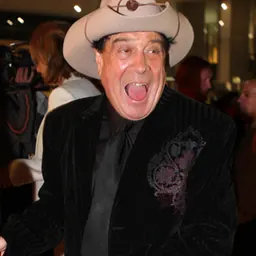
He operated on the Australian celebrity Molly Meldrum after his brain injury, caused by a fall from a ladder in 2011.
In 2011, he published in The New England Journal of Medicine the first multicentre randomised controlled trial about the effectiveness of decompressive craniectomy (surgically removing a section of skull to allow the pressure from swelling to abate), compared to drug therapy. Describing the level of detail they hope the devices will provide, Rosenfeld said "They won't be able to recognise the detail of a person's face... but they will be able to recognise where a staircase is, where a door or door handle is, common things you need to navigate... in everyday life."
Neurotrauma and public service Rosenfeld's principal academic and clinical interests are in neurotrauma, traumatic brain injury, and trauma systems. He served on the National Trauma Committee of the Royal Australasian College of Surgeons (RACS) from 1993 to 2018 and was subsequently appointed an Emeritus Member. Between 2000 and 2003, he served on the Victorian State Trauma Committee following appointment by the Minister for Health. He also served on the Victorian Ministerial Working Party
Beyond medicine, Rosenfeld has held leadership roles in higher education, civic organisations, and veterans' affairs. He served as President of the Graduate Union of the University of Melbourne from 2012 to 2015. Between 2001 and 2004, he was National Vice-President and Victorian President of the United Nations Association of Australia. the Melbourne Rotary Vocational Service Award in 2008, was named a Paul Harris Fellow in 2011, received the Paul Harris Fellow with Sapphire recognition from Bentleigh Rotary in 2012, and was awarded the Monash Medal by Melbourne Rotary in 2012. In 2015, he received the Returned and Services League (RSL) ANZAC of the Year Award.
Public health advocacy
Rosenfeld has used his public profile to speak out on matters of violence and social justice.
In 2008, together with psychiatrist Major Nick Ford, he warned about unidentified brain injuries which returned military suffer, caused by pressure waves from explosions. More concerning, there could be a cumulative effect from exposure to multiple explosions. But there are no external wounds to see, so these injuries are often not detected. In Afghanistan, these invisible injuries make up some 12 per cent of wounds inflicted on Australian troops. In 2011, he organised an international conference on the topic, explaining that it can leave victims with brain damage, depression, and post-traumatic stress. In 2009, he compiled a collection of brain scans to show young people how just one blow to the head can be fatal, or lead to lifelong brain injury.
He was the keynote speaker at the 2020 Holocaust Remembrance Day, comparing it to the Rwandan genocide which he witnessed personally as a military surgeon.
He also contributed to the public debates on football's history of poorly managing cases of repeated head injuries, the value of making bicycle helmets compulsory, the role of alcohol in violent head injuries and in car crashes, and the risks of boxing.
Published works
Journal articles As of June 2026, PubMed listed 381 publications authored or co-authored by Rosenfeld while ResearchGate listed 397 publications According to Google Scholar, his h-index was 67.
Books Rosenfeld has authored and edited books and academic monographs in neurosurgery, neurotrauma, and neuroscience, including: Master of Surgery (MS), University of Melbourne (1992). Thesis: Neural transplantation in mice: immunological and neurobiological considerations.
In 2022, Rosenfeld completed a Master of Music (Research) at the University of Melbourne. His thesis, Developing a Performance Companion to the Third Clarinet Concerto of Carl Stamitz (1785) Played on the Five-Key Period Clarinet: An Analysis of Technical Capability Through Practice-Led Research, examined historical performance practice and clarinet technique.
, Monash University also lists 27 book chapters which he has published.
In the 2011 Queen's Birthday Jonours, Rosenfeld was appointed a Member of the Order of Australia (AM). In the 2013 Birthday Honours, he was appointed an Officer of the Order of the British Empire (OBE), presented in person by the Governor-General of Papua New Guinea. Then, in the Australia Day honours of 2018, he was appointed a Companion of the Order of Australia (AC) for "eminent service to medicine, particularly to the discipline of neurosurgery, as an academic and clinician, to medical research and professional organisations, and to the health and welfare of current and former defence force members". In October 2014, Rosenfeld was appointed a Knight of Grace of the Order of St John (KStJ). 2009 - Michael E DeBakey International Military Surgeons' Award for excellence in military surgery 2012 - Rotary Club of Melbourne’s Monash Medal 2018 - International Lifetime Recognition Award from the American Association of Neurological Surgeons King James IV Professorship from the Royal College of Surgeons in Edinburgh The Sir Hugh Devine Medal 2019. Neurosurgery Society of Australasia (NSA) Medal 2019. Recognises outstanding contributions to the Neurosurgery Society of Australasia (NSA) and to neurosurgery. Sir John Eccles Oration, Neurosurgical Society Australasia and Australasian Neurosciences Society 2016. Fellow of the Australian Academy of Health and Medical Sciences (FAHMS) Fellow of Royal Australasian College of Surgeons (FRACS) Fellow of the Royal College of Surgeons (FRCS)(Edin) Fellow of the American College of Surgeons (FACS) since 1997 International Fellow of the American Association of Neurological Surgeons (IFAANS) He was on the board of the Society for Brain Mapping & Therapeutics, based in California. John Mitchell Crouch Fellowship of the Royal Australasian College of Surgeons (RACS) for 2004. Honorary Fellowship, College of Neurosurgeons of Thailand – February 2011 Honorary Fellowship, Royal College of Surgeons and Physicians of Glasgow. March 2008. Since 25 November 2022, he has been a director of The Spirit of Australia Foundation Ltd
Military decorations
AASM (With CLASPS Rwanda, East Timor and Iraq), 2004. Iraq Campaign Medal (2005) Australian Operational Service Medal (AOSM) – Greater Middle East Operation (July 2017) Centenary of Federation Medal, (May 2003) Meritorious Unit Citation, Iraq - 26 January 2007
Personal life
Rosenfeld is married with 3 adult children. He gives a lot of the credit for his own success to his wife, saying "I couldn't do what I have done without the work my wife does... We need to look at it as a partnership."
An accomplished clarinettist, Rosenfeld performed with the Australian Youth Orchestra and has served as Principal Clarinet with Corpus Medicorum, a Melbourne-based orchestra comprising medical professionals, as well as the Australian Doctors Orchestra. He holds a Licentiate from the Australian Music Examinations Board, a Graduate Diploma in Clarinet Performance, and a Master of Music (Performance) from the Melbourne Conservatorium of Music at the University of Melbourne.
Don’t just read it —
keep it.
Full-length biographies made to live with: read them, listen on the way to work, watch them tonight.
- E-book
- Audio
- Video
Instant download · yours to keep · every purchase keeps this site free
Important facts
People in Jeffrey V. Rosenfeld's life
Named in this biography and alive at the same time





Related people
Same field, nearest in time

Contemporaries
People whose lives overlapped Jeffrey V. Rosenfeld's

Frequently asked questions
Who is Jeffrey V. Rosenfeld?
Australian neurosurgeon
When was Jeffrey V. Rosenfeld born?
Jeffrey V. Rosenfeld was born on 19 November 1952 in Melbourne.
What is Jeffrey V. Rosenfeld's occupation?
Jeffrey V. Rosenfeld is a neurosurgeon.
What nationality is Jeffrey V. Rosenfeld?
Jeffrey V. Rosenfeld is Australian.
Sources & further reading
· Wikipedia: Jeffrey V. Rosenfeld
Cite this page
APA: Biography.guide. (2026). Jeffrey V. Rosenfeld. https://biography.guide/jeffrey-v-rosenfeld/
MLA: "Jeffrey V. Rosenfeld." Biography.guide, https://biography.guide/jeffrey-v-rosenfeld/.
Chicago: "Jeffrey V. Rosenfeld." Biography.guide. https://biography.guide/jeffrey-v-rosenfeld/.
Data last updated: 2026-09-25 · Spot an error? Report a correction.
Page generated 2026-09-27 05:12 UTC