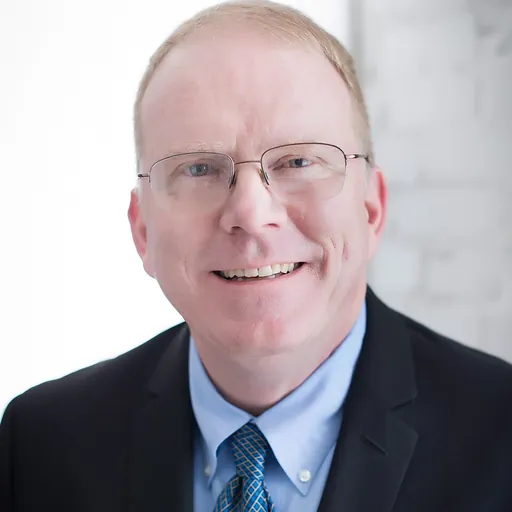
About Jeffrey Beall
Born 2000. Jeffrey Beall is an American librarian and blogger, known for Predatory open access publishing.
Jeffrey Beall is an American librarian and library scientist who drew attention to "predatory open access publishing", a term he coined, and created Beall's list, a list of potentially predatory open-access publishers.
He is a critic of the open access publishing movement and particularly how predatory publishers use the open access concept. Known for his blog Scholarly Open Access, he has also written on this topic in The Charleston Advisor, in Nature, in Learned Publishing, and elsewhere.
When Beall created his list, he was employed as a librarian and associate professor at the University of Colorado Denver. More recently, he was a librarian at Auraria Library in Denver. He retired in 2018.
Education and career Beall has a bachelor's degree in Spanish from California State University, Northridge (1982), as well as an MA in English from Oklahoma State University (1987) and an MS in library science from the University of North Carolina (1990). Until December 2012, he served on the editorial board of Cataloging & Classification Quarterly. In that same year, Beall was awarded tenure by the University of Colorado Denver and promoted to associate professor. In an interview with The Charleston Advisor in July 2013, he said that his biggest influence was Fred Kilgour.
Criticism of open access publishing
Beall classifies open access (OA) publishers as following a "gold model" in which authors pay for their work to be published and a "platinum model" in which they do not pay, and sees the gold model as being prone to abuse.
In December 2013, Beall published a comment in tripleC, an open access journal, in which he articulated his criticism of open access publishing advocates. He noted that the quality of articles published in many OA journals is low, that peer review in many OA journals is negligible or non-existent, that public access to poor-quality articles harms the public, and that the careers of young scholars who publish in poor-quality OA journals are harmed. He portrayed the open access movement as an anti-corporatist movement whose advocates pursue the goal of "kill[ing] off the for-profit publishers and mak[ing] scholarly publishing a cooperative and socialistic enterprise" while ignoring the benefits of traditional academic publishers, including consistent peer review and attention to the long-term preservation of articles they publish.
Beall provided an overview of the history of predatory publishing, his involvement with the issue, and a summary and reiteration of most of the above criticisms in an article published in June 2017.
Predatory open access publishing
Beall is well known for his investigations of predatory open access publishing, a term he coined. He has published a number of analyses of predatory OA journals, such as one of Bentham Open in The Charleston Advisor in 2009. However, his interest in such journals began when, in 2008, he started to receive numerous requests from dubious journals to serve on their editorial boards. He has said that he "immediately became fascinated because most of the e-mails contained numerous grammatical errors". Since 2008, he has maintained a well-known and regularly updated list of what he states are "potential, possible, or probable predatory scholarly open-access publishers". In 2011, Beall's list had 18 publishers on it; by December 29, 2016, this number had grown to 923. Beall has estimated that predatory open access journals publish about 5–10 percent of all open access articles, He has been particularly critical of OMICS Publishing Group, which he described as "the worst of the worst" in a 2016 Inside Higher Education article.
Predatory meetings Beall coined the term "predatory meetings" for a new activity of OMICS and others in organizing scientific conferences claiming editorial boards and organizing committees with prominent academics who have not agreed to participate, with high fees for attendance, and with poor reviewing standards for acceptance. Deceptively similar names to existing reputable conferences are also used. Beall has criticised the financial arrangements for OMICS conferences, noting that the "registration policy shows that they never grant refunds for registration fees – even if they themselves cancel or postpone the conference. Instead, they grant a credit for other OMICS conferences."
Beall's list and the Science sting In 2013, Science published the results of a sting operation in which a scientifically flawed spoof publication was submitted to open access publications. Many accepted the manuscript, and a disproportionate number of the accepting journals were on Beall's list. The publication, entitled Who's Afraid of Peer Review?, concluded that Beall is "good at spotting publishers with poor quality control". Of publishers on his list that completed the review process, it was accepted by 82%.
Counter-criticism Phil Davis, in an analysis of the Who's Afraid of Peer Review? sting operation, observed that "Beall is falsely accusing nearly one in five as being a 'potential, possible, or probable predatory scholarly open access publisher' on appearances alone." He continued to say that Beall "should reconsider listing publishers on his 'predatory' list until he has evidence of wrongdoing. Being mislabeled as a 'potential, possible, or probable predatory publisher' by circumstantial evidence alone is like the sheriff of a Wild West town throwing a cowboy into jail just 'cuz he's a little funny lookin.' Civility requires due process." and that Beall's "broader critique (really an assault) of Gold OA and those who advocate it" had "crossed the line".
City University of New York librarians Monica Berger and Jill Cirasella said his views are biased against open-access journals from less economically developed countries. Berger and Cirasella argued that "imperfect English or a predominantly non-Western editorial board does not make a journal predatory". While recognizing that "the criteria he uses for his list are an excellent starting point for thinking about the hallmarks of predatory publishers and journals", Instead of relying on blacklists, Bjørnshauge argues that open-access associations such as the DOAJ and the Open Access Scholarly Publishers Association should adopt more responsibility for policing publishers: they should lay out a set of criteria that publishers and journals must comply with to win a place on a whitelist, indicating that they are trustworthy.
Website removal On 15 January 2017, the entire content of the Scholarly Open Access website was removed, along with Beall's faculty page on the University of Colorado's website. The removal was first noticed on social media, with speculation on whether the removal was due to migration of the list to Cabell's International, a library services company that had been working with Beall on its own journal blacklist. The University of Colorado also declared that the decision to take down the list was a personal decision from Beall. Beall later wrote that he had taken down his blog because of pressure from the University of Colorado, which threatened his job security. A demand by Frontiers Media to open a research misconduct case against Beall, to which the University of Colorado acquiesced, is reported as the immediate reason for Beall to take down the list. The university's investigation was closed with no findings.
In an interview in 2018, Beall stated that "my university began to attack me in several ways. They launched a research misconduct investigation against me (after seven months, the result of the investigation was that no misconduct had occurred). They also put an unqualified, mendacious supervisor over me, and he constantly attacked and harassed me. I decided I could no longer safely publish the list with my university threatening me in these ways."
After the website was taken down, medical researcher Roger Pierson of the University of Saskatchewan said, "To see Beall's work disappear would be an absolute disaster," adding, "From an academic perspective, this represents the absence of an extremely important resource."
Subsequently, an anonymous person created an archive of Beall's work on lists of predatory publishers and journals.
Legal threats In February 2013, the open-access publisher Canadian Center for Science and Education sent a letter to Beall stating that Beall's inclusion of their company on his list of questionable open-access publishers amounted to defamation. The letter also stated that if Beall did not remove this company from his list, they would subject him to "civil action".
In May 2013, OMICS Publishing Group, which had also been included on Beall's list of predatory open access publishers, stating that they intended to sue him, and were seeking $1 billion in damages under section 66A of India's Information Technology Act, 2000. However, section 66A was struck down as unconstitutional by the Supreme Court of India in an unrelated case in 2015. In 2016, Beall welcomed news that the U.S. Federal Trade Commission had filed a lawsuit in Federal District Court against the OMICS group. The complaint was the first against an academic publisher holding manuscripts hostage by seeking fees to allow them to be withdrawn, and promoting predatory conferences; OMICS's attorneys have described the allegations as baseless.
Don’t just read it —
keep it.
Full-length biographies made to live with: read them, listen on the way to work, watch them tonight.
- E-book
- Audio
- Video
Instant download · yours to keep · every purchase keeps this site free
Important facts
People in Jeffrey Beall's life
Named in this biography and alive at the same time


Related people
Same field, nearest in time




Contemporaries
People whose lives overlapped Jeffrey Beall's


Frequently asked questions
Who is Jeffrey Beall?
American librarian
When was Jeffrey Beall born?
Jeffrey Beall was born in 2000.
What is Jeffrey Beall's occupation?
Jeffrey Beall is a librarian and blogger.
What is Jeffrey Beall known for?
Jeffrey Beall is known for Predatory open access publishing.
What nationality is Jeffrey Beall?
Jeffrey Beall is American.
Sources & further reading
Cite this page
APA: Biography.guide. (2026). Jeffrey Beall. https://biography.guide/jeffrey-beall/
MLA: "Jeffrey Beall." Biography.guide, https://biography.guide/jeffrey-beall/.
Chicago: "Jeffrey Beall." Biography.guide. https://biography.guide/jeffrey-beall/.
Data last updated: 2026-09-22 · Spot an error? Report a correction.
Portrait: Wikimedia Commons · author & licence
Page generated 2026-09-27 05:03 UTC