
About Jefferson B. Snyder
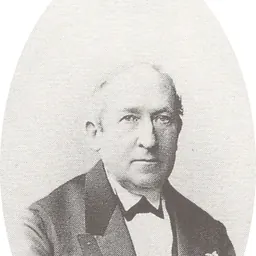
Lived 1859 – 1951 (aged 92). Jefferson B. Snyder was an American military officer, lawyer, politician and district attorney.
Jefferson B. Snyder (January 19, 1859 – October 18, 1951), was a lawyer and politician from the Mississippi River delta country of northeastern Louisiana. Snyder became a virtual political boss of Madison, Tensas, and East Carroll parishes; his leadership was rarely challenged, and politicians courted his endorsements.
From 1888 to 1891, Snyder revived the parish newspaper, The Madison Journal, which had ceased publication in 1883. He was the publisher for three years.
From 1892 to 1893, he was a member of the Louisiana House of Representatives for Madison Parish. He resigned from the legislature a year into his term to become a United States Navy officer in the customhouse in New Orleans. The appointment came during the second administration of U.S. President Grover Cleveland through the intervention of U.S. Representative Charles J. Boatner of Louisiana's 5th congressional district. While in New Orleans, Snyder obtained a law degree from Tulane University Law School. He also supported his widowed mother and a sister, Kate, later Kate Watson, who moved with him to New Orleans.
In May 1923, Snyder spoke before a rally at the courthouse in St. Joseph assembled in defense of the revival of the Ku Klux Klan. After Snyder's remarks, the Reverend William McDougall of Winnsboro, hailed the KKK for its "principles of Christianity and Americanism." Oliver Watson, a candidate for clerk of court, took to the stage to denounce the Klan as divisive and unnecessary because of the restraint long exercised in race relations within Tensas Parish. Watson was subsequently defeated in the election, a point not lost on the observant Snyder.
Relationship with Huey Long In 1927, Snyder stunned his associates when he endorsed Huey P. Long Jr., for governor in the 1928 primary race against U.S. Representative Riley J. Wilson, the favorite of the planter interests, and the third candidate, sitting Governor Oramel H. Simpson. The decision was surprising because Snyder had enjoyed a close relationship in the past with Long's most vehement critic, former Governor Jared Y. Sanders Sr. Snyder backed Long because he believed that Long, who had lost the 1924 primary race, would defeat Wilson, and Snyder wanted a good relationship with the new governor over whom he expected to exert much influence on behalf of delta interests. He tried unsuccessfully to get Long to visit his hunting lodge on Lake Bruin. The Tensas Gazette questioned Snyder's backing of Long because the district attorney had for "practically his whole life-time been hand in glove with the New Orleans Ring". When Snyder turned aside his old friend Sanders, the Tensas Gazette said that the DA had "turned to other gods" and now worshipped at "another shrine." After the defection, Sanders wrote Snyder that the Great Mississippi Flood of 1927 had not only devastated delta lands but also "affected your mind."
By the spring of 1930, Snyder expressed regret for his support of Long, who he believed had agitated class warfare and undermined the state constitution which Snyder had helped to write. Long shut out most delta interests in his administration. Again showing his political flexibility, Long vowed to "do all in my power to make amends for that course". Long, however, was on another roll; soon he would unseat U.S. Senator Joseph E. Ransdell of Lake Providence, the highest ranking of all delta political advocates. That action left the anti-Long advocates in a sense of bewilderment. Many tried to make peace with the Long forces to survive politically.
Delayed retirement Snyder could have retired with full pay on his 80th birthday by virtue of his more than 30 years service as a district attorney. The retirement was permissible through a state constitutional amendment pushed by Governor Richard Leche and approved by voters in 1937. The amendment was humorously called the "Amendment for the Retirement of Jeff B. Snyder" in honor of the long-serving district attorney, held in such esteem that he was usually called "Judge Snyder" though he was never a judge. However, Snyder continued to serve as DA until 1948; he postponed retirement by nine years under the constitutional amendment approved for his benefit.
Political insider Snyder was active in the Louisiana Democratic State Central Committee. He was a delegate to both the 1916 and 1924 Democratic National Conventions, which nominated Woodrow Wilson for a second term and John W. Davis, respectively, the latter to run against Calvin Coolidge.
For many years, Snyder maintained a hunting lodge on Lake Bruin near St. Joseph, where he hosted guests, all men, ranging from the governor to a U.S. senator, an architect, a surgeon, a publisher, the local bootlegger, and African Americans of various occupations. Snyder was known as one of the most skilled raconteurs—his orations could leave his guests spellbound. Guests included the Kentucky humorist Irvin S. Cobb and the journalist Bob Davis, the columnist who penned "Bob Davis Recalls" for the Joseph Pulitzer newspaper chain. Snyder, then eight-four, recalled with nostalgia the time when there were "no levees, no bridges, ferries nor roads, but the richest soil in the world, more fertile than the Valley of the Nile River. It was a hunter's paradise."
Death Snyder died at ninety-one of a lingering illness in a hospital in Vicksburg, Mississippi. His body lay in state in the Madison Parish Courthouse, with funeral in the Trinity Episcopal Church in Tallulah. He is interred at Silver Cross Cemetery in Tallulah.
The list of honorary pallbearers reads like a "Who's Who" of state and delta politicians: Russell B. Long, Allen J. Ellender, John B. Fournet, Otto Passman, Benjamin C. Dawkins Sr., Joseph E. Ransdell, W. W. Burnside, Joseph T. Curry, Andrew L. Sevier, Judge Frank Voelker Sr., and successor District Attorney Thompson L. Clarke of Snyder's native St. Joseph.
Don’t just read it —
keep it.
Full-length biographies made to live with: read them, listen on the way to work, watch them tonight.
- E-book
- Audio
- Video
Instant download · yours to keep · every purchase keeps this site free
Important facts
People in Jefferson B. Snyder's life
Named in this biography and alive at the same time



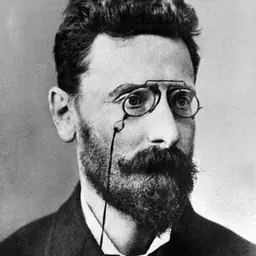
Related people
Same field, nearest in time
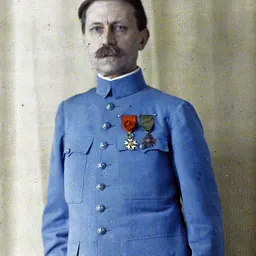





Contemporaries
People whose lives overlapped Jefferson B. Snyder's
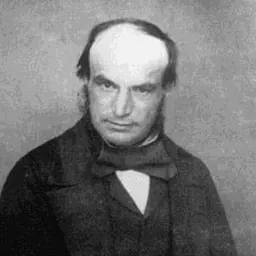
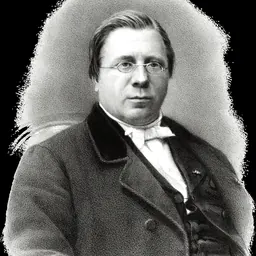

Frequently asked questions
Who was Jefferson B. Snyder?
American politician and lawyer
When was Jefferson B. Snyder born?
Jefferson B. Snyder was born on 19 January 1859 in St. Joseph.
When did Jefferson B. Snyder die?
Jefferson B. Snyder died on 18 October 1951 in Vicksburg.
What was Jefferson B. Snyder's occupation?
Jefferson B. Snyder was a military officer, lawyer, politician and district attorney.
What nationality was Jefferson B. Snyder?
Jefferson B. Snyder was American.
Sources & further reading
· Wikipedia: Jefferson B. Snyder
· DBpedia: Jefferson B. Snyder
Cite this page
APA: Biography.guide. (2026). Jefferson B. Snyder. https://biography.guide/jefferson-b-snyder/
MLA: "Jefferson B. Snyder." Biography.guide, https://biography.guide/jefferson-b-snyder/.
Chicago: "Jefferson B. Snyder." Biography.guide. https://biography.guide/jefferson-b-snyder/.
Data last updated: 2026-09-20 · Spot an error? Report a correction.
Page generated 2026-09-27 05:10 UTC