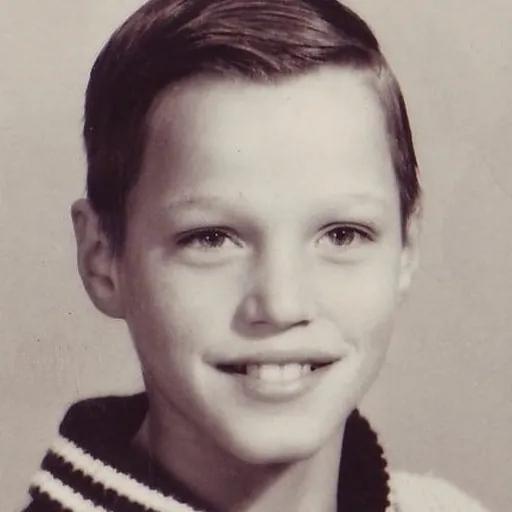
Jed Johnson
American interior designer, film editor, film director
About Jed Johnson
Lived 1948 – 1996 (aged 47). Jed Johnson was an American film director, film editor, cinematographer, interior designer, film producer and architect.
Jed Johnson (December 30, 1948 – July 17, 1996) was an American interior designer and film director. He first came to prominence through his close association with pop artist Andy Warhol before becoming recognized for his influential design work. The New York Times hailed him as "one of the most celebrated interior designers of our time."
Raised in California, Johnson moved to New York in 1968, where he began working at Warhol's Factory performing odd jobs. Following an assassination attempt on Warhol, Johnson moved in with the artist to aid in his recovery, and the two maintained a romantic partnership for 12 years. At the Factory, Johnson progressed from assisting Warhol and director Paul Morrissey to directing his own film, Bad (1977). He also edited several notable works, including Trash (1970), Heat (1972), Flesh for Frankenstein (1973), and Blood for Dracula (1974). After Warhol's death, Johnson was a founding member of the Andy Warhol Art Authentication Board.
In addition to his work in film, Johnson became a highly acclaimed interior designer. Beginning with the decoration of the townhouse he shared with Warhol, he developed a distinctive style that combined minimalist elegance with bold, dramatic accents. He collected antiques and built a high-profile clientele that included Mick Jagger, Pierre Bergé, Yves Saint Laurent, and Barbra Streisand. Johnson's career was cut short when he was killed in the explosion of TWA Flight 800 in 1996.
Leaving behind a lasting impact on contemporary interior design, Johnson was posthumously inducted into the Interior Design Hall of Fame in 1996. Architectural Digest later named him as one of "The World's 20 Greatest Designers of All Time." In 2005, Rizzoli published Jed Johnson: Opulent Restraint, Interiors, a monograph and tribute by his twin brother, Jay Johnson, documenting his work.
Life and career
Early life and education
Jed Johnson was born in Alexandria, Minnesota, on December 30, 1948. He was the fourth of six children, born fifteen minutes after his fraternal twin brother Jay Johnson. They had two older brothers, Craig and Larry, and two younger sisters, Nancy and Susan. At the age of 10, Johnson's family moved to Scottsdale, Arizona, for eight months before settling in Fair Oaks, California, where his father worked in construction. While in high school, Johnson took a summer school class in architecture at American River Junior College in Sacramento, California. After graduating from Bella Vista High School in 1967, he attended American River College.
Johnson and Jay decided to take a semester off and drive cross-country to Montreal, Canada, by car with an AWOL soldier. Their car broke down on the Santa Monica Freeway while they were leaving Los Angeles after a brief stop, so they hitchhiked to Chicago, where they saw their father, who was visiting family. They boarded a train bound for Montreal, but immigration officials stopped them near Buffalo, New York. thumb Johnson, Jay Johnson, and Andy Warhol photographed by Cecil Beaton at the Factory, 1969. On his third day working for Western Union in February 1968, Johnson delivered a telegram to the Decker building at 33 Union Square West, where Pop artist Andy Warhol had recently relocated his studio, the Factory. According to Malanga, Johnson briefly assisted Warhol with silkscreening, but disliked the hands-on, messy nature of the process, prompting Warhol to call Malanga back to resume the work.
Warhol also allowed Johnson and his brother to use his charge account at Max's Kansas City. After seeing their building, he expressed concern about the neighborhood's safety and encouraged Johnson to find a better apartment. Warhol and Solanas had arrived at the building at the same time as Johnson, who had just returned from the hardware store, and the three rode the elevator up together. During Warhol's recovery, a romance blossomed, and Johnson came to "fill the traditional role of a devoted young spouse." Johnson brought order to the household by painting the walls, arranging the furniture, and clearing out the clutter in the townhouse. He also accompanied Warhol's mother on weekly visits to the doctor and cared for her two elderly cats.
After expressing interest in working on sound, Warhol and Morrissey trained Johnson, and he started assisting them on their underground films. While Warhol was hospitalized, Johnson assisted Morrissey with filming Flesh (1968), in which he makes a cameo, and he did the sound for Blue Movie (1969). He also appeared as a hippie partygoer in John Schlesinger's Midnight Cowboy (1969).
Like Warhol, Johnson developed a strong interest in photography. In 1969, his work appeared in Al Hansen's underground magazine Kiss, which featured a gossip column by Warhol. Later that year, he became a staff photographer for Warhol's Interview magazine. thumb Johnson (holding a camera) with Warhol and members of the Factory: Candy Darling, Brigid Berlin,Geraldine Smith, Gerard Malanga, and Ingrid Superstar. Photo by Claude Picasso for Esquire, 1969.Described as intensely quiet and shy, Johnson was Warhol's constant companion. He was an integral part of Warhol's inner circle, traveling with him for museum exhibitions, gallery shows, and portrait commissions. The press referred to Johnson as "Andy's shadow" and "Warhol's new standard of male beauty." In 1971, Warhol designed the cover for the Rolling Stones' album Sticky Fingers, which features a man's crotch in blue jeans with a real zipper. Although several people have claimed to be the man on the album cover, Johnson is generally believed to have been the model.
As an editor, Johnson worked on the films Trash (1970), Heat (1972), L'Amour (1972), Flesh for Frankenstein (1973), and Blood for Dracula (1974). He made his directorial debut with Bad (1977), starring Carroll Baker, which received mixed reviews. After its release, he abandoned filmmaking and began buying and selling antiques. His film Bad has since become a cult classic.
In 1977, Johnson's relationship with Warhol began to deteriorate, spurred on by Warhol's partying and his friendship with Victor Hugo. Johnson recalled: "When Studio 54 opened things changed with Andy. That was New York when it was at the height of its most decadent period, and I didn't take part. … I was always really shy and had a really hard time socially anyway, and I didn't like the people. Andy was just wasting his time, and it was really upsetting."
Johnson struggled with depression, which was exacerbated by Warhol's emotional distance; during their relationship, he attempted suicide twice, in 1970 and 1978. Johnson also aspired to become a pilot and paid for flying lessons in the early 1970s, but was unable to obtain his license due to his first suicide attempt. "Jed missed the affection—verbally and physically. Andy wasn't capable of expressing it in the way Jed needed … Jed felt very strongly about the relationship. He definitely had strong feelings for Andy, and it caused him a lot of pain," his brother Jay Johnson said. In October 1980, while still residing with Warhol, Johnson purchased a duplex apartment to use as an office for his decorating business at 15 West 67th Street. On December 21, 1980, Johnson informed Warhol that he had decided to move out and live in the duplex when he returned from a skiing trip in Colorado. A few days later, Johnson called Warhol on Christmas, but he would not come to the phone. He also gave him a Christmas card in which he wrote: "Andy, I don't know what you are looking for. Sorry you didn't find it at home. I don't think (or don't want to think) you'll get it from your Victors and Kevins and nights at Studio 54. You did have all my love and respect. I'm sorry it went wrong. Thinking of you with sincere love, Jed." Following their split, they shared custody of their two dachshunds, Archie and Amos. thumb Johnson and Warhol with their dachshund Archie at the port of Amalfi, 1973.In 1982, Warhol amended his will to exclude Johnson. His business manager Fred Hughes remained the executor, and Vincent Fremont, vice president of Andy Warhol Enterprises, replaced Johnson as the backup executor. Likewise, Johnson was devastated when Warhol died following gallbladder surgery in February 1987. He later spoke to biographer Victor Bockris about the "real strong influence" of Warhol's presence in his life. He said, "I still feel him today. When I do something I think, Well, gee, how would Andy do it?" In 1995, Johnson became a founding member of the Andy Warhol Art Authentication Board, which was a private corporation that certified the authenticity of works by Warhol.
Throughout their relationship, Johnson amassed several of Warhol's paintings, including Silver Elvis, Front and Back Dollar Bills, Mao, and a print portfolio of Electric Chair. Warhol also created portraits of Johnson and their dachshunds. Johnson's twin brother Jay Johnson inherited his art collection after his death. As Warhol's collecting increasingly overwhelmed their Lexington Avenue townhouse, Johnson encouraged him to move to a larger home. By late 1973, Johnson was scouting properties and reporting back to Warhol. In January 1974, Warhol purchased a Neo-Georgian townhouse at 57 East 66th Street in Lenox Hill, reflecting his investment in their domestic life. Johnson, who had enjoyed organizing their previous home, oversaw the interior decoration and collaborated with architect Peter Marino on renovations to the kitchens and bathrooms.
The townhouse served as a canvas for Johnson, who drew inspiration from the furniture and collections he saw during his travels with Warhol over the years. When Warhol saw that the few pieces of "primitive country furniture" he had purchased looked out of place in the townhouse's "new high, classical spaces," he encouraged Johnson to find more appropriate furniture. Johnson's shopping became a dedicated search for period furnishings suited to their home. He assigned various rooms in the house to distinct period styles, experimenting with three different styles: Neoclassical, Art Deco, and Victorian. "Jed influenced Andy to appreciate fine old things. It probably influenced Andy towards the classical theme of art," he added.
Johnson was a close friend of Sandy Brant, who was the director of advertising for Warhol's Interview magazine. In 1977, Johnson collaborated with Sandy on interior schemes for an office building in Greenwich, Connecticut owned by Peter and his business partner Joe Allen.thumb The second-floor landing of Andy Warhol's townhouse, designed by Johnson, featured Legrain throne chairs and a console.
Johnson also purchased a house in Vail, Colorado with the Brants, where their commissioned ski house—known as the Brant-Johnson House—was completed in 1977. Designed by Venturi & Rauch, the residence was featured in the October 1977 issue of Progressive Architecture. Its design drew on Art Nouveau and the Arts and Crafts movement, emphasizing vertical massing, angular geometry, and extensive use of natural wood. This led to Johnson's first commission: decorating Bergé's pied-à-terre at The Pierre hotel in New York City. "Jed took me to see Mark Twain's house," Bergé recalled. The apartment featured Neo-Grec and American Empire style furniture, stenciled friezes, and lush furnishings. It was showcased in Vogue 's May 1979 issue, which described it as having "a warm, comfortable, rich ambience unlike any other in the city." In 1979, Johnson and Hollander designed the Yves Saint Laurent Enterprises offices in New York with architect Michael Hollander.
Design partnership with Alan Wanzenberg and later life In 1980, Johnson met architect Alan Wanzenberg through a mutual friend, art dealer Thomas Ammann. After becoming friends, the two began working together professionally and subsequently had an affair. By 1981, Wanzenberg had moved into Johnson's apartment on Manhattan's West Side. Despite the split, they continued to collaborate professionally, sharing a home office and resources. Although Johnson completed much of his later work with Wanzenberg, he also enjoyed collaborating with other architects, designing interiors for houses by Cesar Pelli, Hugh Newell Jacobsen, Samuel White, and others.
By the mid-1980s, Johnson's business was billing millions of dollars annually and had attracted high-profile clients such as Mick Jagger, Jerry Hall, Bianca Jagger, Barbra Streisand, Richard Gere, and Carl Icahn. After his death in 1987, Johnson worked with photographer Elizabeth Heyert to document the interiors for her book Metropolitan Places (1989), preserving the atmosphere he had created in the house before Warhol's collection was dispersed. The show, The Four-Footed, Finned or Feathered Four Hundred, featured 245 photographs of prominent New Yorkers and their pets. In 1989, he renovated the new headquarters of Interview magazine.
Johnson was active in AIDS-related fundraising efforts. In 1991, Johnson and Wanzenberg participated in Metropolitan Home magazine's ShowHouse benefit for the Design Industries Foundation for AIDS (DIFFA) in New York City. thumb From 1980 to 1996, Johnson resided at 15 W 67th St on the Upper West Side of Manhattan. His duplex also served as the office for his interior design business.In 1994, Barbaralee Diamonstein and Carl Spielvogel commissioned Johnson, working with architect Samuel White of Buttrick White & Burtis, to renovate their home, Bonnie Dune, in Southampton, New York.
Thurston Twigg-Smith commissioned Johnson to decorate the Twin Farms resort in Barnard, Vermont. Johnson and Wanzenberg oversaw the renovation of the hotel's main house and the construction of three cottages in 1993, followed by the completion of five additional individually designed cottages in 1995.
In 1995, Johnson and Wanzenberg served as honorary chairmen of the Katonah Museum of Art's gala dinner dance at Purchase College in Purchase, New York. In the 1990s, they shared a dachshund named Gus and owned a two-home Fire Island property that had previously belonged to fashion designer Perry Ellis.
In 1996, art dealer Angela Westwater and her husband, David Meitus, enlisted Johnson and Wanzenberg to design their New York apartment. Johnson was the interior design consultant for the five-story Frédéric Fekkai Beauté de Provence Salon salon, located in the Chanel building on 57th Street, which opened in August 1996.
Johnson developed a strong interest in 18th-century crewelwork and embroidery, incorporating such textiles into his interiors. As these materials became increasingly scarce, he began commissioning hand-embroidered reproductions in India, a process that led to a partnership with London-based Mona Perlhagen, who oversaw Chelsea Textiles, the European counterpart to Johnson's planned New York venture, Chelsea Editions. Following his death, the showroom opened in 1996 with the support of his brother.
Death On July 17, 1996, Johnson was killed at the age of 47, when TWA Flight 800 exploded off the coast of Long Island, shortly after taking off from John F. Kennedy International Airport in New York City. As a passenger in first class, Johnson was killed instantly when the fuel tank exploded, and his body was one of the first recovered, a mile from the crash scene in the Atlantic Ocean. She spoke of their friendship and shared a photo of Johnson with Alan Wanzenberg, and expressed her condolences. Reverend Fred Turpin of the City Church of New York, who presided over the funeral, said "the stench of evil" surrounded the explosion.
A four-year investigation concluded that the accident was most likely caused by the ignition of a flammable mixture of fuel vapor and air inside a fuel tank, triggered by an electrical short circuit. As a result, new regulations were passed to prevent future fuel tank ignitions in airplanes.
In 1978, Pierre Bergé, chairman of Yves Saint Laurent, hired Johnson to decorate his newly acquired New York apartment. Art dealer Angela Westwater, who commissioned Johnson to design her New York residence, described him as a "master colorist," and said, "Jed knew about art—it was part of his vocabulary. The restraint which characterized his design aesthetic combined with his personal experience in the art world were appropriate attributes for creating a context for our art collection."
Legacy Following his death in 1996, House & Garden devoted an issue to Johnson, while Architectural Digest published a five-page photographic feature on his work.
Johnson's twin brother, Jay Johnson, became president of Jed Johnson & Associates and carried out his plans to open a textiles showroom in New York's Fine Arts Building in 1996. In 2017, it was rebranded as Arthur Dunnam for Jed Johnson Studio.
In 2005, Jay Johnson established Jed Johnson Home to pay tribute to and carry on his brother's legacy by offering designers and architects luxury textiles for interior usage. Organized by Jay Johnson, the book has contributions from Paul Goldberger, Bob Colacello, Pierre Berge, and Sandy Brant. A celebratory re-edition of the book was released in 2023.
In 2010, Johnson was named by Architectural Digest as one of "The World's 20 Greatest Designers of All Time."
Filmography Actor
Flesh (1968) — uncredited role Midnight Cowboy (1969) — uncredited role
Associate Producer
Women in Revolt (1971) Heat (1972)
Cinematographer
Women in Revolt (1971) L'Amour (1972) Director Bad (1977)
Editor
Trash (1970) Heat (1972) L'Amour (1972) Flesh for Frankenstein (1973) Blood for Dracula (1974) Sound
Blue Movie (1969)
Don’t just read it —
keep it.
Full-length biographies made to live with: read them, listen on the way to work, watch them tonight.
- E-book
- Audio
- Video
Instant download · yours to keep · every purchase keeps this site free
Important facts
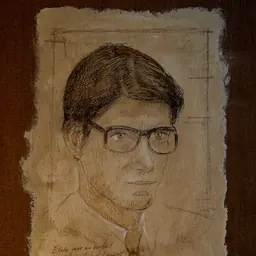
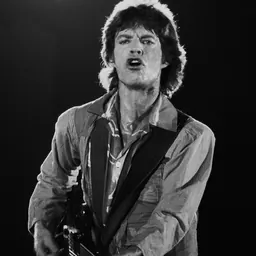
People in Jed Johnson's life
Named in this biography and alive at the same time





Related people
Same field, nearest in time

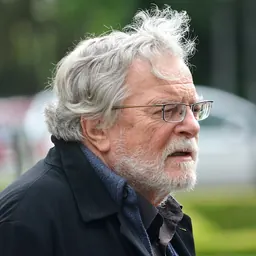

Contemporaries
People whose lives overlapped Jed Johnson's

Frequently asked questions
Who was Jed Johnson?
American interior designer, film editor, film director (1948-1996)
When was Jed Johnson born?
Jed Johnson was born on 30 December 1948 in Alexandria.
When did Jed Johnson die?
Jed Johnson died on 17 July 1996 in East Moriches.
What was Jed Johnson's occupation?
Jed Johnson was a film director, film editor, cinematographer, interior designer, film producer and architect.
What nationality was Jed Johnson?
Jed Johnson was American.
Sources & further reading
· DBpedia: Jed Johnson (interior designer)
Cite this page
APA: Biography.guide. (2026). Jed Johnson. https://biography.guide/jed-johnson/
MLA: "Jed Johnson." Biography.guide, https://biography.guide/jed-johnson/.
Chicago: "Jed Johnson." Biography.guide. https://biography.guide/jed-johnson/.
Data last updated: 2026-09-23 · Spot an error? Report a correction.
Portrait: Wikimedia Commons · author & licence
Page generated 2026-09-27 05:07 UTC