
About Jean Weigle
Lived 1901 – 1968 (aged 67). Jean Weigle was a Swiss physicist and biologist.
Jean-Jacques Weigle (9 July 1901 – 28 December 1968) was a Swiss molecular biologist at Caltech and formerly a physicist at the University of Geneva from 1931 to 1948. He is known for his major contributions on field of bacteriophage λ research, focused on the interactions between those viruses and their E. coli hosts.
Biography Jean Weigle was born in Geneva, Switzerland, where he obtained his PhD in physics in 1923, from the University of Geneva. He married Ruth Juliette Falk, a widow. He died in Pasadena, California, after suffering a heart attack in 1968. ), Giuseppe Bertani, and Nobel laureate Werner Arber.
In 1952, Salvador Luria had discovered the phenomenon of "restriction modification" (the modification of phage growing within an infected bacterium, so that upon their release and re-infection of a related bacterium the phage's growth is restricted), (also described in Luria's autobiography, pgs. 45 and 99). Work by Jean Weigle and Giuseppe Bertani at almost the same time, and later work by others clarified the basis for this phenomenon. They showed that restriction was actually due to attack by specific bacterial enzymes on the modified phage's DNA. This work led to the discovery of the class of enzymes now known as "restriction enzymes." These enzymes allowed controlled manipulation of DNA in the laboratory, thus providing the foundation for the development of genetic engineering.
He is most noted for his demonstration, with Matthew Meselson, of Caltech and Grete Kellenberger of Geneva, that genetic recombination involves actual breakage and reunion of DNA molecules. He created the classic induction of a lysogen, which involved irradiating the infected cells with ultraviolet light. He demonstrated through his classical experiments the inducible nature of the DNA repair system. (now referred to as Weigle mutagenesis in his honor) and inducible DNA repair following DNA damage
Selected works
Awards and honours In 1947 he received an honorary doctorate from Case Institute of Technology. In 1962 he was awarded the Prix des trois physiciens.
Legacy "So Weigle was the pioneer of the whole lambda genetics business, which is now a real industrial operation". "The interest of physical scientists such Max Delbrück and Jean Weigle in the 20th Century had a revolutionizing effect on biology". In his honor the institutions where he worked created the Weigle Memorial Service and the Weigle Memorial Lecture at Caltech, and several friends established the Jean Weigle Memorial Fund. The Weigle lecture honors his memory, since he was instrumental for the development of Molecular Biology in Geneva.
Don’t just read it —
keep it.
Full-length biographies made to live with: read them, listen on the way to work, watch them tonight.
- E-book
- Audio
- Video
Instant download · yours to keep · every purchase keeps this site free
Important facts
People in Jean Weigle's life
Named in this biography and alive at the same time

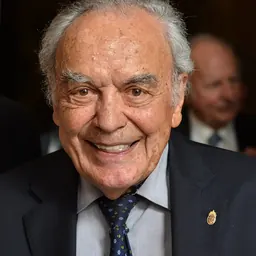
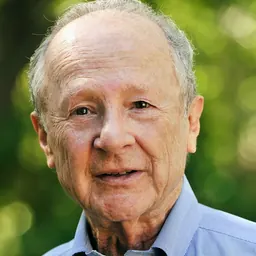


Related people
Same field, nearest in time
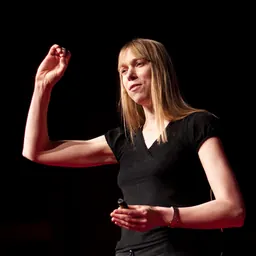

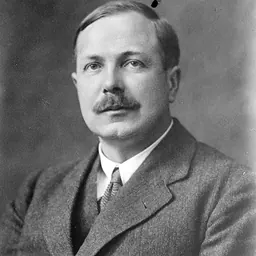
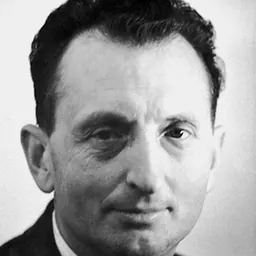
Contemporaries
People whose lives overlapped Jean Weigle's


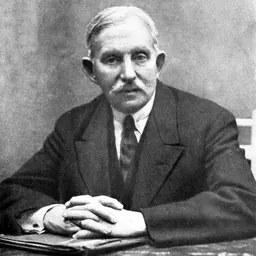

Frequently asked questions
Who was Jean Weigle?
Swiss biologist (1901-1968)
When was Jean Weigle born?
Jean Weigle was born on 9 July 1901 in Geneva.
When did Jean Weigle die?
Jean Weigle died on 28 December 1968 in Pasadena.
What was Jean Weigle's occupation?
Jean Weigle was a physicist and biologist.
What nationality was Jean Weigle?
Jean Weigle was Swiss.
Sources & further reading
Cite this page
APA: Biography.guide. (2026). Jean Weigle. https://biography.guide/jean-weigle/
MLA: "Jean Weigle." Biography.guide, https://biography.guide/jean-weigle/.
Chicago: "Jean Weigle." Biography.guide. https://biography.guide/jean-weigle/.
Data last updated: 2026-09-20 · Spot an error? Report a correction.
Page generated 2026-09-27 05:06 UTC