
About Jean Rostand
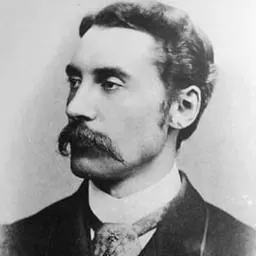
Lived 1894 – 1977 (aged 82). Jean Rostand was a French philosopher, biologist, writer and historian.
Jean Edmond Cyrus Rostand (30 October 1894 – 4 September 1977) was a French biologist, historian of science, and philosopher.
Active as an experimental biologist, Rostand became famous for his work as a science writer, as well as a philosopher and an activist. His scientific work covered a variety of biological fields such as amphibian embryology, parthenogenesis and teratogeny, while his literary output extended into popular science, history of science and philosophy. His work in the area of cryogenics gave the idea of cryonics to Robert Ettinger. He took an interest in ethics and morality in biology and wrote against pseudoscience, the use of science for war, wrote against racism and supported human equality and freedom.
Early life Rostand was born in Paris to playwright Edmond Rostand and poet Rosemonde Gérard. He was the brother of novelist and playwright Maurice Rostand. His paternal grandfather Eugène Rostand was a political scientist and economist. The family moved to Cambo-les-Bains in 1900. Rostand grew up with a fascination for natural history in these surroundings. He was educated by home tutors and read the works of J. H. Fabre, Claude Bernard, and Charles Darwin. He then studied natural sciences at the University of Sorbonne and graduated in 1914.
Academic career Rostand's biological research began with work on paedogenesis in flies, studies on silkworms and dragonflies before beginning to work on embryology in frogs. In 1910 he was able to induce parthenogenesis in the eggs of Rana temporaria. He then examined polydactyly and its induction by chemical agents in frogs and studied the preservation of sperm vitality using glycerine. He also examined the determination of sex in frogs. For his work in biology he received the Henry de Parville Prize in 1934 and the Binoux Prize in 1941.
Following in the footsteps of his father, Rostand was elected to the Académie française in 1959.
Rostand is famous for the quotation: "Kill one man, and you are a murderer. Kill millions of men, and you are a conqueror. Kill them all, and you are a God" from Thoughts of a Biologist, 1938.
In the preface of the 1959 Italian edition of his Artificial man, Rostand foresaw artificial oviparity, gender mutation, virgin births, as well as DNA modifications before and after the birth.
Personal life Rostand was active in several causes, in particular against nuclear proliferation and the death penalty. An agnostic, he demonstrated humanist convictions. He wrote several books on the question of eugenism and the responsibilities of mankind regarding its own fate and its place in nature.
Rostand married a cousin Andrée Mante in 1920 and they had a son François who became a mathematician. After 1922, he set up a laboratory in his home at Ville d’Avray and began to conduct most of his research there, free of institutional demands. He would meet people from a wide range of interests at his home on Sundays. He died following prolonged ill-health at home.
Rostand Island in Antarctica is named after him.
Works Le retour des pauvres , 1919 - Return of the poor La loi des riches, 1920 - The law of the rich Pendant qu’on souffre encore, 1921 - While suffering endures Ignace ou l'Écrivain , 1923 - Ignace or the writer Deux angoisses : la mort, l’amour, 1924 - Two anguishes: love and death De la vanité et de quelques autres sujets , 1925 - Of vanity and several other subjects Les familiotes et autres essais de mystique bourgeoise, 1925 - The familiotes and other essays of the bourgeois mystique De l’amour des idées , 1926 - On the love of ideas Le mariage, 1927 - Marriage Valère ou l’Exaspéré, 1927 - Valère or The exasperated Julien ou Une conscience, 1928 - Julien or A conscience Les chromosomes, artisans de l’hérédité et du sexe, 1929 - Chromosomes, artisans of heredity and sex De la mouche à l’Homme, 1930 - From fly to man L’état présent du transformisme, 1931 - The current state of transformism Journal d’un caractère, 1931 - Journal of a character L’Évolution des espèces, 1932 - The evolution of species Les problèmes de l’hérédité et du sexe, 1933 - The problems of heredity and sex L’aventure humaine, 1933 - The human adventure La vie des libellules, 1935 - The life of dragonflies Insectes, 1936 - Insects La nouvelle biologie, 1937 - The new biology Biologie et médecine, 1938 - Biology and medicine Hérédité et racisme, 1938 - Heredity and racism Pensée d’un biologiste, 1938 - Thoughts from a biologist La vie et ses problèmes, 1938 - Life and its problems Science et génération, 1940 - Science and generation Les idées nouvelles de la génétique, 1941 - New ideas in genetics L’Homme, introduction à l’étude de la biologie humaine , 1941 - Man, introduction to the study of human biology L’Homme, maître de la vie, 1941 - Man, master of life Hommes de vérité, 1942 - Men of truth L’avenir de la biologie, 1943 - The future of biology La genèse de la vie, histoire des idées sur la génération spontanée , 1943 - Genesis of life, a history of the ideas on spontaneous generation La vie des vers à soie , 1944 - The life of silkworms Esquisse d’une histoire de la biologie , 1945 - Sketch of a history of biology L’avenir de la biologie, 1946 - The future of biology Qu’est-ce qu’un enfant ?, 1946 - What is a child? Charles Darwin, 1947 Nouvelles pensées d’un biologiste, 1947 - New thoughts from a biologist L’hérédité humaine , 1948 - Human heredity Hommes de vérité II , 1948 - Men of truth II La biologie et l’avenir humain, 1949 - Biology and the human future L’Homme devant la biologie, 1949 - Man facing biology La parthénogenèse, reproduction virginale chez les animaux, 1949 - Parthenogenesis, virginal reproduction in animals La parthénogenèse animale, 1949 - Animal parthenogenesis La génétique des batraciens, 1951 - Batrachian genetics Les grands courants de la biologie , 1951 - Great trends in biology Les origines de la biologie expérimentale et l’abbé Spallanzani, 1951 - The origins of experimental biology and the Abbé Spallanzani L’hérédité humaine, 1952 - Human heredity Pages d’un moraliste , 1952 - Pages by a moralist Ce que nous apprennent les crapauds et les grenouilles, 1953 - What toads and frogs teach us La vie, cette aventure, 1953 - Life, that adventure Ce que je crois, 1953 - What I believe Instruire sur l’Homme, 1953 - To instruct on Man Notes d’un biologiste , 1954 - Notes from a biologist Les crapauds et les grenouilles et quelques grands problèmes biologiques, 1955 - Toads, frogs and a few great problems in biology Le problème biologique de l’individu, 1955 - The biological problem of the individual L’Homme en l’an 2000, 1956 - Man in the year 2000 Peut-on modifier l’Homme?, 1956 - Can we modify Man? L’atomisme en biologie, 1956 - Atomism in biology Bestiaire d’amour, 1958 - A bestiary of love Aux sources de la biologie, 1958 - At the sources of biology Anomalies des amphibiens anoures, 1958 - Anomalies of anurian amphibians Science fausse et fausses sciences, 1958 - Erroneous science and false science Les origines de la biologie expérimentale, 1959 - Origins of experimental biology Carnet d’un biologiste, 1959 - Notepad of a biologist Espoirs et inquiétudes de l’homme, 1959 - The hopes and worries of Man
Don’t just read it —
keep it.
Full-length biographies made to live with: read them, listen on the way to work, watch them tonight.
- E-book
- Audio
- Video
Instant download · yours to keep · every purchase keeps this site free
Important facts
Family & relationships
People in Jean Rostand's life
Named in this biography and alive at the same time




Related people
Same field, nearest in time


Contemporaries
People whose lives overlapped Jean Rostand's


Frequently asked questions
Who was Jean Rostand?
French writer (1894–1977)
When was Jean Rostand born?
Jean Rostand was born on 30 October 1894 in Paris, 17th arrondissement of Paris.
When did Jean Rostand die?
Jean Rostand died on 4 September 1977 in Ville-d'Avray.
What was Jean Rostand's occupation?
Jean Rostand was a philosopher, biologist, writer and historian.
What nationality was Jean Rostand?
Jean Rostand was French.
Sources & further reading
Cite this page
APA: Biography.guide. (2026). Jean Rostand. https://biography.guide/jean-rostand/
MLA: "Jean Rostand." Biography.guide, https://biography.guide/jean-rostand/.
Chicago: "Jean Rostand." Biography.guide. https://biography.guide/jean-rostand/.
Data last updated: 2026-09-20 · Spot an error? Report a correction.
Page generated 2026-09-27 05:27 UTC