
Jean-Marie de La Mennais
Breton Priest, Founder and Venerable
About Jean-Marie de La Mennais
Lived 1780 – 1860 (aged 80). Jean-Marie de La Mennais was a French catholic priest, founder of Catholic religious community and catholic theologian.
Jean-Marie Robert de La Mennais, FICP (or de Lamennais; 1780–1860) was a Breton Catholic priest and brother of the philosopher Felicité Robert de Lamennais, whom he influenced in their youth. He was a leading figure in the revival of the Catholic Church in France after the French Revolution, involved in founding three religious institutes as part of this effort.
Pope Paul VI proclaimed him to be Venerable in 1966 and his cause of canonization is ongoing.
Life
Early life Jean-Marie was born at Saint-Malo, then in the ancient Province of Brittany, on 8 September 1780, in . He is one of the sons of Robert de Lamennais, a wealthy merchant who had recently received a coat of arms from the king, and Marie des Saudrais. He was five years old when his mother died, and as a result, he and his younger brother were sent for education to an uncle, Robert des Saudrais, at La Chênaie, an estate near Saint-Malo.
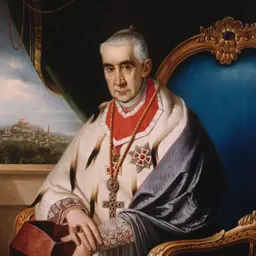
During the period of the Revolution, the family sheltered non-juring priests who would lead Mass secretly in their home in the middle of the night. Jean-Marie began to express an interest in priesthood. In October 1790 he made his First Communion and received Confirmation from Gabriel Cortois de Pressigny, the last Bishop of Saint-Malo, who went into exile the following May. The Reign of Terror came to Brittany in December 1793. Their father Robert was arrested and barely escaped the guillotine.
Soon after he had returned from exile, Bishop Cortois de Pressigny installed Lamennais as a subdeacon on 21 December 1801 at the chapel of the Ursulines in Paris. The following year Lamennais helped the former rector of a secondary school previously run by the church, closed by the Revolution, to re-open the institution. To house the revived school, he and his brother, Hugues-Felicité purchased a former hospital. He was ordained a deacon at the Cathedral of Rennes on 24 September 1803 by Bishop Jean-Baptiste-Marie de Maille, Bishop of Rennes. and was quickly named vicar of the diocese for the region of Saint-Malo, based at the former cathedral of the local diocese there which had been suppressed under the recent Concordat of 1801 with the Holy See. In 1807, upon the death of the rector, the College of Saint-Malo was converted into a minor seminary and the Lamennais brothers both joined the faculty of the school.
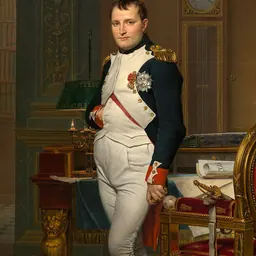
Together the brothers wrote two major works, Reflections on the State of the Church in France in the 18th century and Its Current Situation and The Tradition of the Church on the Institution of Bishops, which they published anonymously in Paris in 1808. The books urged a religious revival in the nation with an active role by the clergy. They defended the Holy See as the true authority over the Catholic Church in France. The government of the Emperor Napoleon judged the ideas of the books dangerous and banned their further printing. The following year they published a translation of the work of the noted 16th-century spiritual writer, the Benedictine Abbot Louis de Blois. He was also appointed as vicar of the Grand Almoner of France, in charge of charitable works throughout the nation. Lamennais threw himself tirelessly into the work required of him. In addition to his holding the office of Vicar General for Saint-Brieuc, the Bishop of Rennes, his canonical superior, appointed him simultaneously to that same office for his own diocese. In addition to these other duties, he took an active role in the founding of the Congregation of St. Peter, dedicated to the administration of the diocesan seminary and of parish missions, having to act as its Superior General for a brief period. One prelate, Bishop John Dubois of New York, was so impressed by Lamennais' dedication and capability after receiving help from him, that he appointed him vicar general for his own diocese in the United States.
Brothers of Christian Instruction Lamennais was also concerned about the needs of the young boys in his diocese, and sought teachers for them. He initially sought the help of the Brothers of the Christian Schools, founded by John Baptist de la Salle to educate poor boys. He was stymied, however, as the regulations of those Brothers forbade their working alone, while the mission he envisioned often needed only one teacher for an isolated location with a small student population. He began to recruit young men he found working in the fields whom he considered capable of learning. He brought them into his own home and provided them a basic education.
Lamennais learned of the establishment of a small group of religious brothers by Gabriel Deshayes (1767-1841), pastor of Auray and vicar general of the Diocese of Vannes. They agreed to cooperate and, to this end, they signed an agreement on 6 June 1819 to provide their people teachers of "solid piety".
With the arrival of the new bishop, Lamennais was able to direct more of his energies to this project. In response to this, the two priests began to recruit men to commit themselves to this life as part of a religious community. The first recruits received their canonical training from the Brothers of the Christian Schools. It ceased to exist with the dissociation of religious orders in France.
Death After the death of Deshayes, Lamennais became the full-time superior of the brothers and lived at the motherhouse. By the time of his death in December 1860, the brothers had 852 members serving throughout France and its far flung colonies in the world, from French Guiana to Senegal.
In 1897 the Sisters established their first overseas mission in Canada, later followed by a school in England in 1903.
Don’t just read it —
keep it.
Full-length biographies made to live with: read them, listen on the way to work, watch them tonight.
- E-book
- Audio
- Video
Instant download · yours to keep · every purchase keeps this site free
Important facts
People in Jean-Marie de La Mennais's life
Named in this biography and alive at the same time


Related people
Same field, nearest in time


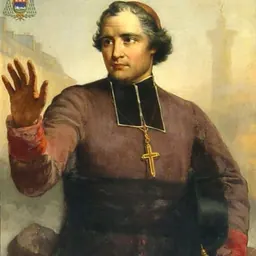
Contemporaries
People whose lives overlapped Jean-Marie de La Mennais's

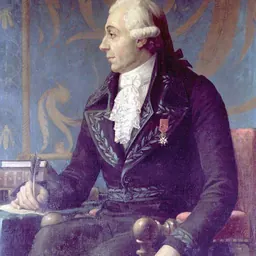
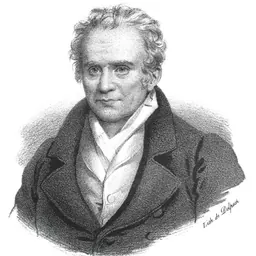
Frequently asked questions
Who was Jean-Marie de La Mennais?
Breton Priest, Founder and Venerable
When was Jean-Marie de La Mennais born?
Jean-Marie de La Mennais was born on 8 September 1780 in Saint-Malo.
When did Jean-Marie de La Mennais die?
Jean-Marie de La Mennais died on 26 December 1860 in Ploërmel.
What was Jean-Marie de La Mennais's occupation?
Jean-Marie de La Mennais was a catholic priest, founder of Catholic religious community and catholic theologian.
What nationality was Jean-Marie de La Mennais?
Jean-Marie de La Mennais was French.
Sources & further reading
· Wikipedia: Jean-Marie de La Mennais
· DBpedia: Jean-Marie de La Mennais
Cite this page
APA: Biography.guide. (2026). Jean-Marie de La Mennais. https://biography.guide/jean-marie-de-la-mennais/
MLA: "Jean-Marie de La Mennais." Biography.guide, https://biography.guide/jean-marie-de-la-mennais/.
Chicago: "Jean-Marie de La Mennais." Biography.guide. https://biography.guide/jean-marie-de-la-mennais/.
Data last updated: 2026-09-20 · Spot an error? Report a correction.
Page generated 2026-09-27 05:19 UTC