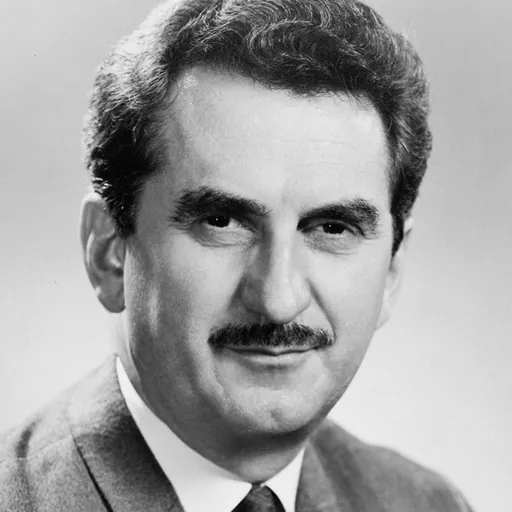
About Jean-Luc Pépin
Lived 1924 – 1995 (aged 70). Jean-Luc Pépin was a Canadian politician, university teacher, writer, political scientist and political pundit.
Jean-Luc Pépin (; November 15, 1924 – September 5, 1995) was a Canadian academic, politician and Cabinet minister.
Political biography Pépin was a political science professor at the University of Ottawa when he was first elected to the House of Commons of Canada in the 1963 election as a Liberal Member of Parliament (MP) from Quebec.
From 1965 to 1972, he served in the cabinets of Prime Ministers Lester B. Pearson and Pierre Trudeau in various capacities, including Minister of Mines and Minister of Industry, Trade and Commerce overseeing the decision to have Canada adopt the metric system.
He lost his seat in the 1972 election, and retired from public life until 1975 when Trudeau appointed him to chair the Anti-Inflation Board.
In 1977, he and former Premier of Ontario John Robarts were appointed to head the "Task Force on Canadian Unity". This task force was created by the federal government as a response to the election of the Parti Québécois, which seeks political independence for Quebec in the 1976 provincial election.
The task force issued a report in 1979 that recommended entrenching language rights in the Canadian Constitution, and for the reduction of federal powers in all areas but economic management. The Task Force also recommended the replacement of the Senate of Canada with a "Council of the Federation" whose members would be appointed by provincial governments, and to grant the provinces a say in appointments to the Supreme Court of Canada. Most of these recommendations were rejected by the Government of Canada, and did not make their way into the new Constitution that was enacted in 1982.
After a seven-year absence, Pépin returned to the House of Commons in the 1979 election. When the Liberals returned to power after the 1980 election, he became Minister of Transport until 12 August 1983. In that position he was responsible for the drastic 1981 passenger rail service cuts (from which Canadian passenger rail never recovered); abolition of the Crowsnest Pass rates; the National Ports Policy, enunciated in the Harbour Commissions Act. Later, he became a Minister of State to the Department of External Affairs and Minister responsible for La Francophonie.
Later life
Following heart surgery, he retired from politics in 1984 and returned to academia as a fellow at the University of Ottawa's Institute on Public Policy.
In 1977, he was made a Companion of the Order of Canada. He was bestowed the title The Right Honourable in 1992.
Electoral history
Note: Social Credit vote is compared to Ralliement créditiste vote in the 1968 election.
Don’t just read it —
keep it.
Full-length biographies made to live with: read them, listen on the way to work, watch them tonight.
- E-book
- Audio
- Video
Instant download · yours to keep · every purchase keeps this site free
Important facts
People in Jean-Luc Pépin's life
Named in this biography and alive at the same time
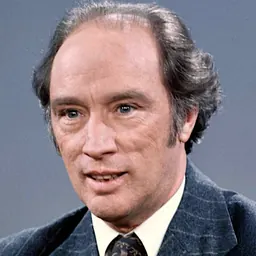

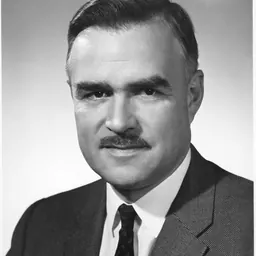
Related people
Same field, nearest in time




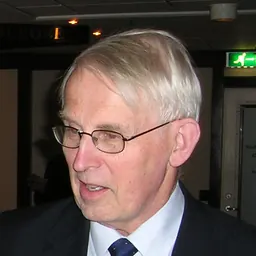

Contemporaries
People whose lives overlapped Jean-Luc Pépin's


Frequently asked questions
Who was Jean-Luc Pépin?
Canadian politician (1924-1995)
When was Jean-Luc Pépin born?
Jean-Luc Pépin was born on 1 November 1924 in Drummondville.
When did Jean-Luc Pépin die?
Jean-Luc Pépin died on 5 September 1995 in Ottawa.
What was Jean-Luc Pépin's occupation?
Jean-Luc Pépin was a politician, university teacher, writer, political scientist and political pundit.
What nationality was Jean-Luc Pépin?
Jean-Luc Pépin was Canadian.
Sources & further reading
Cite this page
APA: Biography.guide. (2026). Jean-Luc Pépin. https://biography.guide/jean-luc-pepin/
MLA: "Jean-Luc Pépin." Biography.guide, https://biography.guide/jean-luc-pepin/.
Chicago: "Jean-Luc Pépin." Biography.guide. https://biography.guide/jean-luc-pepin/.
Data last updated: 2026-09-20 · Spot an error? Report a correction.
Page generated 2026-09-27 05:10 UTC