
About Jean-Joseph de Mondonville
Lived 1711 – 1772 (aged 60–61). Jean-Joseph de Mondonville was a French composer, conductor and violinist.
Jean-Joseph de Mondonville (, 25 December 1711 (baptised) – 8 October 1772), also known as Jean-Joseph Cassanéa de Mondonville, was a French violinist and composer. He was a younger contemporary of Jean-Philippe Rameau and enjoyed great success in his day. Pierre-Louis Daquin (son of the composer Louis-Claude Daquin) claimed, "If I couldn't be Rameau, there's no one I would rather be than Mondonville".
Life
Mondonville was born in Narbonne in Occitania (South France) to an aristocratic family which had fallen on hard times. In 1733, he moved to Paris where he gained the patronage of the king's mistress Madame de Pompadour and won several musical posts, including violinist for the Concert Spirituel.
His first opus was a volume of violin sonatas, published in 1733. He became a violinist of the Chapelle royale and chamber and performed in some 100 concerts. Some of his grands motets were also performed that year, receiving considerable acclaim. He was appointed sous-maître in 1740 and, in 1744, intendant of the Chapelle royale. He produced operas and grand motets for the Opéra and Concert Spirituel respectively, and was associated with the Théatre des Petits-Cabinets, all the while maintaining his career as a violinist throughout the 1740s. In 1755, he became director of the Concert Spirituel on the death of Pancrace Royer. Mondonville died in Belleville near Paris at the age of sixty.
Music Sacred music Between 1734 and 1755, Mondonville composed 17 grands motets, of which only nine have survived. The motet Venite exultemus domino, published in 1740, won him the post of Maître de musique de la Chapelle (Master of Music of the Chapel). Thanks to his mastery of both orchestral and vocal music, Mondonville brought to the grand motet — the dominant genre of music in the repertory of the Chapelle royale (Royal Chapel) before the French Revolution — an intensity of colour and a dramatic quality hitherto unknown. In 1758, he introduced oratorios as a new genre at the Concert Spirituel.
Operas Although Mondonville's first stage work, Isbé, was a failure, he enjoyed great success with the lighter forms of French Baroque opera: the opéra-ballet and the pastorale héroïque. His most popular works were Le carnaval de Parnasse, Titon et l'Aurore and Daphnis et Alcimadure (for which he wrote his own libretto in Languedocien, his native dialect of the Occitan language). Titon et l'Aurore played an important role in the Querelle des Bouffons, the controversy between partisans of French and Italian opera which raged in Paris in the early 1750s. Members of the "French party" ensured that Titon'''s premiere was a resounding success (their opponents even alleged they had guaranteed this result by packing the Académie Royale de Musique, where the staging took place, with royal soldiers). Mondonville's one foray into serious French opera - the genre known as tragédie en musique - was a failure however. He took the unusual step of re-using a libretto, Thésée, which had originally been set in 1675 by the "father of French opera", Jean-Baptiste Lully. Mondonville's bold move to substitute Lully's much-loved music with his own did not pay off. The premiere at the court in 1765 had a mixed reception and a public performance two years later ended with the audience demanding it be replaced by the original. Yet Mondonville was merely ahead of his time - in the 1770s, it became fashionable to reset Lully's tragedies with new music, the most famous example being Armide by Gluck. Grand motet: Dominus regnavit, Tafelmusik, dir. Ivars Taurins, CBC Records (2007) Grands motets : Cantate Domino, Magnus Dominus, De profundis, Nisi Dominus, Purcell Choir, Orfeo Orchestra, dir. Gyögy Vashegyi, Glossa (2016) Grands motets : In exitu Israël, Dominus Regnavit, Coeli enarrant, Choeur & Orchestre Marguerite Louise, dir. Gaétan Jarry, Château de Versailles Spectacles (2022) Grand motet: In exitu Israël, Le Concert d’Astrée, dir. Emmanuelle Haïm, Warner Classics (2023)
Instrumental Music (List Incomplete)
Pièces de clavecin en sonates avec accompagnement de violon, œuvre 3, Florence Malgoire (violin), Christophe Rousset (harpsichord) 1 CD Verany (1990) Six sonates en symphonie, op. 3, Les Musiciens du Louvre, dir. Marc Minkowski, 1 CD Archiv Produktion (1998) (OCLC 956264542); réédition, 1 CD Archiv Produktion coll. "Blue" (2003) (OCLC 724831406) Pièces de clavecin avec voix ou violon, op. 5, Luc Beauséjour, Shannon Mercer, Hélène Plouffe, 1 CD Analekta (2008) (OCLC 705324011) Sonates en trio, opus 2, Ensemble Diderot, Johannes Pramsohler, violin, Audax (2016)
Dramatic works
Daphnis et Alcimadure (Abridged version), Orquèstre e Còrs del Teatre de Montpelhièr, dir. Louis Bertholon, Ventadorn (1981) Titon et l'Aurore, Ensemble Vocal Françoise Herr, Les Musiciens du Louvre, dir. Marc Minkowski, 2 CD Erato (1992) (OCLC 39039271) Les Fêtes de Paphos, Choeur de Chambre Accentus, Les Talens Lyriques, dir. Christophe Rousset, 3 CD L'Oiseau-Lyre (1997) Isbé, Purcell Choir, Orfeo Orchestra, dir. György Vashegyi, Glossa (2017) Titon et l'Aurore, Les Arts Florissants, dir. William Christie, Naxos DVD (2021) Daphnis et Alcimadure (Complete opera), Orchestre Baroque de Montauban, Ensemble Les Passions, dir. Jean-Marc Andrieu, 2 CD Ligia Digital (2023) Le carnaval du Parnasse, Les Ambassadeurs - La Grande Écurie, Choeur de Chambre de Namur, dir. Alexis Kossenko, Château de Versailles Spectacles (2024)
Don’t just read it —
keep it.
Full-length biographies made to live with: read them, listen on the way to work, watch them tonight.
- E-book
- Audio
- Video
Instant download · yours to keep · every purchase keeps this site free
Important facts
People in Jean-Joseph de Mondonville's life
Named in this biography and alive at the same time
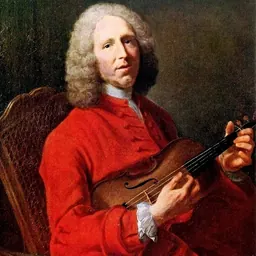
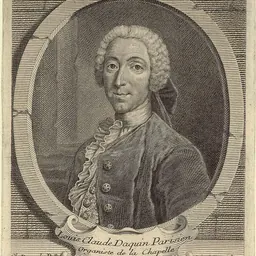


Related people
Same field, nearest in time
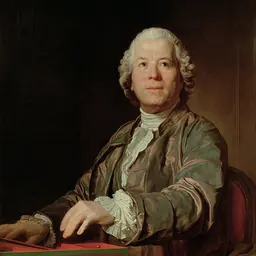

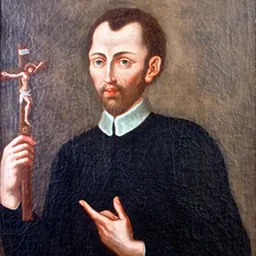

Contemporaries
People whose lives overlapped Jean-Joseph de Mondonville's




Frequently asked questions
Who was Jean-Joseph de Mondonville?
French composer and violinist
When was Jean-Joseph de Mondonville born?
Jean-Joseph de Mondonville was born in 1711 in Narbonne.
When did Jean-Joseph de Mondonville die?
Jean-Joseph de Mondonville died on 8 October 1772 in Belleville.
What was Jean-Joseph de Mondonville's occupation?
Jean-Joseph de Mondonville was a composer, conductor and violinist.
What nationality was Jean-Joseph de Mondonville?
Jean-Joseph de Mondonville was French.
Sources & further reading
· Wikipedia: Jean-Joseph de Mondonville
· DBpedia: Jean-Joseph de Mondonville
Cite this page
APA: Biography.guide. (2026). Jean-Joseph de Mondonville. https://biography.guide/jean-joseph-de-mondonville/
MLA: "Jean-Joseph de Mondonville." Biography.guide, https://biography.guide/jean-joseph-de-mondonville/.
Chicago: "Jean-Joseph de Mondonville." Biography.guide. https://biography.guide/jean-joseph-de-mondonville/.
Data last updated: 2026-09-20 · Spot an error? Report a correction.
Page generated 2026-09-27 05:34 UTC