
About Jean-Jacques Perrey
Lived 1929 – 2016 (aged 87). Jean-Jacques Perrey was a French composer, pianist, organist, recording artist and musician.
Jean Marcel Leroy (20 January 1929 – 4 November 2016), better known as Jean-Jacques Perrey , was a French electronic music performer, composer, producer, and promoter. He is considered a pioneer of pop electronica. Perrey partnered with composer-performer Gershon Kingsley to form the electronic music duo Perrey and Kingsley, who issued some of the first commercial recordings featuring the Moog synthesizer. Perrey was also one of the first to promote, perform, and record with the Ondioline, developed by Georges Jenny.
Biography Early life Jean Marcel Leroy was born in Amiens, in the north of France. He was given his first instrument, an accordion, at age 4 on Christmas Eve, 1933. during which he and several classmates formed a jazz band, which performed at the school and at public venues. However, the school's director warned the students that they could either "continue playing jazz or continue your studies". Perrey was expelled from the conservatory for violating a prohibition against students performing in public; He was an avid reader of science fiction, in particular the works of Isaac Asimov, Aldous Huxley, Arthur C. Clarke, and Ray Bradbury,
Start of music career In 1950, while enrolled in medical school, Perrey heard inventor Georges Jenny playing and promoting his homemade Ondioline on a French radio show. "With the audacity of youth [Perrey] phoned the radio station and requested Georges Jenny's telephone number, which he was duly given," wrote music historian Mark Brend. "Perrey then phoned Jenny himself, saying he liked the sound of the Ondioline but couldn't afford to buy one." Perrey offered to promote the instrument if Jenny would give him one for free. After a visit to the inventor's workshop, Perrey was loaned an Ondioline. For six months Perrey practiced playing the Ondioline with his right hand while simultaneously playing piano with his left. Jenny was so impressed with Perrey's proficiency, he offered him a job as a salesman and product demonstrator. After earning substantial commissions on sales made during a trip to Sweden (during which he performed on TV), Perrey quit medical school and devoted his career to electronic music.
In 1951, singer/composer Charles Trenet heard about the Ondioline and requested a demonstration of the instrument by Perrey, who at the time was traveling to promote the new device. Trenet was so impressed that he hired Perrey for the recording session for the song "L'Âme des poètes" ("The Soul of Poets"). At a second session, Perrey played Ondioline on three more Trenet songs; the guitarist on two of those later tracks was Django Reinhardt. "My collaboration with [Trenet] lasted a year," said Perrey, "during which I was able to meet other great artists and singers such as Yves Montand and Jacques Brel. I made my debut on radio and French television, not only as an accompanist of great singing stars, but also performing my own musical act." which was described by the artist as an "auditory recipe" to induce sleep in insomniacs. That same year, composer Paul Durand hired Perrey to provide Ondioline accompaniment for the main theme of the French-Italian tragi-comedic film La Vache et le Prisonnier (The Cow and the Prisoner), which starred French actor-singer Fernandel.
Relocation to New York At the Studio of Contemporary Music Research in France, Perrey met Pierre Schaeffer, who had pioneered the avant-garde sound art form known as musique concrète. Thereafter, Perrey began to experiment with tape manipulation. Around this time he performed at the Olympia Theater in Paris accompanying France's most acclaimed chanteuse, Edith Piaf, who became an enthusiastic proponent of Perrey's musical gifts. In March 1960, Perrey relocated to New York under the mentorship of Bratman, who sponsored Perrey's green card, paid Perrey's living expenses at the Bristol Hotel on West 48th Street, got him registered with the musicians' union, paid him a salary, and landed him appearances performing the Ondioline on television. Bratman built Perrey an experimental laboratory and recording studio, with state-of-the-art tape recorders, and accorded him free use of any instruments in the Carroll Music collection.
Perrey made his U.S. television debut on Tonight Starring Jack Paar; he also appeared on The Garry Moore Show, I've Got a Secret, and Captain Kangaroo. sometimes in partnership with Harry Breuer and Angelo Badalementi (working under the name "Andy Badale"). As a duo, Perrey and Kingsley recorded two albums for the Vanguard label: The In Sound From Way Out! (1966), for which Perrey played Ondioline and provided musique concrète "rhythmic patterns", Some tracks by Perrey and Kingsley were licensed for radio and television commercials. On the Moog Indigo track "Flight of the Bumblebee" (adapted from an interlude composed by Nikolai Rimsky-Korsakov), Perrey began with a recording of actual bees:
For this composition, I took a Nagra tape recorder to an apiary in Switzerland to record the live sounds of bees buzzing about their hive. I took these bee tapes back to New York, where my studio had a variable-speed tape recorder. Using this machine, I transposed the bee buzzes to the subdivisions of the 12-tone equal-tempered scale and rerecorded them on another tape machine. Then, using manual splicing techniques, I edited the melody for one verse. Just this part took 52 hours of splicing work. People told me that I was crazy, but I told them to listen to the result! We added an accompaniment to the melody, recreating the "Flight of the Bumblebee" played by living bees. Perrey played Moog synthesizer and other keyboards, while Breuer played xylophone and other percussion.
Return to Europe (1970–2006) After a decade in the United States, Perrey moved back to France in 1970, ostensibly for family reasons. while continuing to explore therapeutic sounds to treat insomnia. That included a project that involved shooting with dolphins in the waters near Vancouver, Canada. He also wrote and recorded music for television commercials and various French cartoons, and released several albums of this music on the Montparnasse 2000 label. In 1996, after a decade of inactivity because of his mother's death, Perrey began working occasionally with electropop musician/composer David Chazam; was independently issued by Chazam in May 2015; it was the final album of new Perrey material released during his lifetime. The following year he performed at the Klinkende Munt festival in Brussels, Belgium, with David Chazam. In 1999 he composed and recorded "The Groovy Leprechauns" for a thematic compilation album At Home with the Groovebox, issued on the Beastie Boys' Grand Royal label. In 1995 the Beastie Boys had issued an album entitled The In Sound From Way Out! that was an obvious homage to Perrey and Kingsley.
In 2003, MediaDreams Productions produced a documentary titled Jean-Jacques Perrey: Extraterrestrial Musician, which was presented at MIPCOM in 2003. With Luke Vibert Perrey recorded an album titled Moog Acid, which was released in 2007. AllMusic reviewer John Bush observed that Perrey "uncannily conjures the rather eerie ghosts of musique concrète's past, while Vibert anchors them with expert productions. ... The tracks are ... the 21st century equivalent of Perrey-Kingsley's vision of lock-solid arrangements accompanied by the far-out sound of the Moog as a lead voice."
Later years (2006–2016)
Perrey and Dana Countryman released the collaborative album Destination Space in 2008; AllMusic reviewer William Ruhlmann wrote that "this is not an album to be taken seriously, but it is one to enjoy." Also in 2008, Perrey and Countryman made a rare appearance in the UK, playing at the AV Festival at the Sage, Gateshead. In 2009, Giles Weinzaepflen produced a film documentary Prélude au Sommeil about Perrey's life and work. Dana Countryman also wrote a biography of Perrey titled Passport to the Future, which was published in 2010 through CreateSpace. Over the next few years, De Backer visited regularly and began helping the aging musician catalog and preserve his legacy. and learning how to play the instrument.
Eventually, after a number of Ondiolines had been reconstructed, De Backer formed the Ondioline Orchestra, consisting of two Ondiolines (played by De Backer and Rob Schwimmer), Moog, Theremin, clarinet, guitar, bass, drums, and sampling devices. The ensemble's debut was scheduled for 22 November 2016, at National Sawdust, in Williamsburg, Brooklyn, with Perrey invited to attend. However, his health declined, and he could not travel. Two and a half weeks before the performance, Perrey died of lung cancer at the age of 87.
De Backer and the Ondioline Orchestra have staged several performances of Gotye Presents a Tribute to Jean-Jacques Perrey: at the Sydney Festival (16–17 January 2017); at the Melbourne Recital Centre (20 January 2017); The Sydney concert won a Helpmann Award in the Contemporary Music category. De Backer launched a record label, Forgotten Futures, whose first release was Jean-Jacques Perrey et son Ondioline, a compilation album featuring rare and unreleased tracks with Perrey on the Ondioline. The album was released on vinyl and digitally in May 2017.
Discography Studio albums and EPs 1958: Prelude au Sommeil (Institut Dormiphone) 1959: Cadmus, Le Robot de l'Espace (with Henri Gruel) (Philips) 1960: Mr. Ondioline (Pacific) 1962: Musique Electronique Du Cosmos (Electronic Music From Outer Space) (MusiCues) 1966: The In Sound From Way Out! (with Gershon Kingsley) (Vanguard) 1967: Kaleidoscopic Vibrations: Electronic Pop Music From Way Out (with Gershon Kingsley) (Vanguard) 1968: The Amazing New Electronic Pop Sound of Jean Jacques Perrey (Vanguard) 1968: Electronic Music (unreleased studio demo acetate) 1969: The Happy Moog! (with Harry Breuer) (Pickwick) 1969: Switched On Santa (engineer, Moog programming; with Sy Mann) (Pickwick) 1970: Moog Indigo (Vanguard) 1971: Moog Sensations (Editions Montparnasse 2000) 1972: Moog Expressions (Editions Montparnasse 2000) 1972: Moog Generation (Editions Montparnasse 2000/Zero International Records) 1974: Moog Mig Mag Moog (Editions Montparnasse 2000) 1976: Dynamoog (with Gilbert Sigrist) (Mondiophone/Crea Sound Ltd) 1977: Moog is Moog (with Harry Breuer) (Editions Montparnasse 2000) 1980: Kartoonery (with Daniel Longuein and Guy Boyer) (Editions Montparnasse 2000) 1982: Energize with Exercise (with Bette and Ione Darrel) (Black & White) 1998: Eclektronics (with David Chazam) (Basetonic; Basta Music) 2000: Circus Of Life (with Gilbert Sigrist and O.C. Banks) (Koka Media) 2006: The Happy Electropop Music Machine (with Dana Countryman) (Olgio) 2007: Moog Acid (with Luke Vibert) (Lo Recordings) 2008: Destination Space (with Dana Countryman) (Oglio) 2010: Froots (with Cosmic Pocket) (In-Vitro Records) 2015: ELA (with David Chazam) (Freaksville)
Compilations 1973: The Best Of The Moog (Vanguard) 1975: Incredible Synthesizer (Vanguard) 1975: The Essential Perrey & Kingsley (Vanguard) 2000: Good Moog: Astral Animations and Komputer Kartoons (Kosinus) 2001: The Out Sound From Way In! The Complete Vanguard Recordings (Vanguard) 2007: Vanguard Visionaries: Perrey & Kingsley (Vanguard) 2012: The Electronic Pop Songs (Welk Music Group) 2012: Space Age Computer Music (Welk Music Group) 2017: Jean-Jacques Perrey et son Ondioline (Forgotten Futures) 2019: Past Future Sound Tracks
Soundtracks 1959: Les Folles Aventures d'omer et de Jacques Courtois: Omer en Synovie (Polydor) 1971: (Riviera) 2006: Moog (one track, with Luke Vibert) (Hollywood Records)
In popular culture "Chicken on the Rocks" (from Musique Electronique du Cosmos) was used in a 1960s commercial for the Ideal Toy Company. "The Minuet of the Robots" (from The Amazing New Electronic Pop Sound of Jean Jacques Perrey) served as the soundtrack for the Muppet feature "Big Bird's Dance" on 14 December 1969, in The Ed Sullivan Show, it was accompanied by arrangements made by the CBS Studio Orchestra. "March of the Martians" (from The Happy Moog!) was used as the opening theme for the program The Hilarious House of Frightenstein. "The Elephant Never Forgets" (from Moog Indigo) was used as main theme of the Canadian TV program The Buck Shot Show. An orchestral adaptation of "Baroque Hoedown" (from Perrey & Kingsley's Kaleidoscopic Vibrations: Electronic Pop Music From Way Out!) was used as the Main Street Electrical Parade theme at Disney parks. Two pieces by Perrey were used as principal themes for television comedy shows created by and starring Mexican comedian Chespirito (Roberto Gómez Bolaños): "The Elephant Never Forgets" also was used as the main theme for El Chavo, and "Baroque Hoedown" (co-composed by Perrey and Kingsley) was the closing theme for El Chapulín Colorado. "Country Rock Polka" was used in the program Chespirito. In 2009 the composers filed a lawsuit against the Televisa Network for improper use of their music; the case was settled and they now receive prominent credit in promotional materials for El Chavo del Ocho. In 1973, a cover of "Passport to the Future" (originally from Moog Indigo) by instrumental rock band The Ventures peaked at #38 on the Billboard Adult Contemporary chart. The track "E.V.A." (composed by Perrey, Badalamenti, and Marie Perreault, from the album Moog Indigo) has been sampled numerous times by hip-hop and rap artists, notable examples include "Just to Get a Rep" by Gang Starr (1990), "Lower da Boom" by Artifacts (1994), "Gameplan" by Lord Finesse (1995), "3000" by Dr. Octagon (1996), "Lunch Money" by Pusha T (2014), and "Every Little Thing I Do" by Jamila Woods and Taylor Bennett (2017). In 1996, "E.V.A." was sampled for a UK TV commercial for energy drink Lucozade. In 1997, remix artist Fatboy Slim reconfigured the track, and in 2002, electronic artist Glyn Bush (under the name Lightning Head) recorded a "E.V.A." cover version for his album Studio Don. In 2004, "E.V.A." was featured in a Zelnorm commercial, in 2016 in an advertising campaign "Shot on iPhone" by Apple and also appeared in the 2018 film, Ocean's 8. In 2010, a new recording by Perrey and Dana Countryman of "Chicken on the Rocks" (from The Happy Electropop Music Machine) was used in season 14, episode 3 ("Medicinal Fried Chicken") of the U.S. TV series South Park. That same year, Perrey's "Brazilian Flower" was used in a soccer commercial, and Perrey's music was used in the TV series The Simpsons. Late for Meeting from 2013 (used "The Mexican Cactus"); and Time for Sushi from 2017 (used the song "Dynamoog"). In 2018, Luke Vibert's Turn EP included a tribute song to Perrey titled "JJP". His music was used in the later seasons of SpongeBob SquarePants and its spinoff series The Patrick Star Show. The track "Boys and Girls" was used as the end credits theme for The Mighty B!.
Don’t just read it —
keep it.
Full-length biographies made to live with: read them, listen on the way to work, watch them tonight.
- E-book
- Audio
- Video
Instant download · yours to keep · every purchase keeps this site free
Important facts
People in Jean-Jacques Perrey's life
Named in this biography and alive at the same time


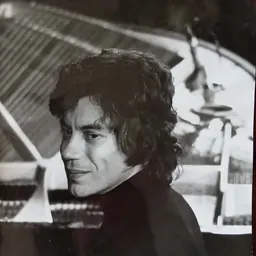

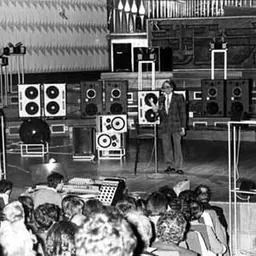
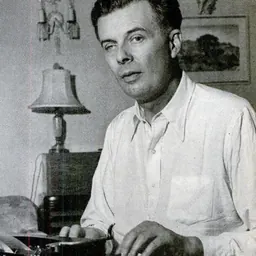
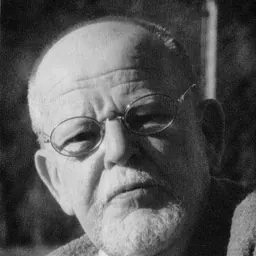
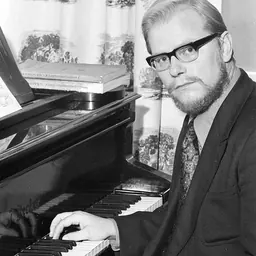
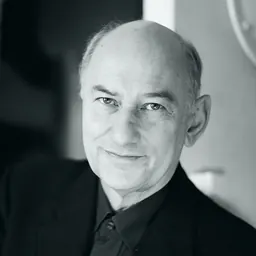
Related people
Same field, nearest in time


Contemporaries
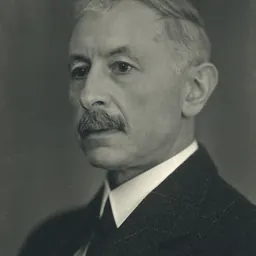
People whose lives overlapped Jean-Jacques Perrey's





Frequently asked questions
Who was Jean-Jacques Perrey?
French composer (1929-2016)
When was Jean-Jacques Perrey born?
Jean-Jacques Perrey was born on 20 January 1929 in Rosières-en-Santerre.
When did Jean-Jacques Perrey die?
Jean-Jacques Perrey died on 4 November 2016 in Lausanne.
What was Jean-Jacques Perrey's occupation?
Jean-Jacques Perrey was a composer, pianist, organist, recording artist and musician.
What nationality was Jean-Jacques Perrey?
Jean-Jacques Perrey was French.
Sources & further reading
· Wikipedia: Jean-Jacques Perrey
· DBpedia: Jean-Jacques Perrey
Cite this page
APA: Biography.guide. (2026). Jean-Jacques Perrey. https://biography.guide/jean-jacques-perrey/
MLA: "Jean-Jacques Perrey." Biography.guide, https://biography.guide/jean-jacques-perrey/.
Chicago: "Jean-Jacques Perrey." Biography.guide. https://biography.guide/jean-jacques-perrey/.
Data last updated: 2026-09-25 · Spot an error? Report a correction.
Page generated 2026-09-27 05:11 UTC