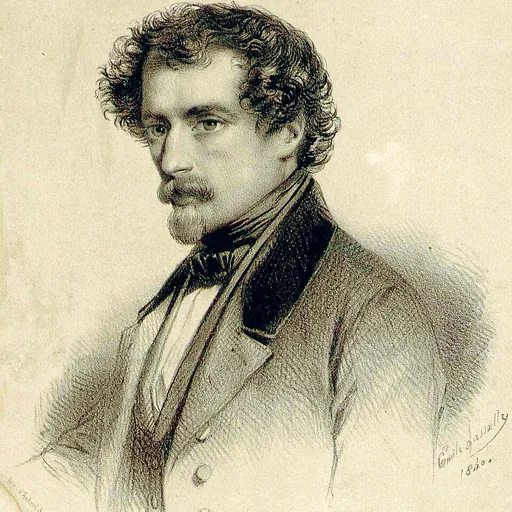
Jean Ignace Isidore Gérard Grandville
French caricaturist
About Jean Ignace Isidore Gérard Grandville
Lived 1803 – 1847 (aged 43). Jean Ignace Isidore Gérard Grandville was a French caricaturist, illustrator, painter, lithographer, draftsperson and watercolorist.
Jean Ignace Isidore Gérard (; 13 September 1803 – 17 March 1847) was a prolific French illustrator and caricaturist who published under the pseudonym of Grandville , and numerous variations (e. g. Jean-Jacques Grandville, Jean Ignace Isidore Grandville) throughout his career. Art historians and critics have called him "the first star of French caricature's great age", and described his illustrations as featuring "elements of the symbolic, dreamlike, and incongruous" while retaining a sense of social commentary, and "the strangest and most pernicious transfigurement of the human shape ever produced by the Romantic imagination". The anthropomorphic vegetables and zoomorphic figures that populated his cartoons anticipated and influenced the work of generations of cartoonists and illustrators from John Tenniel, to Gustave Doré, to Félicien Rops, and Walt Disney. He has also been called a "proto-surrealist" –1825, Grandville moved to Paris and began pursuing a career in illustration and lithography. One account states his first lithograph titled La Marchande de cerises (The Cherry Seller), was published in Nancy 1824 or 1825.
Grandville's parents had friends and family in Paris working in the theater who provided work and connections early on, including a relative, Frédéric Lemétheyer, who was a stage manager in the Opéra-Comique. He began using his pseudonym, "Grandville" in Paris. It was derived from "Gérard de Grandville", his paternal grandparents stage name when they were actors and worked in the court of Lorraine. The pseudonym Grandville appeared in numerous variations throughout his career, including Grandville, Jean-Jacques Granville, J. J. Grandville, Jean Ignace Isidore Grandville, J. I. I. Grandville, Jean de Granville, and other variants. He designed illustrations for decks of playing cards and worked with Hippolyte Lecomte, a painter and ballet set designer in Paris, for whom he produced a set of color lithographs in 1826. That set was followed by additional series including 12 lithographs created for the printer Langlumé titled (Sundays of a Paris Bourgeois or The Tribulations of Small Property), in 1826. Subsequent collections included 53 prints in La Sibylle des salons (The Sibyl of the Salons) in 1827 and 12 prints in (Titles for Musical Pieces) in 1828.
The success of Grandville's previous lithographic series led to invitations to design cartoons for these papers. The first of these was the satirical paper La Silhouette where his friend Charles Philipon was working as an editor. Grandville's lithograph Let's Put Out the Light and Rekindle the Fire! ("the light" of the Enlightenment and "the fire" of book-burning), criticizing censorship of the press, was published in June 1830 and quickly proscribed by the government. La Silhouette had a short run (December 1829 – January 1831), folding after the administration's fines and pressure.
Political lithographs (1830–1835)
Later career: 1836–1847
At the outbreak of the July Revolution of 1830, Grandville was a 26-year-old bachelor living a bohemian life. By the time the September Laws were passed in 1835, he was a 31-year-old husband, and a father. He quit producing political cartoons after the September Laws and turned to illustrating books. It has been postulated that he was relieved and even happy to leave the politics and police harassment behind at this point in his life. In July 1833 he married a cousin from Nancy, Marguerite Henriette Fischer and the couple maintained an apartment close to his studio, and rented a house near the outskirts of town. In 1834 their first son Ferdinand was born. A second son, Henri, was born in fall of 1838, but tragedy soon struck the family. Marguerite's health is said to have declined with each birth and Ferdinand died of meningitis about the time Henri was born. In 1841 Henri choked to death on a piece of bread while his parents helplessly watched. A third son, Georges, was born in July 1842 but, Marguerite died of peritonitis later that month. Grandville remarried in October 1843 to Catherine Marceline Lhuillier (1819–1888) who was the mother of his fourth son Armand, born in 1845. One source states that from her deathbed, his first wife Marguerite, had a hand in selecting Catherine as a second wife and stepmother for her husband and son. which approaches the status of pure surrealism, despite being conceived in a pre-Freudian age. The full title of the book is, Un autre monde: Transformations, visions, incarnations, ascensions, locomotions, explorations, pérégrinations, excursions, stations, cosmogonies, fantasmagories, rêveries, folâtreries, facéties, lubies, métamorphoses, zoomorphoses, lithomorphoses, métempsycoses, apothéoses et autres choses (Another world: Transformations, visions, incarnations, ascents, locomotions, explorations, peregrinations, excursions, stations, cosmogonies, phantasmagoria, reveries, frolics, pranks, fads, metamorphoses, zoomorphoses, lithomorphoses, metempsychoses, apotheoses and other things).
Original drawings
Legacy The Relics (c. 1835), pen and ink with gouache 11.8 x 9.4 cm., Cleveland Museum of Art
Alexandre Dumas wrote in his memoirs: "Grandville had a delicate and sarcastic smile, eyes that sparkled with intelligence, a satirical mouth, short figure, large heart and a delightful tincture of melancholy perceptible everywhere — that is your portrait, dear Grandville!"
Honoré de Balzac expressed ambivalent views of Grandville. He was an enthusiastic supporter and collector of Grandville's early print series, and the two worked together at La Caricature in the early 1830s, where Balzac worked as an editor, and caricatures were an integral part of the newspaper. However in the 1840s, when publishers begin including illustrations in books, Balzac became more critical. He believed illustrations competed with the written word, distorted and diluted the text, and were undermining the market for novels, perhaps with some justification. Balzac contributed chapters to Grandville's Scènes de la vie privée et publique des animaux (1842) which was one of the bestsellers of the 1840s, selling 25,000 copies, while Balzac's first edition novels of the period were only selling 1,200–3,000 copies.
Charles Baudelaire, friend and champion of Honoré Daumier, was not a fan of Grandville. It seems odd that the author of Les Fleurs du mal (The Flowers of Evil), with poems such as Spleen, and the great admirer and translator of Edgar Allan Poe, felt frightened by the images of Grandville. Today his criticisms read like an underhanded compliment.
His style and humour had a marked influence on John Tenniel and various other Punch-cartoonists. Grandville's affinity with surrealism has been recognized since the 1930s. His work was included in the Museum of Modern Art's landmark exhibition Fantastic Art, Dada, and Sureealism in 1936. However, the art historian William Rubin pointed out the absence of any reference or recognition of Grandville by André Breton in his two manifestos of surrealism, or the other surrealists in the formative years of the movement in the 1920s. After a period of relative obscurity in the early 20th century, Grandville's work became widely reproduced in the 1930s. Ernst later made the frontispiece for a 1963 facsimile edition of Un autre monde with a caption reading "A new world is born. All praise to Grandville." which is set during a fictionalized version of the French Revolution of 1848.
Gallery La Fontaine 's Fables (1838–1840) wood engravings
Un autre monde (1843–44), preliminary drawings: graphite, pen & ink, some with watercolor Un autre monde (1844), wood engravings Jérôme Paturot à la recherche d'une position sociale (1846), wood engravings
Selected works Les Métamorphoses du jour (Metamorphoses of the Day), 73 lithographs, Aubert, Paris, 1829 Voyage pour l'éternité (Voyage to Eternity), 9 lithographs, Aubert, Paris, 1830 La Silhouette (The Silhouette), 9 lithographs, periodical illustrations, 1829–1831 La Caricature (The Caricature), 120 lithographs, periodical illustrations, 1830–1835 Le Charivari (Le Charivari), 106 lithographs, periodical illustrations, 1832–1835 L'Association Mensuelle lithographique (The Association of Monthly Lithographs), 16 lithographs, 1 etching, 1 engraving, periodical illustrations, 1832–1834 Le Magasin pittoresque (The Picturesque Store), 67 woodcuts, periodical illustrations, 1833–1857 24 breuvages de l'homme (24 Beverages of Man), 8 lithographs, Bulla, Paris, 1835 Oeuvres complétes de P. de Beranger (Complete works of P. de Béranger), 38 wood engravings, Fournier et Perrotin, Paris, 1835 (100 wood engravings in 1837 edition) Fables de La Fontaine (La Fontaine 's Fables), 258 wood engravings, Fournier et Perrotin, Paris, 1838–1840 Voyages de Gulliver (Gulliver's Travels), by Jonathan Swift, 346 wood engravings, Fournier et Furne, Paris, 1838 Les Aventures de Robinson Crusoe (The Adventures of Robinson Crusoe), by Daniel Defoe, 206 wood engravings, Fournier, Paris, 1840 Les Français peints par eux-mêmes (The French Painted by Themselves), periodical illustrations, 18 wood engravings, 1840 Fables de Lavalette (Fables of Lavalette), 21 etchings, Paulin et Hetzel, Paris, 1841 (33 etchings in 1847 ed.) Fables de Florian (Fables of Florian), 95 wood engravings, Dubochet, Paris, 1842 Scènes de la vie privée et publique des animaux (Scenes of the Private and Public Life of Animals), 320 wood engravings, Hetzel et Paulin, Paris, 1842 Petites misères de la vie humaine (Little Miseries of Human Life), by Old Nick & Grandville, 222 wood engravings, Fournier, Paris, 1843 L'Illustration (The Illustration), 17 wood engravings, periodical illustrations, 1843–1845 Un autre monde (Another World), text by Taxile Delord, 185 wood engravings, Fournier, Paris, 1844. Cent proverbes: par trois Tetes dans un bonnet (One Hundred Proverbs: by Three Heads in a Bonnet), by Old Nick, Taxile Delord, & Amédée Achard, 105 wood engravings, Fournier, Paris, 1845 Jérôme Paturot à la recherche d'une position sociale (Jérôme Paturot in Search of a Social Position), by Louis Reybaud, 186 wood engravings, Dubochet, Paris, 1846 Les fleurs animées (Animated Flowers or Flowers Personified), text by Taxile Delord, 2 wood engravings, 50 engravings, Gabriel de Gonet, Paris 1846 L'Ingénieux hidalgo Don Quichotte de La Mancha (The Ingenious Gentleman Don Quixote of La Mancha), by Cervantes, 18 wood engravings, 8 engravings, Ad Mame et Cie, Tours, 1848
Don’t just read it —
keep it.
Full-length biographies made to live with: read them, listen on the way to work, watch them tonight.
- E-book
- Audio
- Video
Instant download · yours to keep · every purchase keeps this site free
Important facts
more
Jean Ignace Isidore Gerard Grandville, Jean-Ignace-Isidore Gerard, Jean Isidore Gerard Grandville, Grandville, Jean-JacquesPeople in Jean Ignace Isidore Gérard Grandville's life
Named in this biography and alive at the same time



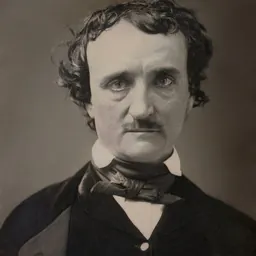
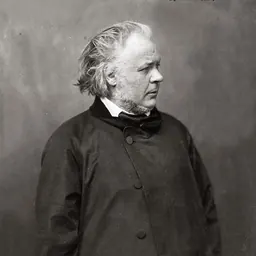
Related people
Same field, nearest in time
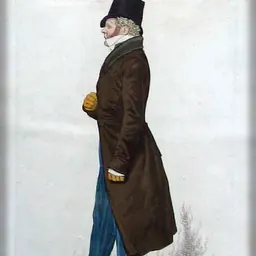

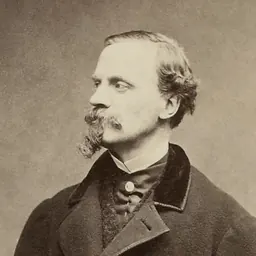
Contemporaries
People whose lives overlapped Jean Ignace Isidore Gérard Grandville's





Frequently asked questions
Who was Jean Ignace Isidore Gérard Grandville?
French caricaturist (1803-1847)
When was Jean Ignace Isidore Gérard Grandville born?
Jean Ignace Isidore Gérard Grandville was born on 13 September 1803 in Nancy.
When did Jean Ignace Isidore Gérard Grandville die?
Jean Ignace Isidore Gérard Grandville died on 17 March 1847 in Vanves.
What was Jean Ignace Isidore Gérard Grandville's occupation?
Jean Ignace Isidore Gérard Grandville was a caricaturist, illustrator, painter, lithographer, draftsperson and watercolorist.
What nationality was Jean Ignace Isidore Gérard Grandville?
Jean Ignace Isidore Gérard Grandville was French.
Sources & further reading
· Wikipedia: Jean Ignace Isidore Gérard Grandville
· DBpedia: Jean Ignace Isidore Gérard
Cite this page
APA: Biography.guide. (2026). Jean Ignace Isidore Gérard Grandville. https://biography.guide/jean-ignace-isidore-gerard-grandville/
MLA: "Jean Ignace Isidore Gérard Grandville." Biography.guide, https://biography.guide/jean-ignace-isidore-gerard-grandville/.
Chicago: "Jean Ignace Isidore Gérard Grandville." Biography.guide. https://biography.guide/jean-ignace-isidore-gerard-grandville/.
Data last updated: 2026-09-20 · Spot an error? Report a correction.
Page generated 2026-09-27 05:10 UTC