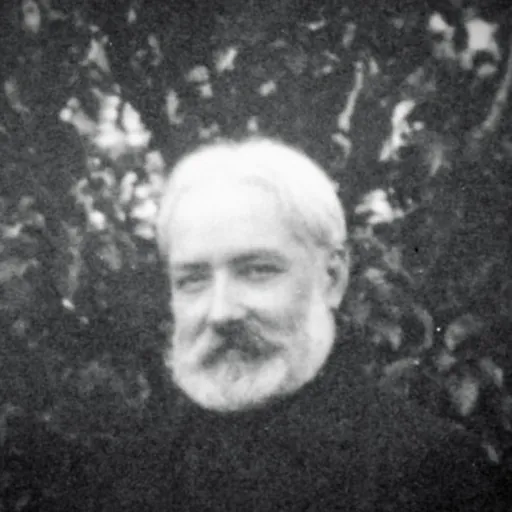
About Jean-Gabriel Chauvin
Lived 1889 – 1976 (aged 87). Jean-Gabriel Chauvin was a French sculptor.
Jean Gabriel Chauvin, born in Rochefort on March 30, 1889, and died in Saint-Martin-lès-Melle on May 15, 1976, was a French sculptor.
He was one of the first to develop abstract sculpture (La Toilette, 1909). and is therefore considered a pioneer in the field.
Biography Jean Chauvin was the only survivor, along with his twin brother André Joseph, of a family of six children. The themes of birth and twinhood permeate his entire body of work.
In 1908, at the age of 19, he arrived in Paris and was admitted to the École des Arts Décoratifs on March 14. He later joined the École des Beaux-Arts, studying in the studio of sculptor Antonin Mercié from January 7, 1909. He remained there until 1915, having been exempted from military service on December 9, 1914. During this period, he met François Pompon, with whom he would develop a close relationship,
Between 1913 and 1920, Chauvin took part in both the Salon d'Automne and the Salon des Indépendants while working in the studio of Joseph Bernard. where he contributed to the carving of The Dance (now housed at the Musée d'Orsay). As a member of the Salon d'Automne, he also exhibited two sculptures there in 1928. As he definitively turned toward abstract sculpture, he caught the attention of collector Jacques Doucet, who purchased one of his works who would become Director of Visual Arts in 1944, and Jean Cassou, founder of the Musée National d'Art Moderne, were among his close acquaintances during this period.
Around the 1930s, he moved to 9 rue du Chalet in Malakoff and became the owner of a house in Port-des-Barques.
In 1935, at the request of architect Pierre Patout, he created a large sculpture entitled Fontaine Lumineuse for the ocean liner Normandie.
In 1937, again at Patout's request, Chauvin created a monumental sculpture (11 meters high) in exposed concrete for the Pavillon des Artistes Décorateurs at the Exposition Internationale, as well as two large porcelain basins for the Sèvres Pavilion.
Public collections
France Centre Pompidou Musée d'Art Moderne de la Ville de Paris Centre national des arts plastiques Musée des Beaux-Arts de Dijon Musée Cantini
United States Smithsonian Institution, Washington D.C. Metropolitan Museum of Art
Belgium Musée d'Art moderne et d'Art contemporain, Liège
Israël Tel Aviv Museum of Art
United-Kingdom Victoria and Albert Museum
Don’t just read it —
keep it.
Full-length biographies made to live with: read them, listen on the way to work, watch them tonight.
- E-book
- Audio
- Video
Instant download · yours to keep · every purchase keeps this site free
Important facts
People in Jean-Gabriel Chauvin's life
Named in this biography and alive at the same time





Related people
Same field, nearest in time


Contemporaries
People whose lives overlapped Jean-Gabriel Chauvin's


Frequently asked questions
Who was Jean-Gabriel Chauvin?
French sculptor (1889–1976)
When was Jean-Gabriel Chauvin born?
Jean-Gabriel Chauvin was born on 30 March 1889 in Rochefort.
When did Jean-Gabriel Chauvin die?
Jean-Gabriel Chauvin died on 15 May 1976 in Saint-Martin-lès-Melle.
What was Jean-Gabriel Chauvin's occupation?
Jean-Gabriel Chauvin was a sculptor.
What nationality was Jean-Gabriel Chauvin?
Jean-Gabriel Chauvin was French.
Sources & further reading
· Wikipedia: Jean-Gabriel Chauvin
· DBpedia: Jean-Gabriel Chauvin
Cite this page
APA: Biography.guide. (2026). Jean-Gabriel Chauvin. https://biography.guide/jean-gabriel-chauvin/
MLA: "Jean-Gabriel Chauvin." Biography.guide, https://biography.guide/jean-gabriel-chauvin/.
Chicago: "Jean-Gabriel Chauvin." Biography.guide. https://biography.guide/jean-gabriel-chauvin/.
Data last updated: 2026-09-23 · Spot an error? Report a correction.
Portrait: Wikimedia Commons · author & licence
Page generated 2026-09-27 05:07 UTC