
About Jean Françaix
Lived 1912 – 1997 (aged 85). Jean Françaix was a French composer, choreographer, pianist and film score composer.
Jean René Désiré Françaix (; 23 May 1912 – 25 September 1997) was a French neoclassical composer, pianist, and orchestrator known for his prolific output and vibrant style. Françaix composed for various genres, and is particularly known for his chamber works for piano as well as wind instruments.
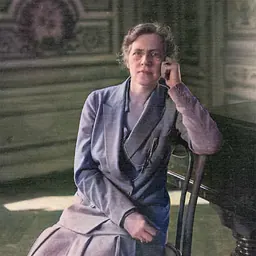
Life Françaix was born in Le Mans. His natural gifts were encouraged from an early age by his family. His father, Alfred Françaix, was Director of the Conservatoire of Le Mans as well as a musicologist, composer, and pianist; His mother, Jeanne Françaix, was a teacher of singing. Jean Françaix studied at the Conservatoire of Le Mans and then at the Paris Conservatory, and was only six when he took up composing, with a style heavily influenced by Ravel. Françaix's first publication, in 1922, caught the attention of a composer working for the publishing house, who steered the gifted boy towards a gifted teacher, Nadia Boulanger (who, after her sister's death in 1918, had given up composing and devoted her life to teaching, conducting, and playing the organ). Boulanger encouraged Françaix's career, considering the young composer to be one of the best, if not the best, of her students. Noted pianist and pedagogue Isidor Philipp also taught him. Françaix himself often played his own works, to public acclaim; notably in the premiere of his Concertino for Piano and Orchestra at the festival of Baden-Baden in 1932.
By 1932, Françaix had his Huit Bagatelles played at the Vienna Festival by the Kolisch Quartet and himself at the piano, while in Paris his Concertino for piano and orchestra was performed in 1933. Françaix's compositions continued to be played during the 1930s in Paris. A string trio (1933), a fantaisie for cello and orchestra, three duos for two sopranos, a sonatine for violin and piano, a quintet, and a serenade for small orchestra (1934). 1935 saw the premiere of his Quadruple Concerto for Flute, Oboe, Clarinet, Bassoon and Orchestra, and of a piano concerto in 1936.
Françaix was an accomplished pianist from an early age, earning a First Prize in Piano at the Paris Conservatory, and toured throughout Europe and the U.S. They did not, and he flourished: Françaix was a prolific composer, writing over 200 pieces in a wide variety of styles.
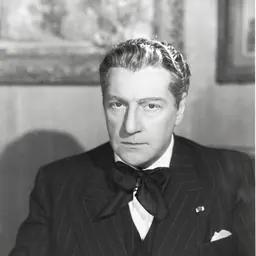
Since he was a virtuoso pianist, many of his works feature the piano, particularly his numerous chamber works which he wrote for nearly every orchestral instrument and standard ensemble. He was a skilled orchestrator, which was reflected in his use of tone colors. Françaix wrote the majority of his earlier works for saxophone between the mid-1930s and the early 1960s. Françaix wrote pieces in many of the major large musical forms, including concerti, symphonies, opera, theatre, ballet, Though he often put his own modern spin on the old modes of expression, he was an avowed neoclassicist who rejected atonality and formless wanderings, and he drew from great literature of the past for his vocal settings. He also wrote ten film scores for director Sacha Guitry.
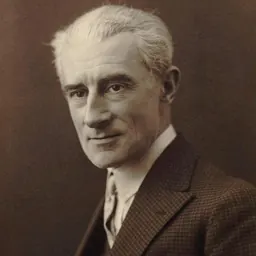
Françaix's style is marked by lightness and wit, as well as a conversational style of interplay between the musical lines. It changed little throughout his career; while he was influenced by composers he admired (such as Emmanuel Chabrier, Igor Stravinsky, Maurice Ravel, and Francis Poulenc), he integrated what he picked up into his own distinct aesthetic, which was already evident in his early works.
Selected works For the complete list see List of compositions by Jean Françaix.
Scherzo (1932), his first mature work for solo piano Huit Bagatelles, for piano and string quartet (1932) Concertino for piano and orchestra (1932) String trio (1933) Quartet for winds (1933) Beach, ballet (1933) Sonatine, for violin and piano (1934) Quintet, for flute, harp and string trio (1934) Sérénade, for small orchestra (1934) Sérénade (Andantino from the 'Sérénade for small orchestra', 1934) – (arr. Maurice Gendron, 1953) Petit quatuor, saxophone quartet (1935) Le Malheurs de Sophie, ballet (1935) Piano concerto (1936) Cinq portraits de jeunes filles, piano (1936) Le Diable boiteux, Opera (1937) Rondino staccato (from the Opera Le Diable boiteux, 1937) – (arr. Maurice Gendron, 1953) L'apocalypse selon Saint-Jean, Oratorio (1939) L'apostrophe, a musical comedy (1940) Berceuse (from 'L'Apostrophe', 1940) – (arr. Maurice Gendron, 1953) Divertissement for bassoon and string quintet, or orchestra (1942) – dedicated to William Waterhouse L'Arlequin blanc, ballet (1944) Mouvement perpétuel (from 'L'Arlequin blanc', 1944) – (arr. Maurice Gendron, 1953) L'Heure du Berger, sextet for piano and wind quintet (1947) Wind quintet No.1 (1948) Les demoiselles de la nuit, ballet (1948) Nocturne (from Les demoiselles de la nuit, 1948) – (arr. Maurice Gendron, 1951) Symphony in G (1953) Divertimento, for horn and piano (1953) Divertimento, for flute and piano (1953; orchestrated in 1974) Napoléon, film score (1954) Si Paris nous était conté film score (1956) L'horloge de flore, for oboe and orchestra (1959) Harpsichord concerto (1959) Suite for solo flute (1962) Six preludes, for string orchestra (1963) Double piano concerto (1965) La princesse de Clèves, Opera (1965) Flute concerto (1966) Clarinet concerto (1967) Violin concerto No.1 (1968) Quartet, for cor anglais and string trio (1970) Concerto for double bass and orchestra (1974) Le gai Paris, for trumpet and winds (1974) Cassazione, for three orchestras (1975) Cinque piccoli duetti, for flute and harp (1975) Variations sur un thème plaisant, for piano and winds (1976) Quintet for clarinet and string quartet (1977) Serenade, for guitar (1978) Concerto for bassoon and 11 strings (1979) Impromptu, for flute and 11 strings (1983) Concerto, for trombone and 10 wind instruments (1983) Sonata for recorder and guitar (1984) Double concerto for flute, clarinet, and orchestra (1991) Accordion concerto (1993) Trio for oboe, bassoon, and piano (1994) – dedicated to William Waterhouse Sonate for flute and piano (1996) Neuf historiettes de Tallemant des Réaux for baritone voice, tenor saxophone, and piano (1997) -Françaix's last completed work- Marche triomphale for 4 trumpets and organ
Don’t just read it —
keep it.
Full-length biographies made to live with: read them, listen on the way to work, watch them tonight.
- E-book
- Audio
- Video
Instant download · yours to keep · every purchase keeps this site free
Important facts
People in Jean Françaix's life
Named in this biography and alive at the same time




Related people
Same field, nearest in time




Contemporaries
People whose lives overlapped Jean Françaix's





Frequently asked questions
Who was Jean Françaix?
French composer and pianist (1912–1997)
When was Jean Françaix born?
Jean Françaix was born on 23 May 1912 in Le Mans.
When did Jean Françaix die?
Jean Françaix died on 25 September 1997 in Paris.
What was Jean Françaix's occupation?
Jean Françaix was a composer, choreographer, pianist and film score composer.
What nationality was Jean Françaix?
Jean Françaix was French.
Sources & further reading
Cite this page
APA: Biography.guide. (2026). Jean Françaix. https://biography.guide/jean-francaix/
MLA: "Jean Françaix." Biography.guide, https://biography.guide/jean-francaix/.
Chicago: "Jean Françaix." Biography.guide. https://biography.guide/jean-francaix/.
Data last updated: 2026-09-20 · Spot an error? Report a correction.
Page generated 2026-09-27 05:34 UTC